A collector’s guide to what Armani/Casa and Casa Bella disclose about their art programs, what remains unestablished about conservation lighting and collection stewardship, and which installation permissions buyers should obtain in writing.
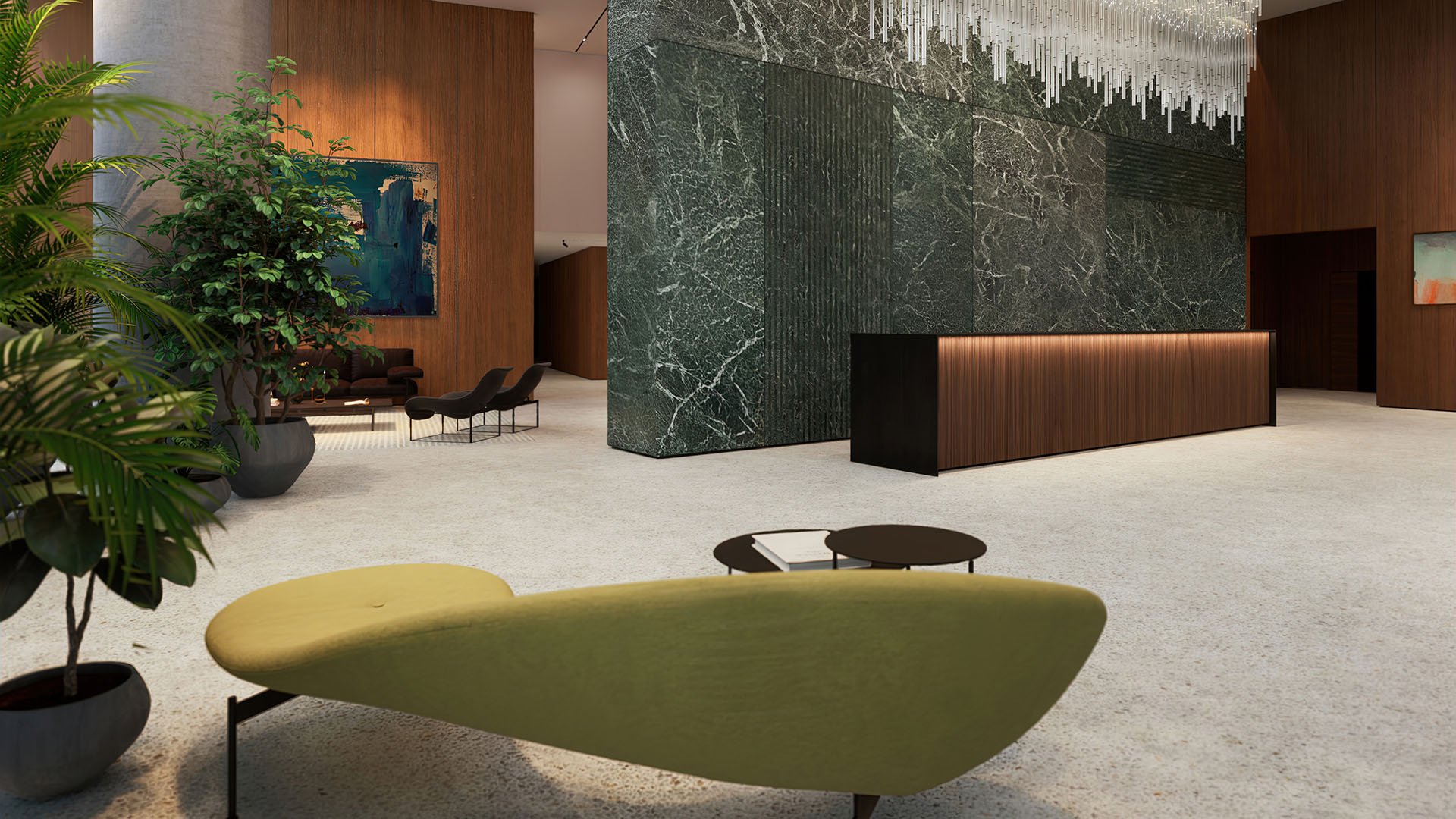
For an art-collecting buyer, a beautifully composed lobby is an introduction, not a complete buyer file. The more consequential questions concern stewardship, illumination, and the right to install a private collection. At Armani/Casa in Sunny Isles Beach and Casa Bella in Downtown Miami, the public descriptions establish distinct design identities. They do not, on their own, establish a conservation program or an owner’s installation permissions.
Three distinctions should guide the purchase: common-area art is not private-unit art; a curated collection is not necessarily a professionally managed collection; and “museum-quality” describes the marketed artwork, not the technical conditions surrounding it. These distinctions let buyers appreciate the design without mistaking its language for an operational guarantee.
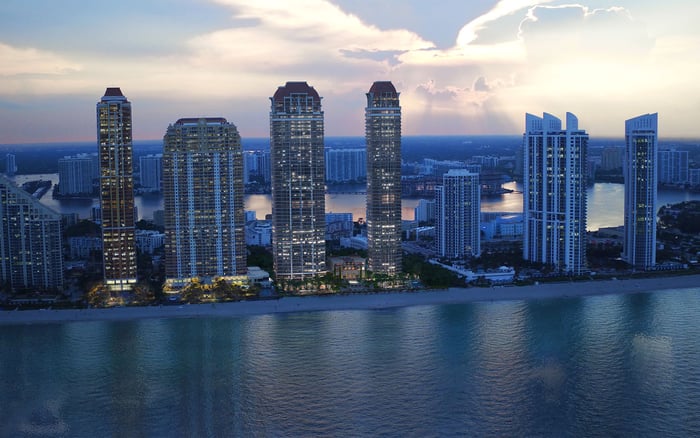
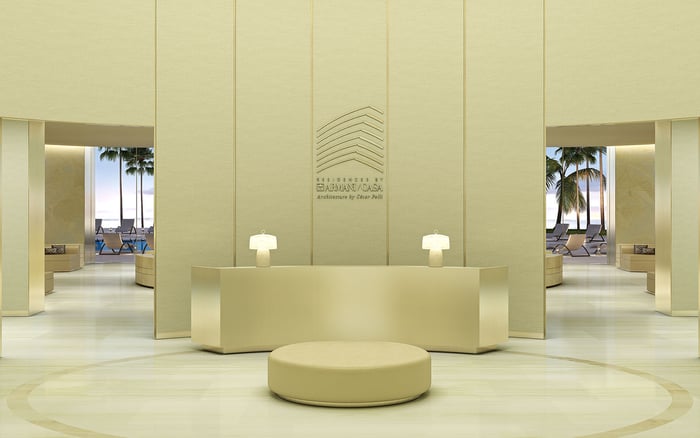
Armani Casa Sunny Isles Beach is an oceanfront condominium at 18975 Collins Avenue, with 56 stories and 308 residences. Pelli Clarke Pelli designed the completed tower, while Armani/Casa oversaw the interiors of residences and amenities under Giorgio Armani’s artistic direction.
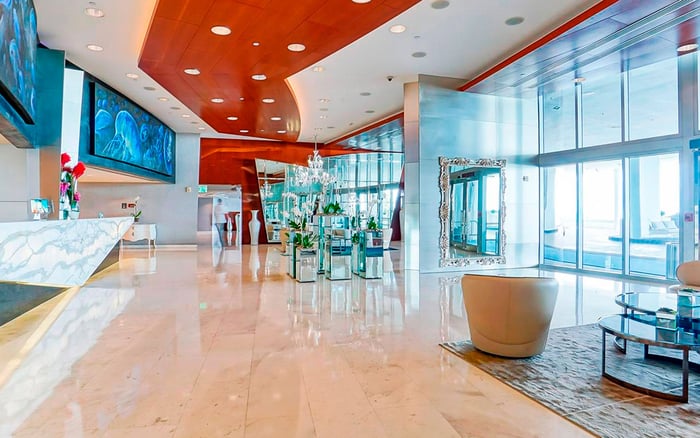
The amenity program exceeds 35,000 square feet across two floors. The described spaces include a residents’ lounge, restaurant, cigar room, wine cellar, spa, ocean-facing fitness center, movie theater, clubroom, and heated pool deck. This is a substantial setting for a collection, but amenity scale does not establish how individual works are maintained.
The collection is marketed as professionally curated and “museum-quality,” with monumental sculptures by Sandro Chia and Sinisa Kukec. Named artists offer a more specific foundation than a general promise of artful interiors. They do not resolve who owns each work, who records its condition, or who authorizes conservation and replacement.
The available collection description identifies no collection manager, registrar, conservator, or formal artwork-access policy. Buyers should treat these as open diligence questions, not evidence that such arrangements are absent.
At Casa Bella by B&B Italia Downtown Miami, the residential identity draws on B&B Italia’s Italian furniture and design vocabulary. The described collaboration with celebrated Italian artists centers on curating homes with selected masterworks from B&B Italia collections.
That language should remain separate from the contemporary-art and sculpture program. The latter is described in future tense: the project “will host” works by Italian masters. This establishes an intended collection, not an installed inventory. It is not a complete account of artists, individual works, locations, or ownership.
The publicly described program provides no complete artist roster, artwork inventory, named collection custodian, conservation protocol, or replacement policy. Buyers should request the current schedule of works and clarify which elements are commitments, which remain intentions, and which have been installed.
The comparison is therefore qualitative. Armani/Casa’s marketed curated collection includes named sculptors; Casa Bella’s described program centers on Italian contemporary art and sculpture. Neither description alone resolves the practical questions of collection care.
Lighting placement and outlet coordination are addressed in the onsite design-center process at Armani/Casa. That establishes attention to lighting design, but it does not substantiate museum-grade illumination through published lux limits, UV-control standards, color-rendering measurements, or conservation monitoring. The publicly disclosed technical lighting specifications for Casa Bella are likewise insufficient to verify that description.
The useful question is not simply whether lighting is “museum-grade.” Ask for artwork-specific illumination levels, color-rendering performance, UV filtration, and the controls proposed for the actual display location. Request HVAC and humidity information separately. An attractive lighting scheme and an appropriate conservation environment are different questions.
A private collection deserves review at the level of each work and its intended position. Buyers should have their advisers assess the supplied specifications rather than infer suitability from the furniture brand, architectural pedigree, or appearance of a common-area installation. The distinction is clear: museum-quality art does not establish museum-grade lighting or environmental controls.
For common-area works, request an inventory that distinguishes ownership, leases, and loans. Ask who is responsible for maintenance, conservation, insurance, and replacement, and how those responsibilities are funded. The aim is to understand the collection as an ongoing obligation, not merely an opening-day design feature.
A practical file should identify the person or entity responsible for the works and explain how condition concerns are handled. Where a formal manager or conservator is involved, request confirmation of the role. Where responsibilities sit with building management, ask for the written arrangement rather than assuming that curation includes continuing care.
Artwork-access rules also matter. Establish how handling, maintenance access, and any removal or replacement are authorized. A marketing description is no substitute for those answers, and the absence of public detail is not proof that no policy exists.
Developer-installed common-area art does not establish an owner’s right to install private artwork. No named art committee or formal approval process for private-residence installations is established in the public information available for Casa Bella. That does not justify describing either project as permitting unrestricted installation.
Request current condominium rules, alteration agreements, renovation manuals, and move-in procedures. Confirm the approving authority and written requirements for wall penetrations, ceiling fixtures, sculptures, and specialty lighting. For valuable or substantial works, obtain structural-backing details and delivery-route clearances before finalizing the installation plan.
Confirm contractor qualifications, insurance, freight-elevator reservations, loading access, rigging, installation hours, and damage deposits in writing. A delivery route and an installation approval are separate matters. Ask the building to address both, with requirements tied to the proposed work rather than a general assurance that art can be accommodated.
The same discipline applies when a broader search includes Aston Martin Residences Downtown Miami: carry the collection-care, lighting, and installation questions from one prospective residence to another without presuming identical answers.
For Armani/Casa and Casa Bella, the compelling design identities are established more clearly than the operating details of their art programs. The strongest buyer file connects the collection description to current stewardship arrangements, technical specifications, and written permissions for the owner’s actual works. That is the distinction between admiring an art-led residence and knowing how a collection will live there.
For a discreet perspective on South Florida residences and collector-focused buyer diligence, explore MILLION.
If branded residences are on your mind — as a home or as an allocation — we would be glad to share what we are seeing, privately.
Begin a quiet conversationThe oceanfront condominium is at 18975 Collins Avenue in Sunny Isles Beach. It comprises 56 stories and 308 residences.
Pelli Clarke Pelli designed the tower, and Armani/Casa oversaw the residence and amenity interiors. The interior design studio worked under Giorgio Armani’s artistic direction.
The marketed collection includes monumental sculptures by Sandro Chia and Sinisa Kukec. It is described as professionally curated and museum-quality.
No. That description concerns the marketed artwork and does not establish illumination levels, UV control, environmental conditions, or conservation monitoring.
Design-center documentation discusses coordinating lighting placement and outlet locations. It does not substantiate museum-grade illumination through published conservation-related specifications.
Its collection description says the project will host contemporary artwork and sculpture by Italian masters. That language describes an intended program rather than a documented installed inventory.
The available Armani/Casa collection description does not identify a manager, registrar, or conservator, and Casa Bella’s materials do not name a custodian. This does not prove that stewardship arrangements are absent.
Its public materials do not establish a named art committee or a formal private-residence installation approval process. Buyers should request current written requirements rather than assume unrestricted permissions.
Request condominium rules, alteration agreements, renovation manuals, and move-in procedures. Confirm the approving authority, structural requirements, contractor insurance, and delivery logistics for the proposed installation.
Determine whether the works are owned, leased, or loaned. Confirm who pays for maintenance, conservation, insurance, and replacement.