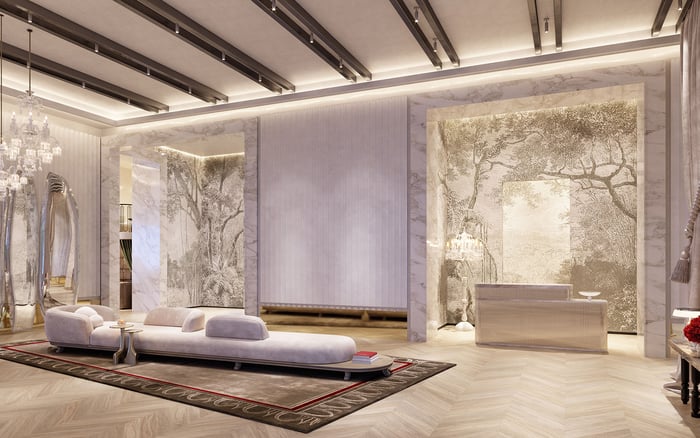
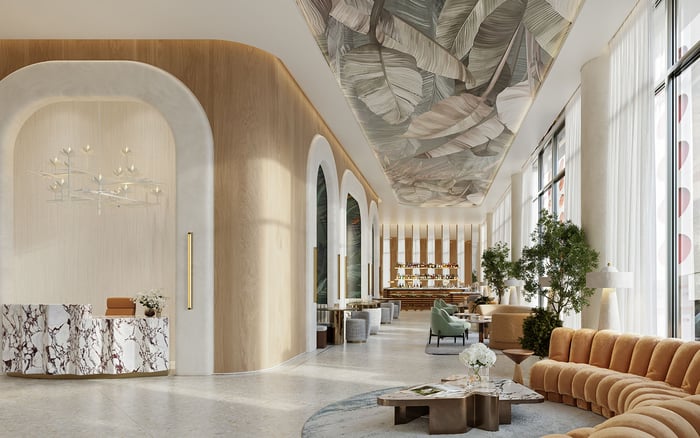
A security vestibule in a Miami penthouse is no longer just an architectural pause. For 2026 buyers, it has become a diligence topic touching privacy, access control, staff movement, deliveries, maintenance, and future resale confidence.

In Miami’s penthouse market, the private arrival sequence has moved beyond a design gesture. A security vestibule-whether conceived as a controlled entry chamber, private elevator landing, gallery foyer, or transitional buffer between public and private space-now warrants the same careful review buyers apply to views, terraces, ceiling heights, and building services.
The 2026 due-diligence question is direct: does the vestibule genuinely improve privacy and control, or does it simply look secure? For a buyer considering a high-floor residence, the answer can shape daily living, staffing, deliveries, guest protocol, insurance conversations, and eventual resale positioning.
This is especially relevant across Brickell, Miami Beach, Sunny Isles, Fisher Island, penthouse, and new-construction searches, where the language of privacy can be persuasive while the underlying mechanics still require scrutiny.
A vestibule should be evaluated as part of a broader residential security ecosystem. The relevant question is not whether the space is attractive, but how it functions from the moment someone exits the elevator or approaches the residence. A polished stone foyer with custom lighting may photograph beautifully, yet the essential details sit in the operational layer: access permissions, door sequencing, camera placement, package handling, staff access, and emergency egress.
Buyers should ask how many thresholds exist between the elevator, vestibule, and living areas. They should also understand whether the vestibule is private, shared, a limited common element, or governed by building rules. That distinction can determine who may alter finishes, add technology, install millwork, or change entry hardware.
For ultra-private owners, the strongest vestibules are not necessarily the most dramatic. They are the most coherent. The elevator opens into a controlled environment. Guests are received without immediate exposure to the main residence. Service providers can be held, directed, or screened. The owner retains discretion without making the home feel defensive.
The first diligence item is control. Who can access the vestibule, and under what conditions? A buyer should review whether access is tied to building staff, fobs, biometrics, keyed elevators, smart locks, or manual release protocols. The more sophisticated the home, the more important it becomes to understand what happens when technology fails, power is interrupted, or a guest arrives outside standard hours.
The second item is governance. In condominium settings, entry areas can involve association rules, fire-safety requirements, elevator service agreements, and architectural approval procedures. A buyer should not assume a vestibule can be modified simply because it sits outside the front door. If the space is not fully within the unit boundary, planned upgrades may require approvals.
The third item is visibility. Cameras, intercoms, and sensors should be useful without creating a surveillance aesthetic. The best approach is discreet integration: technology that supports the residence while preserving the calm expected at this price level.
The fourth item is flow. Staff, deliveries, pet care, private chefs, wellness providers, family offices, and visiting guests may all touch the entry sequence. A vestibule that works only for formal arrivals may disappoint in daily use. Luxury is not just privacy; it is frictionless repetition.
Many buyers are drawn to vestibules because they create ceremony. The arrival becomes slower, quieter, and more intentional. Art can be introduced before the living room. A powder room, coat storage, seating niche, or concealed service door can elevate the first impression. In the right residence, the vestibule becomes a private antechamber, separating the rhythm of the building from the atmosphere of the home.
Yet design value and resale value should be considered separately. A highly personalized vestibule may be exquisite for one owner and impractical for the next. Overly specific security hardware, aggressive lighting, narrow circulation, or visually heavy doors can make the residence feel less gracious. The ideal balance is a space that feels serene first, secure second, and technical only when needed.
For resale, the strongest language is flexibility. A future buyer should be able to imagine the vestibule as a gallery, receiving room, privacy buffer, or family transition zone. If it can serve multiple lifestyles without renovation, it is more likely to support long-term appeal.
A serious buyer should request clarity on unit boundaries, permitted alterations, building entry procedures, service elevator access, guest registration, package protocol, maintenance responsibility, and any technology dependencies tied to the vestibule. If the residence is under construction or recently delivered, the review should cover what is included, what is optional, and what requires separate installation after closing.
It is also important to test the sequence in person. Stand where a guest would stand. Observe how sound travels from the elevator landing. Check whether the vestibule feels exposed when doors open. Notice whether lighting flatters the space without revealing too much. A private entry should not feel like a corridor with expensive finishes; it should feel like a controlled threshold.
The most valuable question may be the most practical: what happens on an ordinary Tuesday? If staff, family, deliveries, pets, and guests can move through the entry sequence gracefully, the vestibule is doing its job.
Security vestibules sit at the intersection of architecture, privacy, and daily management. They are not merely about threat perception. They are about discretion, sequence, and the right to decide how the home reveals itself.
For Miami penthouse buyers, the 2026 lens is more refined than asking whether a residence has a private entry. The better question is whether the entry has been considered at the level of ownership. When it has, the vestibule becomes one of the most understated luxuries in the home: a place where the outside world pauses before being invited in.
What is a security vestibule in a penthouse? It is a controlled transition area between the building entry point and the private residence, often used to manage privacy, guest arrival, and access.
Is a private elevator landing the same as a vestibule? Not always. A private elevator landing may function as a vestibule, but ownership rights, controls, and permitted uses can vary.
Why does this matter more for 2026 buyers? Buyers are placing greater emphasis on privacy, service flow, and operational ease, especially in high-value urban and waterfront residences.
Should I review the vestibule during a showing? Yes. Walk the full arrival sequence, listen for sound transfer, test sightlines, and consider how guests, staff, and deliveries would move.
Can a buyer modify a penthouse vestibule? Possibly, but it depends on unit boundaries, association rules, life-safety requirements, and approval procedures.
What is the most overlooked issue? Maintenance responsibility is often overlooked. Buyers should know who maintains doors, hardware, finishes, cameras, and access-control equipment.
Does a vestibule automatically increase resale value? Not automatically. It supports value when it improves privacy and flow without limiting future design flexibility.
How should technology be handled? Technology should be discreet, reliable, and easy to service, with clear backup procedures if a system fails.
Is a larger vestibule always better? No. Proportion, circulation, privacy, and function matter more than size alone.
What should a buyer ask before making an offer? Ask who controls the space, what can be altered, how access is managed, and how the entry performs during daily life.
For a confidential assessment and a building-by-building shortlist, connect with MILLION.
If branded residences are on your mind — as a home or as an allocation — we would be glad to share what we are seeing, privately.
Begin a quiet conversation