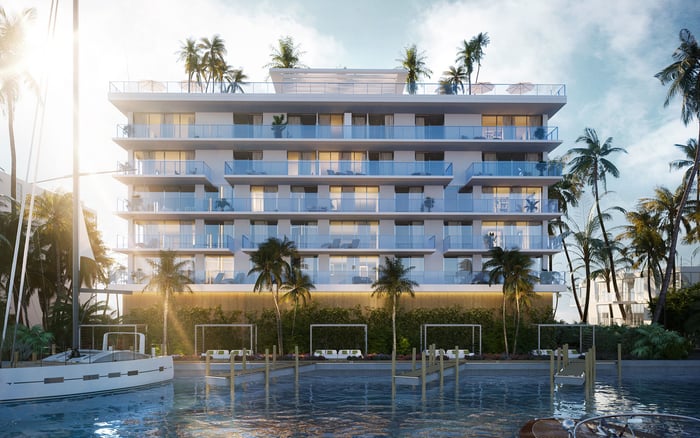
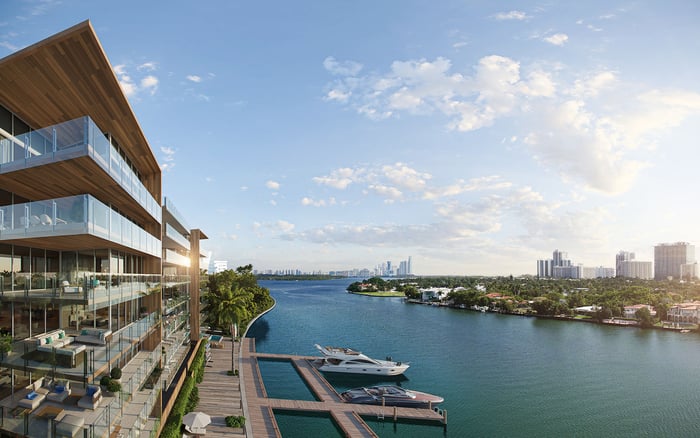
Origin Bay Harbor Islands offers waterfront intimacy at boutique scale, but its strongest 2026 ownership case depends on disciplined review of governance, reserves, insurance assumptions and long-term capital planning.

Origin Bay Harbor Islands presents a clear proposition: waterfront condominium living in Bay Harbor Islands on a more intimate scale than Miami’s larger resort-style towers. For buyers drawn to discretion, privacy and a quieter residential rhythm, that distinction is meaningful.
Yet boutique living should be evaluated as an ownership structure, not merely an aesthetic preference. A limited number of residences can preserve intimacy, but it can also concentrate shared expenses among fewer owners. The 2026 buyer’s lens must therefore hold two ideas at once: scarcity may elevate the experience, while a smaller assessment-paying base may heighten financial exposure.
For readers navigating MILLION’s Buyer's Guides, the most useful question is not simply whether Origin feels exclusive. It is whether the building’s governance, proposed budget and reserve planning can support that exclusivity predictably over time.
Boutique scale can shape the emotional character of condominium ownership. It may offer a stronger sense of residential intimacy and privacy than a high-intensity urban or resort environment. At Origin, this quieter positioning is integral to the appeal, not incidental to it.
That distinction can matter greatly to a buyer seeking a home rather than a heavily programmed hospitality experience. Fewer residences may create a more personal atmosphere and diminish the sense of living within a large vertical community. The advantage is qualitative, but its underlying financial framework must remain measurable.
A buyer creating a local comparison set might consider Alana Bay Harbor Islands alongside Origin, then request equivalent ownership documents and cost assumptions. The objective is not to declare a universal winner, but to determine which format best aligns with the buyer’s desired level of privacy, service and shared financial responsibility.
Waterfront positioning is central to Origin’s lifestyle and value proposition. It is also a reason to examine maintenance obligations and future capital planning with precision. The association’s proposed budget should support both the building’s services and its waterfront infrastructure without relying on assumptions that appear artificially lean.
The proper review extends beyond the current monthly figure. Buyers should identify which obligations are recurring, which may be deferred and which could eventually become capital projects. A polished opening experience is no substitute for a durable plan to maintain the property over a long holding period.
The same discipline applies when considering Onda Bay Harbor. Comparable waterfront options should be evaluated through consistent questions about budgets, maintenance scope, reserves and governance-not through amenity impressions alone.
A smaller ownership base creates a direct tradeoff. Limited inventory can support privacy and exclusivity, while unexpected capital costs may be divided among relatively few assessment-paying units. Buyers should not view these outcomes as contradictory. They are two consequences of the same boutique structure.
This makes reserve planning especially important. The central issue is whether anticipated needs have been considered prudently and whether the association’s financial framework can absorb future demands without destabilizing ownership costs. Buyers should also examine how decisions are made, what authority the governing documents provide and how responsibilities are allocated.
Including La Maré Bay Harbor Islands in a document-level comparison can sharpen the analysis. Each opportunity should be assessed independently, but applying the same diligence framework makes differences in financial structure easier to identify.
At this level of the market, association governance is not administrative background. It is part of the residential product. Clear decision-making, realistic budgets and prudent planning can help preserve the quality buyers initially find compelling.
A disciplined review should cover the proposed operating budget, reserve assumptions, insurance assumptions, maintenance obligations and plans for future capital work. Buyers should also understand how costs are allocated and how the association may address expenses beyond ordinary operations.
Current pricing, inventory, deposit terms, completion timing, association fees and reserve assumptions should be confirmed directly through project representatives and the controlling offering documents. Condominium obligations should be reviewed with qualified legal counsel. The purpose is not to eliminate every variable, but to understand which variables the ownership structure can manage.
Origin’s long-term investment case rests on more than architecture and location. Predictable operating costs and prudent association management are essential to preserving the appeal of a boutique waterfront building. Privacy has lasting value only when the structure supporting it remains financially resilient.
That does not mean a smaller building is inherently less disciplined than a larger one. It means the margin for poorly planned shared expenses may be narrower because fewer owners participate in funding them. The sophisticated buyer will therefore treat governance and reserves with the same seriousness as views, layouts and the arrival experience.
For a 2026 purchaser, Origin’s strongest case is coherent rather than extravagant: a quieter waterfront setting, boutique intimacy and ownership discipline working together. If the documents support that alignment, the project’s limited scale can read as deliberate luxury rather than unexamined cost concentration.
What is Origin Bay Harbor Islands? It is a waterfront condominium development in Bay Harbor Islands, Florida.
Why is Origin considered boutique? Its limited scale positions it as a more intimate alternative to Miami’s larger resort-style condominium towers.
What is the principal lifestyle appeal? Origin is intended for buyers seeking privacy and a quieter residential environment rather than a high-intensity resort setting.
Why does the number of residences matter financially? Shared operating and capital costs are distributed across a relatively small ownership base.
Which budget issue deserves close attention? Buyers should assess whether the proposed association budget can realistically support building services and waterfront infrastructure.
Why are reserves particularly important here? Unexpected capital expenses in a boutique building may be divided among fewer owners.
What governance documents should a buyer examine? Review the controlling documents, decision-making structure, maintenance obligations and provisions for future capital work with qualified advisers.
Should insurance assumptions be reviewed? Yes. Insurance assumptions belong within a broader evaluation of the association budget and its financial resilience.
Which details should be reconfirmed before purchasing? Confirm current pricing, inventory, deposit terms, timing, fees and reserve assumptions through project representatives and offering documents.
What defines a disciplined 2026 purchase decision? It balances the privacy benefits of limited inventory against governance quality, reserve planning and concentrated financial responsibility.
To compare the best-fit options with clarity, connect with MILLION.
If branded residences are on your mind — as a home or as an allocation — we would be glad to share what we are seeing, privately.
Begin a quiet conversation