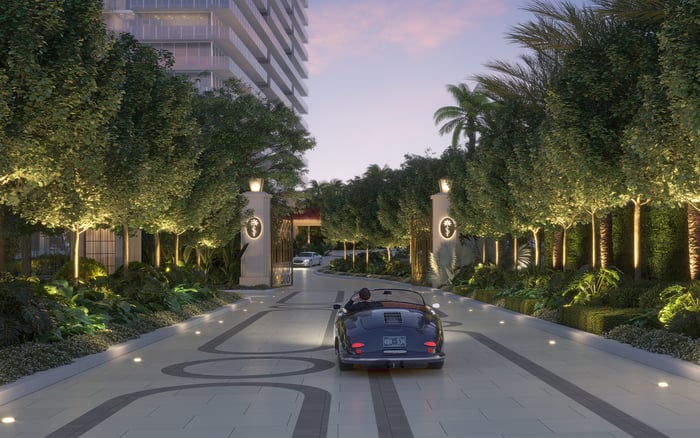
A practical buyer’s guide to determining whether a large Shell Bay terrace will function comfortably for daily outdoor living, storm preparation, and private entertaining.
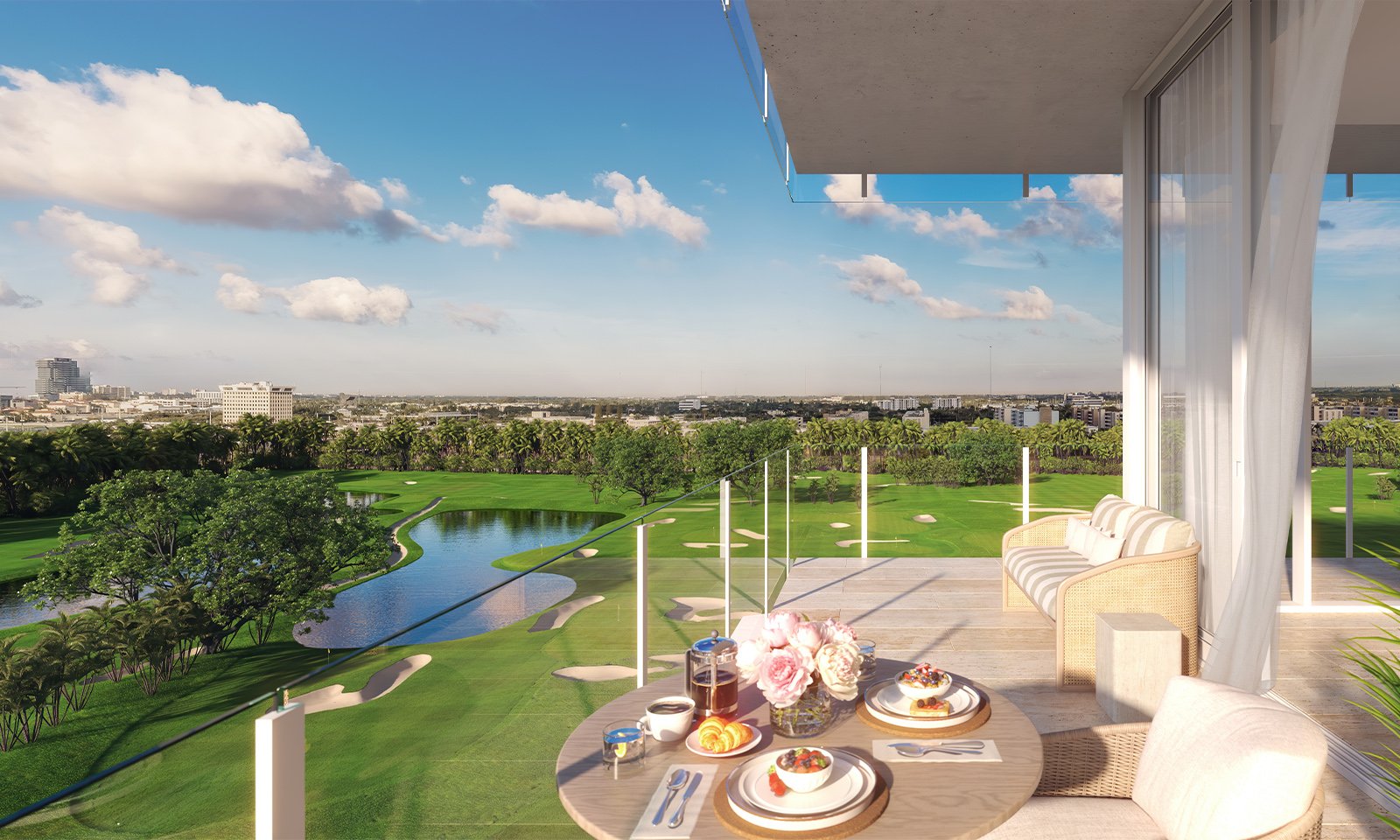
At Shell Bay by Auberge Hallandale, expansive outdoor spaces are positioned as a defining feature of residences designed for indoor-outdoor living. The Hallandale Beach development pairs Auberge resort branding with access to a private golf club setting, placing the terrace at the center of its elevated South Florida lifestyle.
Yet outdoor square footage alone reveals surprisingly little. A terrace may appear generous on paper while yielding fewer practical furnishing zones once doors, columns, circulation paths, railings, setbacks, and irregular corners are considered. Before treating it as an open-air salon or dining room, a buyer should establish precisely how the space can function.
This discipline applies across branded residences and other coastal properties. A balcony can be visually impressive yet operationally constrained. The strongest evaluation combines architectural plans, engineering information, governing documents, and careful consideration of the residence’s orientation and floor.
Request a dimensioned terrace plan for the specific residence, ideally showing depth and width at several points. Ask which areas can comfortably accommodate dining, lounging, circulation, and door clearance simultaneously. Furniture scaled onto the plan can reveal pinch points concealed by a total-area figure.
Buyers comparing 2000 Ocean Hallandale Beach with Shell Bay should apply the same test to each candidate rather than comparing headline outdoor area. The more useful question is how many distinct, comfortable zones the plan supports without compromising movement between interior and exterior spaces.
Identify recessed areas, overhead projections, screens, and built-in elements as well. Each can influence usable space and protection from the elements. A terrace should function as an extension of the residence, not merely as a perimeter measured on paper.
Orientation determines when direct sun reaches the terrace, while floor position and surrounding conditions can further shape the experience. Buyers should request a clear explanation of expected morning and afternoon exposure and how those patterns change throughout the year. A terrace suited to breakfast may feel markedly different during a late-day gathering.
Confirm whether shade comes from permanent architecture, such as an overhang or recessed area, or depends on owner-supplied furnishings. Then determine whether screens, umbrellas, awnings, or similar additions are permitted and whether their dimensions, appearance, or installation are controlled.
A useful plan maps sun, partial-shade, and protected zones during the hours when the owner expects to use the terrace. That exercise helps determine whether dining and lounge arrangements belong where the rendering suggests.
Higher-floor purchasers should request information about prevailing winds, gust exposure, and any wind-mitigation design features. Conditions can vary materially by floor and orientation, making broad assurances about the building an inadequate substitute for residence-specific details.
When considering alternatives such as Auberge Beach Residences & Spa Fort Lauderdale, ask the same questions in the same order. Consistent diligence makes comparisons more meaningful, particularly when outdoor living is a principal reason for purchasing.
Wind affects comfort, table settings, lightweight accessories, plants, umbrellas, and furniture placement. Ask whether movable pieces are subject to minimum weights, anchoring requirements, maximum dimensions, or severe-weather restrictions. Any attachment to the slab or building envelope should be reviewed before purchase or installation.
A refined furniture scheme begins with the operating rules. Confirm what may remain outdoors, what must be secured, and what must be moved inside before hurricanes or severe weather. Then determine where cushions, decorative objects, planters, and furniture can be stored without overwhelming the residence.
Ask whether the unit includes suitable interior storage and whether common or designated storage may be used for outdoor items. Do not assume that service areas, corridors, or parking spaces can serve as temporary storm-storage zones.
Material selection also warrants scrutiny. Weight may improve stability but can raise structural questions. Large planters, spas, fountains, and other water features require confirmation of terrace load limits and waterproofing rules. Obtain approval requirements in writing before committing to custom pieces.
Buyers envisioning an outdoor kitchen should confirm structural capacity, utilities, ventilation, fire-safety requirements, and association restrictions. Determine what is delivered, what may be added, and which modifications require formal approval. Grilling permission should never be inferred from the terrace’s size or an illustrative layout.
Review governing documents for limits involving guest numbers, music, noise, event hours, and outdoor cooking. Buyers weighing Rosewood Residences Hillsboro Beach or another regional residence can use this framework to distinguish visual appeal from practical hosting freedom.
Finally, examine sightlines between neighboring terraces. Privacy during a quiet morning may differ from privacy when several seating zones are occupied. Ask where screens or planting may be placed, subject to load, wind, waterproofing, and design controls.
Request current architectural drawings, engineering specifications, purchase-contract exhibits, and draft condominium documents. These materials should clarify dimensions, permitted improvements, maintenance obligations, storage expectations, and approval procedures. Where they do not, seek a written answer tied to the specific residence.
The central question is not whether the terrace is large. It is whether its shape, shade, wind exposure, furnishing rules, structural limits, privacy, and operating restrictions support the owner’s intended routine.
Why is total outdoor square footage insufficient? Columns, doors, circulation paths, and irregular geometry can reduce the area genuinely practical for furniture and entertaining.
Which terrace drawing should a buyer request? Ask for a current, dimensioned plan for the specific residence showing widths, depths, doors, fixed elements, and usable zones.
How should sun exposure be evaluated? Confirm direct-sun patterns by orientation, time of day, and season rather than relying on a single rendering or visit.
What built-in shade features matter? Ask about overhangs, recessed areas, screens, and permanent elements that protect dining and lounge areas.
Why is floor-specific wind information important? Prevailing winds and gust exposure can vary by height and orientation, materially affecting comfort and furnishing choices.
Can terrace furniture require approval? Yes. Buyers should confirm possible weight, anchoring, size, appearance, and storm-storage requirements before ordering pieces.
Where should outdoor items go during severe weather? Identify permitted storage for furniture, cushions, planters, and accessories without assuming common areas may be used.
What should be verified before adding a summer kitchen? Review structural, utility, ventilation, fire-safety, grilling, and association requirements, including the approval process.
Do planters and water features raise structural concerns? They can. Confirm load limits, waterproofing rules, drainage considerations, and required approvals for the proposed installation.
Which entertaining restrictions deserve review? Examine rules governing guests, music, noise, grilling, event hours, and privacy modifications before planning regular gatherings.
For a confidential assessment and a building-by-building shortlist, connect with MILLION.
If branded residences are on your mind — as a home or as an allocation — we would be glad to share what we are seeing, privately.
Begin a quiet conversation