At Shell Bay, the operational details deserve the same scrutiny as the lifestyle offering. Buyers should obtain written commitments for overnight HVAC service, humidity monitoring, and cooling continuity before relying on broad assurances.

Set within a 150-acre private community in Hallandale Beach, Shell Bay by Auberge Hallandale brings together an ambitious residential and hospitality offering. The development team includes Witkoff and PPG, and the community includes a Greg Norman-designed championship golf course and a planned 60-key Auberge hotel and spa.
For buyers, the quieter operational questions deserve equal scrutiny. Who responds when cooling fails after midnight? Who receives a humidity alarm while the owner is abroad? What remains available when a major cooling component is out of service?
Contractual after-hours HVAC coverage, installed humidity alarms, and cooling-system redundancy require written confirmation. That is not a finding that these features are absent. It is the distinction between a compelling lifestyle offering and an enforceable operating commitment.
Begin with the overnight, weekend, and holiday staffing model. Ask whether engineering personnel will be on-site, on call, or dispatched by an outside contractor. Establish who receives the first call and whether that person can authorize access and repairs without waiting for a daytime manager.
Separate any promise of “24/7 service” into three commitments: acknowledgment of the request, technician arrival, and restoration of cooling. Each is a distinct milestone. Ask which are guaranteed, which are targets, and what exceptions apply.
Request a written responsibility schedule covering in-unit equipment, shared infrastructure, routine maintenance, and emergency attendance. It should identify included services, owner charges, and who authorizes chargeable work when the owner cannot be reached. Clarify whether the initial diagnostic visit and the eventual repair are billed separately.
Because the community includes hospitality and club components, ask whether residential engineering staff are dedicated or shared. When requests arrive simultaneously, what determines priority? Buyers also considering Auberge Beach Residences & Spa Fort Lauderdale should request a separate operating commitment for that property. A shared brand should not be taken to establish identical service arrangements.
A useful humidity review begins with the equipment schedule, not the thermostat’s appearance. Request the proposed thermostat and sensor specifications, including relative-humidity display, available humidity setpoints, alarm thresholds, and notification recipients. Ask whether alerts reach the owner, management, or both.
Distinguish equipment protection from actionable notification. If condensate float switches or leak sensors are specified, do they merely shut equipment down, or do they also notify someone? Ask who investigates a shutdown and how that person learns it has occurred.
Request a space-by-space account of monitoring coverage. Which residences, corridors, storage rooms, and amenity areas connect to a building automation system? Are alarm histories and trend logs retained, and can an owner obtain the relevant records after an incident?
Private climate-controlled storage is offered for purchase at Shell Bay. Buyers considering it should ask whether temperature and humidity are monitored separately and who responds when either moves outside the specified range. The phrase “climate-controlled” does not itself define an alarm threshold or response obligation.
Second-home ownership makes the response protocol particularly important. Obtain written requirements for temperature and humidity settings during vacancy, along with access authorization, escalation procedures, and responsibility for follow-up. Ask the proposed management team to walk through its response to an overnight alert when the owner is unreachable.
Ask the mechanical, electrical, and plumbing engineer to identify the actual system architecture serving the residence. Do not assume the design uses chillers, cooling towers, or independent in-unit systems. Request mechanical schedules and riser diagrams tied to the residence under consideration.
“Individually controlled” is not proof of independent cooling equipment or continued operation during an outage. If that wording appears in a sales discussion, obtain project-specific technical confirmation of what it means.
If a central plant is proposed, request equipment counts, capacities, and the arrangement of pumps and other supporting components. The decisive question is whether design cooling demand can still be met with one major component unavailable. Ask the engineer to identify the failure scenario being addressed rather than accept an undefined claim of redundancy.
Treat standby power as a separate question. Request electrical schedules identifying exactly which cooling equipment receives backup power. Life-safety backup alone does not establish residential cooling continuity. Ask whether the proposed operating arrangement includes the relevant in-unit equipment, controls, and shared mechanical components.
For a broader Broward comparison, apply the same document request to 2000 Ocean Hallandale Beach. Compare defined operating capabilities; do not assume that amenities or positioning establish equivalent mechanical resilience.
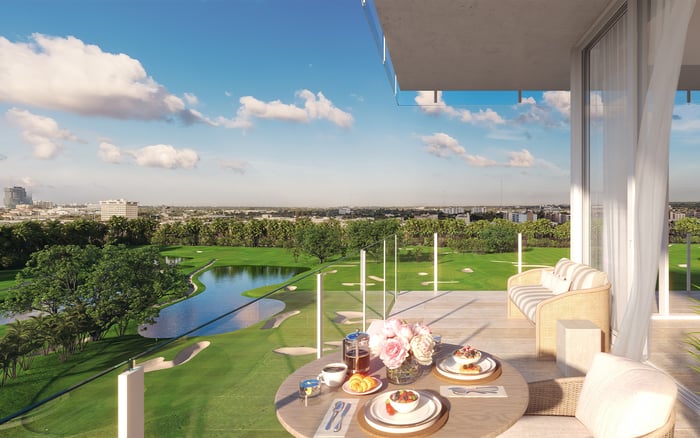
Shell Bay’s residential plans feature floor-to-ceiling windows and approximately 10-foot ceilings, along with planned wraparound terraces overlooking the private golf course. These features warrant mechanical information for the specific residence, not merely a generic building description. Ask the engineer to explain the intended temperature and humidity performance for that plan.
The advertised 18,000-square-foot spa establishes a substantial wellness component, but it does not specify residential humidity control. Nor does hospitality branding establish above-code HVAC performance or a guaranteed repair timeline.
Have your attorney review how maintenance-responsibility provisions and applicable operating agreements align with the technical answers. Identify the entity responsible for each service and whether its commitment appears in the documents governing ownership. If a promise remains verbal, ask where it will be recorded.
Before relying on assurances, assemble a compact file for your attorney and mechanical adviser to evaluate together:
Service commitments: staffing coverage, acknowledgment and arrival targets, restoration terms, escalation contacts, and owner charges.
Monitoring specifications: sensor locations, humidity thresholds, notification recipients, alarm records, and vacancy requirements.
Cooling and power documents: mechanical schedules, riser diagrams, equipment capacities, failure scenarios, and standby-power schedules.
Responsibility provisions: maintenance boundaries, emergency access authority, and applicable residential, hotel, or club operating agreements.
Where equipment or operating arrangements remain planned, distinguish current design intentions from purchase commitments. Request a way to verify the installed configuration and operating procedures before accepting that they match the description.
The objective is not to demand a residence that can never experience an interruption. It is to understand what is monitored, who acts, what cooling remains available, and who bears the cost. For an owner who expects discretion and ease, those answers are part of the luxury proposition itself.
For a considered approach to South Florida luxury ownership, explore MILLION.
If branded residences are on your mind — as a home or as an allocation — we would be glad to share what we are seeing, privately.
Begin a quiet conversationContractual after-hours HVAC coverage remains a matter for written confirmation. Ask separately about call acknowledgment, technician arrival, and cooling restoration.
Confirm whether staff are on-site, on call, or dispatched by a contractor. Ask whether residential staff are shared with the hotel or club and how competing requests are prioritized.
Installed humidity alarms and their notification arrangements remain unresolved buyer questions. Request thermostat and sensor specifications, alarm thresholds, and designated recipients.
Do not assume it does. Ask whether the specified device only shuts equipment down or also sends a notification that triggers a response.
Obtain written temperature and humidity requirements, emergency access arrangements, and an escalation protocol. Clarify who acts if the owner cannot be reached.
No such conclusion should be drawn from that wording alone. Obtain project-specific confirmation of the cooling architecture and the residence’s dependence on shared components.
Ask the engineer to identify the system architecture and the failure scenarios it addresses. If a central plant is proposed, request confirmation of whether design demand can be met with one major component unavailable.
No. Request electrical schedules showing which cooling equipment, controls, and supporting components receive standby power.
Private climate-controlled storage is marketed as available for purchase. Buyers should separately verify monitoring coverage, alarm thresholds, and response responsibilities.
A mechanical adviser can evaluate the technical design, while an attorney can review maintenance provisions and operating agreements. The written responsibilities should align with the technical answers.