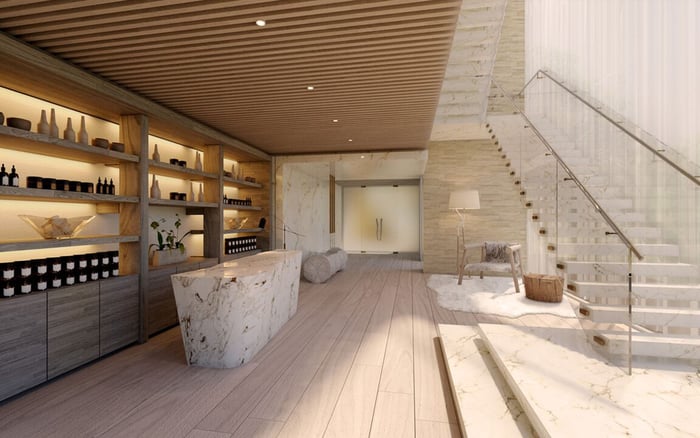
A practical framework for London buyers weighing access, discretion, oceanfront living and lock-and-leave ease when selecting a Hallandale Beach residence.

For a London buyer, the most effective Hallandale Beach search begins not with a building name or dramatic view, but with a precise picture of daily life. A residence may be close to everything yet feel exposed, or wonderfully secluded yet add friction to every departure. The right choice balances the two on your terms.
List the journeys that will define a typical stay: morning appointments, lunches, shopping, evenings out, beach time and family visits. Then distinguish essential convenience from occasional convenience. A route used almost daily should carry more weight than an attraction visited once a season.
Define privacy with equal precision. Decide whether it means a discreet arrival, fewer encounters in shared spaces, separation between entertaining and bedroom areas, protected outdoor space, or simply quiet once the front door closes. This turns an abstract preference into a clear brief for viewings.
The central decision is often between a beach-led residence and a more inward-looking, club-oriented setting. Neither is inherently more private or convenient; their advantages emerge differently in practice.
An Oceanfront home can make the water part of the daily rhythm while reducing the planning required for beach time. When considering 2000 Ocean Hallandale Beach, use the visit to assess more than the outlook. Observe the entire transition from car to residence, the relationship between private and shared areas, and the home's exposure to neighbouring buildings and amenity spaces.
A different comparison can be made through Shell Bay by Auberge Hallandale. Rather than assuming one model is superior, determine which setting better supports your preferred pattern of privacy, hosting and time away. Hallandale buyers should compare lived experience, not labels.
City convenience should be measured as a complete journey. During a viewing, time the sequence from leaving the residence to joining the main route you expect to use. Consider access control, lift waiting times, valet or garage procedures, guest collection and the ease of returning during a busy hour. Small delays become significant through repetition.
London buyers may also want to test the residence as a base for movement along the coast. A comparison with Armani Casa Sunny Isles Beach can clarify whether moving farther south shifts the balance in a way that suits your routine. Looking north toward Auberge Beach Residences & Spa Fort Lauderdale provides another useful reference point. These are not substitutes to be selected by headline alone; they are calibration tools for understanding what Hallandale Beach contributes to your personal map.
Arrange second visits at contrasting times. Repeating the same arrival, parking and lift journey can reveal more than an extended presentation. If convenience changes materially by time of day, factor that variability into the decision rather than relying on a best-case visit.
Privacy is rarely a single feature. It is a chain, and its weakest point may shape the entire experience. Start outside: can guests arrive without confusion, and can household staff or deliveries be handled without disrupting the residence? Continue through the lobby, lift and corridor, then examine sightlines inside the home.
Stand at the entrance and look toward the living room. Sit where dinner would be served and assess views into private rooms. Step onto the Terrace and check angles from nearby homes, shared decks and the shoreline. Consider whether window treatments would need to remain closed precisely when you most want daylight.
Amenity privacy matters as well. A beautiful Pool may feel serene during one appointment and socially active during another. Consider how you would actually use it. Some owners value recognition and community; others prefer near anonymity. Neither preference is wrong, but the building should support it naturally.
For a Second-home, operational ease can be as important as architecture. Review how the property functions when vacant and how quickly it can be prepared before arrival. Clarify procedures for authorised access, deliveries, maintenance and guests. Establish who assumes responsibility when an issue arises while you are in London.
Storage warrants close attention. A home that can securely hold clothing, sports equipment and personal items makes transatlantic stays feel spontaneous rather than logistical. Assess whether each arrival requires unpacking from scratch or whether the residence can remain composed and ready.
Consider, too, the emotional effect of scale. A larger home may provide better separation for family and guests, while a more compact plan may be easier to secure and maintain. The right answer depends on occupancy, hosting habits and the level of service you wish to manage.
Score every candidate against the same categories: arrival, daily routes, acoustic privacy, visual privacy, outdoor exposure, guest circulation, storage, management and departure readiness. Keep the scale simple, and add brief notes immediately after each viewing.
Separate non-negotiables from preferences. If discreet access and protected outdoor space are essential, a spectacular interior should not compensate for weakness in either. Conversely, avoid rejecting a strong home because it lacks a feature you would rarely use.
Before deciding, conduct a final visit without trying to be impressed. Walk the route slowly, sit quietly in the main rooms and imagine an ordinary Tuesday rather than a holiday weekend. Luxury is most convincing when convenience feels effortless and privacy requires no constant intervention.
What should a London buyer define first? Define the daily journeys, level of hosting and type of privacy expected during a typical stay.
Is beach frontage automatically the most private choice? No. Privacy depends on arrival, circulation, sightlines, neighbouring exposure and amenity use.
How should convenience be measured? Measure the complete door-to-door experience, including parking, access control, lifts and repeated routes.
Why visit a residence more than once? Contrasting visits can reveal how traffic, shared spaces, light and the arrival experience vary.
What should be checked from a Terrace? Review sightlines from nearby residences, shared areas and any public-facing edges.
Does a larger residence always suit overseas owners better? Not necessarily. Additional separation can benefit guests, but it may also increase upkeep and oversight.
What operational questions matter most? Ask about authorised access, deliveries, maintenance, vacancy procedures and preparation before arrival.
How can buyers compare different locations fairly? Apply one scorecard to every option and weight each category according to actual use.
Should amenities drive the purchase? Only when they support routines you expect to follow rather than an imagined lifestyle.
What is the final test before choosing? Confirm that ordinary arrivals, quiet time, hosting and departures all feel natural and controlled.
For a discreet conversation and a curated building-by-building shortlist, connect with MILLION.
If branded residences are on your mind — as a home or as an allocation — we would be glad to share what we are seeing, privately.
Begin a quiet conversation