A discreet arrival depends on more than a gate. For part-time Coconut Grove buyers, this guide examines street visibility, parking transitions, waterfront permissions and service routes, with a practical framework for verifying how a residence operates while its owner is away.
For a part-time Coconut Grove resident, privacy is not simply a wall, a staffed entrance or a waterfront address. It is the ability to arrive, unload, receive guests and maintain a home without unnecessary visibility or repeated improvisation. The most revealing inspection traces the full journey from the property boundary to the rooms where daily life begins.
Evaluate four routes separately: curb, garage, dock and service access. A convincing entrance can coexist with an exposed parking transition or a maintenance path that crosses the pool terrace. Treat this as property-specific due diligence, not a ranking of neighborhoods or a certification of security. Advertised amenities establish questions to ask, not current operating procedures.
Begin at the street during an authorized visit, and consider what is visible before any gate opens. Can someone see the front door, driveway, pedestrian entrance or outdoor living areas? Where does a driver wait while access is approved? A brief pause outside the property may be more conspicuous than the arrival itself.
Walk the guest route separately from the owner's route. Note whether visitors must announce themselves within earshot of others and whether luggage waits in view. When considering Park Grove Coconut Grove, ask to trace the proposed residence's actual curb-to-door journey rather than treating the project name as evidence of privacy.
Return after dark. Check whether entry lighting eases arrival while also revealing interiors or guests' movements.
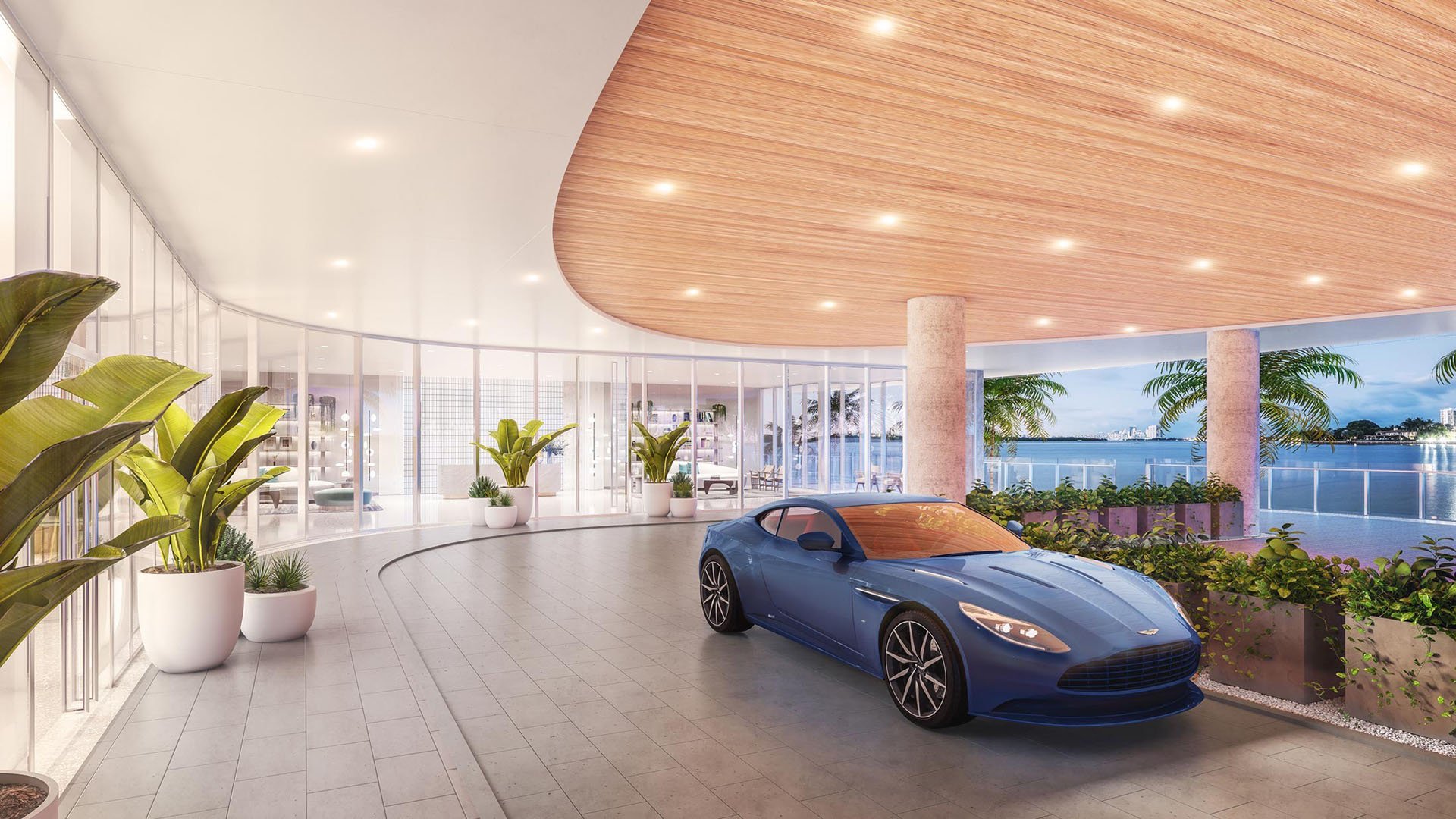
Enclosed parking and a discreet arrival are different propositions. Verify whether parking is enclosed, whether access continues internally to the residence and where shared circulation begins. Test turning space with the type of vehicle you intend to use, and establish whether a second car can wait inside the property boundary.
For buyers assessing Four Seasons Residences Coconut Grove, request a precise explanation of the parking-to-residence route and the applicable access rules. Do not infer those details from branding or a general service description.
If valet is offered, evaluate it separately from self-parking. Where are passengers received, where is luggage transferred, and who coordinates access beyond the vehicle handoff? Gatehouse, parking and concierge functions should each have a clearly explained role.
Do not assume a future garage alteration will resolve an awkward arrival. Ask the relevant municipal department to confirm applicable setback and garage-door orientation requirements before relying on a redesign.
For a Coconut Grove waterfront residence, verify any claimed private dock, boatlift or direct Biscayne Bay access rather than assuming those features accompany the address. A dock's presence does not establish who may use it, how guests arrive or which route marine contractors follow toward the home.
Request evidence of dock ownership or slip rights, association rules, relevant permits and guest-vessel procedures. Walk from the landing to the residence, checking whether the path crosses entertaining areas. Ask where crews wait and whether maintenance access can be limited to the areas needed for their work.
Buyers considering Vita at Grove Isle should obtain residence-specific documentation rather than assume broader island amenity descriptions confer slip rights or dock-access permissions. Ask which arrival services apply to the residence and how they coordinate with any permitted waterfront access.
Before planning dock or pier work, confirm permitting requirements with the relevant authorities. Have the property's waterfront rights and restrictions reviewed directly rather than applying guidance written for another location.
A service door is only the beginning of a service route. Walk the proposed paths for deliveries, household staff, maintenance contractors and refuse removal. Determine whether they cross the foyer, entertaining rooms or pool terrace before reaching their destination.
Apply the same scrutiny on a tour of Arbor Coconut Grove: request the relevant plans and access rules, then establish how routine servicing would work for the particular residence. The question is operational, not stylistic.
Consider an ordinary day while you are away. A delivery arrives, a maintenance appointment runs late and a household employee needs entry. Who authorizes each visit? Where can each person go? Ask whether permissions can be confined to a task and time window, and how completion is recorded. A gracious home should not require its private rooms to become the default circulation route for every appointment.
Part-time ownership makes entry administration as important as the physical layout. Obtain written rules covering vendor entry without resident approval, remote gate operation, camera access and footage retention. Establish who may change permissions and how a former vendor's access is withdrawn.
Ask management or the property's responsible operator to explain a late arrival and an unattended service appointment step by step. Distinguish standing authorization from approval for a single visit. Clarify whom the owner contacts when an arrival falls outside normal arrangements, without assuming a particular response time or service level.
Repeat visits by day and after dark, comparing weekday, weekend and event-period conditions. Record visibility, waiting locations and route crossings for all four approaches. An attractive first impression is useful; a repeatable arrival procedure is more valuable to someone who is frequently away.
Request surveys, site and floor plans, association rules, security procedures, dock and seawall records, and applicable zoning or historic approvals. Flag discrepancies among the plans, the walk-through and the written rules for resolution before commitment.
Confirm municipal jurisdiction before applying county guidance. Ask which zoning conditions govern proposed alterations and whether historic designation requires a certificate of appropriateness or preservation-board review. Evaluate privacy-related alterations before purchase rather than assume they will be straightforward afterward.
The strongest choice is the residence whose physical routes and written procedures support your pattern of living, both when you arrive and when you are elsewhere.
Explore Coconut Grove residences with MILLION to bring arrival privacy into your property search.
If branded residences are on your mind — as a home or as an allocation — we would be glad to share what we are seeing, privately.
Begin a quiet conversationAssess the curb, garage, dock and service access separately. Follow each relevant route from the property boundary to the residence.
No. Street visibility, waiting locations and the route beyond the gate still require inspection.
Check views of the front door, driveway, pedestrian entrance and outdoor living areas. Establish where vehicles and guests wait for access.
Verify enclosed parking, internal access, turning space and room for a waiting vehicle. Evaluate valet and self-parking separately if both are available.
No. Request evidence of ownership or slip rights, applicable association rules and guest-vessel permissions for the specific residence.
No. Broader amenity descriptions do not establish individual slip rights or current dock-access permissions.
Deliveries, maintenance and refuse removal may follow paths that intersect private living areas. Walking those routes helps identify conflicts before purchase.
Obtain written rules for vendor authorization, remote gate operation, camera access and footage retention. Clarify who may grant, change and revoke permissions.
Confirm applicable zoning and permitting requirements before planning garage changes or dock work. Ask whether historic designation triggers additional approvals for the proposed alterations.
Visit by day and after dark, and compare weekday, weekend and event-period conditions. Recheck visibility, waiting locations and route crossings.