A buyer-focused comparison of two hospitality-led Miami residences, examining how St. Regis and Mandarin Oriental translate brand heritage, service culture, and neighborhood context into distinct ownership propositions.
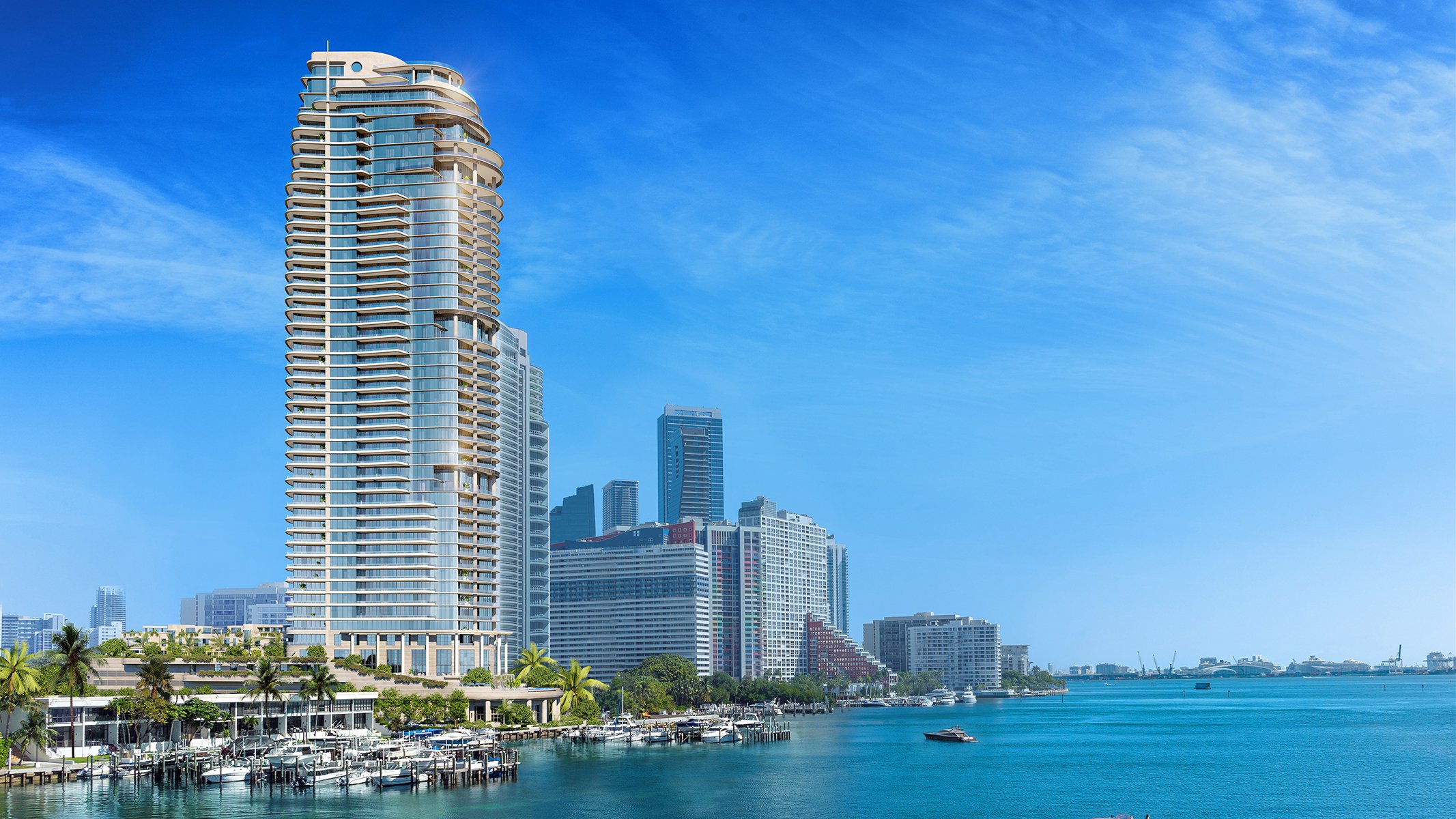
In Miami’s uppermost tier of residential buying, the strongest differentiator is often not square footage or even the view corridor. It is the character of service. That is what makes the comparison between St. Regis® Residences Brickell and The Residences at Mandarin Oriental, Miami so compelling for a South Florida audience attuned to nuance.
Both developments sit within the branded-residences universe, where ownership is shaped as much by hospitality standards as by architecture, amenities, and location. Both draw strength from globally recognized luxury names. Yet these are not interchangeable badges. They represent two distinct traditions of cultivated living, each with its own philosophy of comfort, discretion, and ritual.
For buyers, the real question is not which brand is more prestigious in the abstract. It is which expression of prestige best aligns with how one wants to live in Miami.
At first glance, this appears to be a straightforward faceoff between two marquee projects in a market where branded residences continue to command attention. In practice, buyers are weighing three overlapping layers.
The first is brand heritage. St. Regis carries a long-established identity rooted in the original New York hotel and a classic vision of bespoke service. Mandarin Oriental, by contrast, is defined by a contemporary luxury sensibility shaped by an international hotel and residences platform with strong associations to design, wellness, and serene hospitality.
The second is operating culture. St. Regis is inseparable from the idea of butler service, a signature that gives its residential offering a formal and deeply personalized tone. Mandarin Oriental residences foreground concierge-led living, service integration, and wellness-minded programming. One feels ceremonious and old-world in its precision. The other feels calm, curated, and modern.
The third is the Miami setting itself. Buyers in this category are not simply purchasing an apartment in Brickell or broader Miami. They are buying into a mode of urban life expected to perform every day, whether as a primary home, a seasonal base, or a multigenerational asset.
St. Regis® Residences Brickell benefits from one of Miami’s most consistently coveted luxury districts. Brickell remains the city’s financial center, but its appeal extends well beyond office adjacency. It is a dense, walkable neighborhood where dining, business, waterfront views, and convenience coexist in a way that affluent domestic and international buyers continue to value.
That context reinforces the St. Regis identity. The brand’s classic luxury posture fits naturally within Brickell’s polished urban cadence. For a buyer who wants a home that feels ceremonially serviced, highly organized, and socially legible, the pairing is intuitive. The residential promise centers on private ownership paired with elevated services associated with the hotel flag, and that promise has unusual clarity in a neighborhood already defined by prestige and pace.
This is also why Brickell has become such a fertile setting for adjacent branded and design-led projects, from Baccarat Residences Brickell to The Residences at 1428 Brickell and 888 Brickell by Dolce & Gabbana. The neighborhood rewards strong identity. In that company, St. Regis reads as the expression for buyers who still value formality, ritual, and a more traditional conception of service.
St. Regis also sits within Marriott’s luxury ecosystem, giving the name additional reach within a broader hospitality framework. For some buyers, that institutional scale adds reassurance. For others, the primary draw is simpler: the enduring romance of the St. Regis name and the idea that residential life can still be conducted with a butler-led sensibility.
The Residences at Mandarin Oriental, Miami speaks to a different kind of luxury buyer. Mandarin Oriental presents itself as a global hotel, resort, and residences brand with roots in Asia and a service ethos closely associated with design, composure, and wellbeing. Its residential positioning extends that culture into private ownership, emphasizing hotel-style concierge access, integrated amenities, and a hospitality environment built around ease rather than ceremony.
That distinction matters. If St. Regis evokes a polished private-club mood, Mandarin Oriental suggests a more contemporary sanctuary. The emphasis is not on tradition for tradition’s sake, but on thoughtful service, refined quiet, and wellness as a daily expectation rather than a secondary perk.
In the South Florida context, this approach resonates with buyers drawn to hotel-residence hybrids because they want a home that removes friction from everyday life. Mandarin Oriental’s appeal is especially strong for those who value seamless staffing, calm interiors, and a residence that feels like an extension of an international luxury travel life.
It also aligns with a broader shift across Miami-Dade, where wellness-led residential narratives increasingly shape buyer attention. In that sense, Mandarin Oriental shares some thematic territory, though not the same brand language, with The Well Coconut Grove.
One of the most important distinctions here is corporate and cultural. St. Regis operates within Marriott’s luxury portfolio, giving it the weight of a major global hospitality system. Mandarin Oriental stands apart as an independent luxury operator with its own brand universe and highly specific service language.
Neither structure is inherently superior. They simply signal different kinds of confidence.
For some owners, the St. Regis affiliation carries the appeal of a deeply established luxury name supported by a vast hospitality ecosystem. For others, Mandarin Oriental’s independence feels more rarefied and more singular, particularly for buyers who prefer brands that cultivate an unmistakable internal culture rather than sit beneath a larger umbrella.
This is where the comparison becomes genuinely sophisticated. Affluent buyers are rarely choosing between good and better. They are choosing between archetypes.
St. Regis represents tradition, ceremony, and the refinement of personalized attentiveness. Mandarin Oriental represents tranquility, international modernity, and a service model that is intimate without being formal. Each offers branded living. Each sells confidence. The difference lies in emotional texture.
Miami remains one of the clearest stages for branded residential demand. Wealth migration, international capital, and persistent appetite for service-rich ownership have strengthened the market for homes that offer more than location alone. In this segment, buyers often accept a premium because they are purchasing identity, consistency, and hospitality-led amenities in addition to the fundamentals of views and design.
That helps explain why comparison shopping in Miami no longer happens only within a single neighborhood. A Brickell buyer may also evaluate other Miami-Dade luxury enclaves depending on which brand story feels most convincing. Someone considering St. Regis or Mandarin Oriental may also look sideways at service-forward propositions such as Una Residences Brickell, not because the concepts are identical, but because the standard for luxury ownership in Miami has become increasingly experiential.
In that environment, branded residences perform best when the brand promise feels coherent. St. Regis has coherence through heritage and butler service. Mandarin Oriental has coherence through wellness, discretion, and hotel-integrated living.
The St. Regis buyer is often drawn to classic luxury codes. They may want Brickell specifically for its walkability, business relevance, and polished urban rhythm. They are likely to value ritualized service and a residence that feels formal enough for entertaining, private enough for retreat, and legible within the global language of traditional luxury.
The Mandarin Oriental buyer may be less interested in ceremony and more interested in balance. They may want an environment that feels internationally fluent, serene, and quietly exacting. Wellness, concierge culture, and the soft power of contemporary hospitality can matter as much as address prestige.
For both, Miami provides the backdrop: a market where luxury housing continues to attract buyers seeking permanence with service.
In the end, this is not merely a comparison of towers. It is a comparison of lifestyles translated through two heritage hospitality names. St. Regis asks whether one prefers tradition elevated to ritual. Mandarin Oriental asks whether luxury is best experienced through calm, design, and integrated wellbeing.
What is the core difference between St. Regis Residences Brickell and The Residences at Mandarin Oriental, Miami? St. Regis centers on classic luxury and butler-led service, while Mandarin Oriental emphasizes wellness, concierge culture, and contemporary hotel-integrated living.
Is St. Regis Residences Brickell part of a larger hotel brand system? Yes. St. Regis is part of Marriott’s luxury portfolio, which gives the brand a broad global hospitality framework.
Is Mandarin Oriental an independent luxury brand? Yes. Mandarin Oriental operates as an independent luxury hotel and residences brand with a distinct international identity.
Why does Brickell matter in this comparison? Brickell offers walkable urban luxury, strong live-work-play appeal, and sustained interest from affluent domestic and international buyers.
What service element most defines the St. Regis brand? Its signature butler service is the clearest hallmark and a major part of its residential identity.
What service element most defines Mandarin Oriental residences? Hotel-style concierge, wellness integration, and a calm service environment are central to the ownership experience.
Do branded residences usually command a premium in Miami? Often, yes. Buyers are typically paying for service standards, identity, and hotel-linked amenities in addition to location.
Which brand feels more traditional? St. Regis generally reads as the more formal and classic expression of luxury.
Which brand feels more contemporary? Mandarin Oriental is more closely associated with modern luxury, design fluency, and wellness-oriented living.
What is the best way to shortlist comparable options for touring? Start with location fit, delivery status, and daily lifestyle priorities, then compare stacks and elevations to validate views and privacy.
For a tailored shortlist and next-step guidance, connect with MILLION Luxury.
If branded residences are on your mind — as a home or as an allocation — we would be glad to share what we are seeing, privately.
Begin a quiet conversation