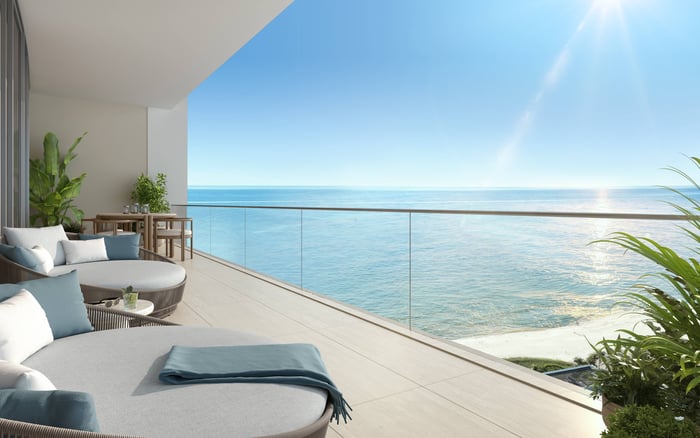
A discreet guide for luxury buyers considering W Pompano Beach Hotel & Residences within a Florida domicile strategy, with emphasis on residence selection, formal records, daily routine, and professional counsel.

For many high-net-worth buyers, South Florida is no longer simply a winter address. It is a preferred base for family life, wealth planning, work flexibility, wellness, and access to the Atlantic coast. Yet domicile is not created by taste, climate, or a signed purchase contract alone. It requires disciplined alignment among where one lives, what one’s formal records show, and how one’s ordinary routine actually unfolds.
That is the useful lens for evaluating W Pompano Beach Hotel & Residences, the branded hotel-and-residences project in Pompano Beach at the center of this discussion. For a buyer exploring Florida domicile, the question is not merely whether the residence is beautiful or convenient. The sharper question is whether the home can credibly support a consistent Florida life.
This article is not legal, tax, homestead, estate, or cross-border advice. Buyers should treat every domicile decision as counsel-led. The purpose here is practical and residential: to help luxury buyers think clearly about residence, records, and routine before they build an ownership strategy around a South Florida home.
Pompano Beach sits within the broader South Florida corridor that appeals to buyers seeking waterfront living, airport access, private clubs, marina-oriented habits, and a more residential rhythm than some denser urban neighborhoods. For the domicile-minded buyer, that lifestyle context matters because routine is often more persuasive when it is visible, ordinary, and repeatable.
A residence that functions as a true base should support the patterns of daily life: arrival and departure habits, health appointments, professional meetings, family visits, local memberships, and a credible cadence of time spent in Florida. That does not mean every buyer needs the same footprint. A seasonal executive, a family with adult children, and a principal managing several homes will each need a different plan.
The appeal of Pompano Beach is also shaped by its growing field of luxury residential choices. A buyer comparing the local market may naturally view W Pompano alongside Armani Casa Residences Pompano Beach, The Ritz-Carlton Residences® Pompano Beach, or Waldorf Astoria Residences Pompano Beach. The important distinction is not only brand preference. It is which property best fits the buyer’s intended pattern of use.
A thoughtful Florida domicile plan begins with a residence that can serve as a genuine home. For some buyers, that means a lock-and-leave condominium with hotel-style support. For others, it means more private square footage, storage, dedicated work areas, or proximity to specific family needs. In every case, the residence should be practical enough to use consistently, not merely impressive enough to own.
Formal records are the second pillar. These may include items a buyer’s advisers will review, such as identification, voter registration, vehicle records, estate documents, financial account addresses, insurance records, club memberships, and business materials. The point is not to check boxes casually. The point is to ensure the paper trail reflects the same intent the buyer is trying to establish.
Routine is the third pillar, and often the most revealing. Where does the buyer actually wake up? Where are medical and dental relationships maintained? Where are charities, schools, clubs, professionals, and household services centered? Where do packages arrive, guests visit, and cars sit? A Florida residence becomes more persuasive when the buyer’s daily life supports the same story as the formal paperwork.
W Pompano Beach Hotel & Residences is framed as a branded hotel-and-residences project, placing it within the broader universe of Branded Residences. That category can be attractive to buyers who value service culture, design identity, hospitality infrastructure, and simplified ownership. For a domicile-minded buyer, those qualities may be useful if they make it easier to occupy the home regularly and comfortably.
The hospitality component can also influence how a buyer evaluates the property. A condo-hotel or hotel-and-residences environment may offer convenience, but the domicile analysis should remain focused on actual use and intent. Buyers should understand how the ownership structure, rental rules, service model, and personal-use expectations interact with their broader planning goals, then review those details with qualified advisers.
This is where discretion matters. A luxury buyer may have homes in multiple jurisdictions, household staff, business entities, aircraft use, club memberships, and family obligations across borders. The residence selected in Pompano Beach should not exist in isolation. It should sit within a coordinated plan that allows counsel to explain why Florida is the buyer’s true home, not simply another attractive address.
The most elegant residence can be undermined by inconsistent records. If a buyer intends to make Florida the center of life, formal documents should not casually point elsewhere. That includes obvious items, but also the quieter administrative details that tend to accumulate over years of multi-home living.
The best practice is to create a counsel-led records review before closing or soon after a binding decision is made. The review should identify what needs to change, what should remain unchanged for legitimate reasons, and what timing is appropriate. Some changes may be straightforward. Others may have tax, estate, business, immigration, or family-law implications that deserve careful sequencing.
For a second-home buyer, the distinction is especially important. A second home can be an extraordinary lifestyle asset without being a domicile anchor. If the goal changes from occasional use to Florida domicile, the records and routine should change as well. The home, the calendar, and the paperwork should begin moving in the same direction.
Domicile planning often becomes most credible in the ordinary details. A buyer may spend more time in Florida, shift professional advisers, establish local physicians, host family in South Florida, attend local events, join nearby organizations, and organize household logistics around the Florida address. None of these details should be manufactured. They should reflect a life that is genuinely being lived.
That is why the residence matters so much. If W Pompano Beach makes it easier for a buyer to arrive often, stay longer, work comfortably, receive guests, and maintain local habits, it may support the practical side of the plan. If another residence better fits family or privacy needs, that should be weighed candidly. The right home is the one a buyer will actually use.
This distinction matters because luxury real estate is not only about acquisition. It is about fit. A property that aligns with a buyer’s routine can be more valuable to the overall plan than one chosen purely for prestige.
Before connecting a purchase to a domicile strategy, buyers should ask whether the residence can support extended stays, whether household services are easy to maintain, whether the local area fits daily needs, and whether the property’s rules support the expected use pattern. In a branded environment, buyers should also understand how hotel operations and residential life intersect.
Buyers should ask counsel how to document intent without overstatement. They should also review whether homestead, estate planning, entity ownership, cross-border status, or state tax exposure affects the ownership structure. The cleanest strategies are usually the ones built early, before records become fragmented and habits become hard to explain.
For comparison, a buyer focused on the same shoreline may also consider Ocean 580 Pompano Beach as part of a broader review of how much space, service, privacy, and simplicity the Florida home should provide. The exercise is not to collect names. It is to identify the address that can become the most believable center of life.
Can buying W Pompano Beach Hotel & Residences establish Florida domicile by itself? No. A residence may support a domicile plan, but domicile generally depends on consistent intent, records, and routine reviewed with counsel.
Why are records important in a domicile strategy? Records help show whether the buyer’s formal life aligns with Florida. Inconsistent documents can weaken an otherwise coherent plan.
What does routine mean in this context? Routine refers to the buyer’s real day-to-day life, including time spent, appointments, services, memberships, and household habits.
Is Pompano Beach appropriate for a domicile-focused buyer? It can be, if the residence and local lifestyle genuinely support the buyer’s Florida routine and long-term intent.
Do branded residences help with domicile planning? They may help if services and convenience encourage real use, but the brand itself does not establish domicile.
Should buyers review tax issues before signing a contract? Yes. Tax, estate, homestead, entity, and cross-border questions should be addressed by qualified advisers early.
Can a second home become a domicile residence? Potentially, but only if the buyer’s records and routine begin to reflect Florida as the true home.
Does a hotel-and-residences structure change the analysis? It can affect practical use, rental rules, and ownership structure, so buyers should review details with counsel.
How should buyers compare Pompano Beach projects? They should compare how each property supports actual use, privacy, service needs, family patterns, and records alignment.
What is the best first step for a serious buyer? Start with a coordinated conversation among real estate, tax, legal, and estate advisers before finalizing the plan.
For a discreet conversation and a curated building-by-building shortlist, connect with MILLION.
If branded residences are on your mind — as a home or as an allocation — we would be glad to share what we are seeing, privately.
Begin a quiet conversation