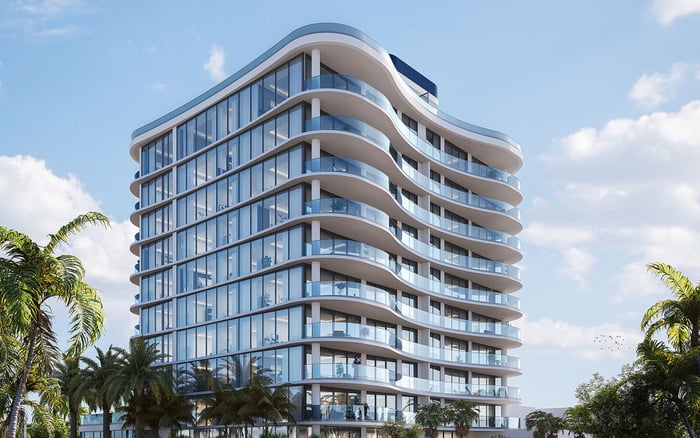
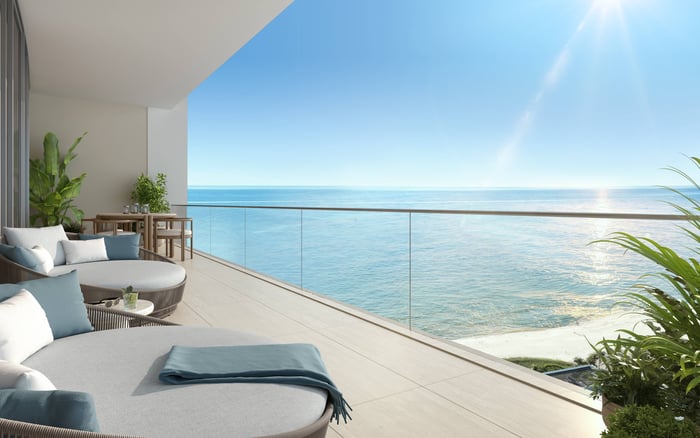
A family-office assessment of Ocean 580 and W Pompano Beach, distinguishing unresolved operating arrangements from contractual brand dependencies, with a focus on governance, service costs, and enforceable owner rights.

For a family office, a coastal residence is both a private retreat and a long-duration ownership commitment. The decisive questions extend beyond architecture: who controls the budget, who delivers the services, and what recourse does an owner have if performance falls short? In Pompano Beach, Ocean 580 and W Pompano Beach Hotel & Residences present distinct diligence priorities.
The distinction is not a verdict on quality. Ocean 580’s central unresolved issue is its long-term operating model. W’s central documented dependency is the continuation of its branded management agreements. Neither a developer’s experience nor a hospitality name, standing alone, establishes enforceable service standards or owner remedies.
A disciplined acquisition review should separate development responsibility, association governance, operating obligations, and individual enforcement rights. They are related, but not interchangeable.
At Ocean 580 Pompano Beach, Claridge Homes is the identified developer, with stated experience spanning nearly 100 projects across condominium, hotel, housing, and retirement-community sectors. That background provides context; it does not settle the residence’s future management arrangements.
The final association-management company, the developer-to-owner board-control timetable, and any third-party hospitality operator remain unconfirmed. A Marriott or other branded-hotel management agreement is also unverified. Buyers should therefore avoid assuming Ocean 580 has a hotel operating platform without documentary confirmation.
The developer-furnished documents required by Section 718.503, Florida Statutes, should anchor a family office’s review. Request the declaration, bylaws, proposed budget, management contract, reserve disclosures, insurance schedule, warranties, construction timetable, and developer-turnover provisions.
The objective is to establish which services are binding obligations, who funds them, and who can revise them. An undisclosed provision is not necessarily an absent one; it is a question to resolve before committing capital.
At W Pompano Beach Hotel & Residences, the legal developer is 20 North Oceanside Owner, LLC, which uses W Hotels trademarks and trade names under a Marriott license. Related Group and BH Group are the identified development team.
Marriott International, W Hotel Management, and their affiliates do not own, develop, or sell the project. Marriott International is the planned manager of on-site hospitality services. The distinction matters: development obligations, management duties, and trademark permissions should be evaluated separately, not treated as one corporate promise.
The structure includes a residential condominium association, a hotel condominium association, and a master association. Owners must pay applicable master-association fees. Buyers should establish which association controls each facility, approves each budget, and holds each relevant contract, then determine how their ownership component participates in those decisions.
W’s associations must maintain residential condominium-management and hotel-management agreements with Marriott or its successor to use the W name and provide the described branded services. W and Marriott services and benefits depend on those agreements being entered into and remaining in effect.
That condition belongs in the investment memorandum, not merely the legal appendix. The review should address contract duration, renewal mechanics, successor-board obligations, termination triggers, termination costs, and replacement-operator standards. It should also establish what happens to branding, amenity access, staffing, and service delivery if an agreement ends.
A wider Broward shortlist might include The Ritz-Carlton Residences® Pompano Beach. The useful comparison is not the prominence of the name, but the obligations in each project’s own documents. W’s conditions should not be presumed to apply to another residence.
For Ocean 580, continuity analysis begins one step earlier: identifying the operating arrangement itself. Only then can counsel assess whether future boards can change managers and which service obligations would survive that change.
W’s advertised residential services include 24-hour security, valet parking, butler, doorman, porter, delivery, and personal assistance. Marketed owner amenities include a private pool deck, outdoor barbecue area, owner’s club lounge, and fitness center, alongside access to hotel amenities.
The described hospitality operation also encompasses front-desk staffing, concierge personnel, package-room attendants, uniform key-entry service, and customary daily maid service. These descriptions do not confirm that every service is included in every owner’s regular assessments.
Create a service schedule that identifies the operative document, responsible entity, access conditions, and charging basis for each offering. Determine whether each service is mandatory, discretionary, separately charged, or budget-dependent. Guaranteed service levels and fixed long-term fees remain unestablished.
For shared facilities, request the fee-allocation methodology and identify owners’ audit and information rights. A private amenity and a shared hospitality function may raise different cost questions; the governing documents must resolve them.
W’s ownership components should not be conflated. The project is described as including 296 fully furnished condo-hotel units alongside a separate residential component. A family office should first confirm which component it is acquiring, then review the applicable occupancy, rental, and expense provisions.
Condo-hotel units are described as eligible for a hotel rental program when owners are not occupying them, with bookings, housekeeping, guest services, and marketing handled by the hotel. A described personal-occupancy limit of up to 180 days annually requires confirmation in the executed ownership and rental-program documents. It should not be assumed to govern the separate residential component.
Guaranteed rental income and occupancy remain unestablished. Any income model should therefore treat program charges, use restrictions, and operating assumptions as matters for verification, not promised returns.
For Ocean 580, project-specific management-termination rights, service-level guarantees, turnover dates, and dispute-resolution provisions remain unestablished. For W, the documented management dependency does not establish that an individual owner can terminate Marriott’s agreement or compel continued W service.
Counsel should identify the contracting parties, association authority, individual enforcement rights, notice and cure procedures, available remedies, and replacement-operator process. The practical question is not simply whether a right exists, but who can exercise it and at what cost.
Buyers also considering Waldorf Astoria Residences Pompano Beach should apply the same document-led review without importing assumptions from W. A recognizable name is not a substitute for project-specific recourse.
Ocean 580 calls for confirmation of the operating model; W calls for scrutiny of a documented branded-management dependency. Neither distinction alone establishes a preferable acquisition. The stronger choice for a particular family is the one whose control structure, service obligations, costs, and remedies align with its intended use.
Explore South Florida residences with a more discerning ownership perspective at MILLION.
If branded residences are on your mind — as a home or as an allocation — we would be glad to share what we are seeing, privately.
Begin a quiet conversationOcean 580’s long-term operating model remains unconfirmed. W’s branded services depend on its management agreements being entered into and remaining in effect.
Claridge Homes is identified as the developer. Its stated experience spans nearly 100 projects across several property sectors.
A Marriott or other branded-hotel management agreement remains unverified. Buyers should not assume a branded operating platform.
No; the legal developer is 20 North Oceanside Owner, LLC. Marriott International, W Hotel Management, and their affiliates do not own, develop, or sell the project.
The structure includes a residential condominium association, a hotel condominium association, and a master association. Applicable master-association fees are payable by owners.
No. Use of the W name and delivery of branded services depend on the required management agreements remaining in effect.
The service descriptions do not establish that every offering is included in regular assessments. Buyers should confirm charging arrangements, access conditions, and budget dependencies in the operative documents.
The described limit concerns condo-hotel ownership and requires confirmation in executed documents. It should not be assumed to apply to the separate residential component.
Individual termination authority should not be assumed. Counsel must identify the contracting parties, association powers, enforcement rights, and replacement procedures.
Guaranteed rental income, occupancy, service levels, and fixed long-term fees remain unestablished. These should not be treated as promised acquisition outcomes.