Shore Club’s planned private arrivals and hospitality services offer an appealing framework for long-term ownership. Buyers should separately verify accessible routes, household-staff permissions, residence layouts, and the practical boundaries of resort service.
Oceanfront ownership becomes more compelling when a residence can accommodate changing routines without sacrificing privacy or independence. At Shore Club Private Collections Miami Beach, the long-term question is not simply which services are advertised, but how a household would move through the property with a caregiver, visiting clinician, or mobility aid.
Planned for approximately three oceanfront acres at 1901 Collins Avenue in South Beach, the development combines 49 marketed homes with an Auberge hotel component of approximately 75 suites. The residential program comprises 44 tower residences, four duplexes in the landmarked building, and an approximately 6,000-square-foot beach house.
Those distinctions matter. A tower residence, duplex, and beach house each require a review of their own layout and circulation. All features discussed here are advertised or planned, not assurances of completion or current operating policy. For a buyer anticipating decades of use, the strongest measure of luxury is everyday usability.
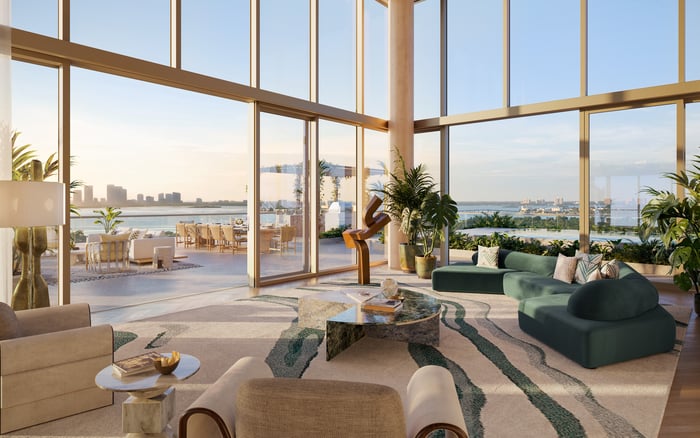
The planned private residential entrance and dedicated lobby establish an arrival point distinct from the hotel entrance. The lobby is described as a sculptural, double-height space overlooking botanical gardens. Secure underground parking with dedicated elevator access and valet service are also advertised.
These are useful starting points, not confirmation of a continuous accessible route. Buyers should request a plan tracing movement from the vehicle drop-off and parking area through every door, elevator, and threshold to the residence. Review clearances, turning space, gradients, seating opportunities, and the distance involved.
A route can be elegant yet inconvenient for someone using a walker or traveling with assistance. Ask where a passenger can transfer without being hurried, whether an aide may accompany the resident through every controlled access point, and what alternative is available during an elevator outage.
For buyers also considering Setai Residences Miami Beach, the same route-by-route review offers a disciplined comparison without assuming equivalent access arrangements.
A private residential entrance is not proof that deliveries, household employees, hotel guests, and residents remain separated throughout the property. The advertised arrival arrangement does not establish dedicated freight elevators, back-of-house corridors, or independent delivery routes.
Request circulation drawings and operating rules together. Drawings explain where people can move; rules explain who may use those routes and when. Ask which elevator accommodates furniture, medical equipment, grocery deliveries, and recurring household staff. Confirm whether reservations or restricted hours could complicate a household’s routine.
The advertised driver/chauffeur room warrants the same scrutiny. It is not established as a lounge for caregivers or other household employees. Ask who may enter, whether waiting is permitted between assignments, and where an aide would wait if access is unavailable.
Discretion depends on predictable arrangements. A beautiful lobby cannot substitute for a clear plan governing shift changes, deliveries, and after-hours staff arrivals.
A household employing regular assistance should define its needs before evaluating the service offering. Occasional companionship, daily personal assistance, and overnight support place different demands on access, parking, and privacy.
Ask management to confirm recurring visitor credentials, identification requirements, elevator permissions, overnight-aide rules, and procedures for substitute caregivers. Establish whether credentials attach to a named individual or an agency, and how an unexpected replacement would enter late at night.
Parking requires its own written confirmation. Dedicated elevator access from underground parking does not establish that caregivers may park there, use that elevator, or avoid additional charges. Clarify permitted hours, vehicle registration, and any valet or parking fees.
Emergency procedures are equally important. Request the protocol for admitting emergency responders and assisting residents when normal circulation is disrupted. These questions do not predict difficulty; they help preserve autonomy as a household’s needs change.
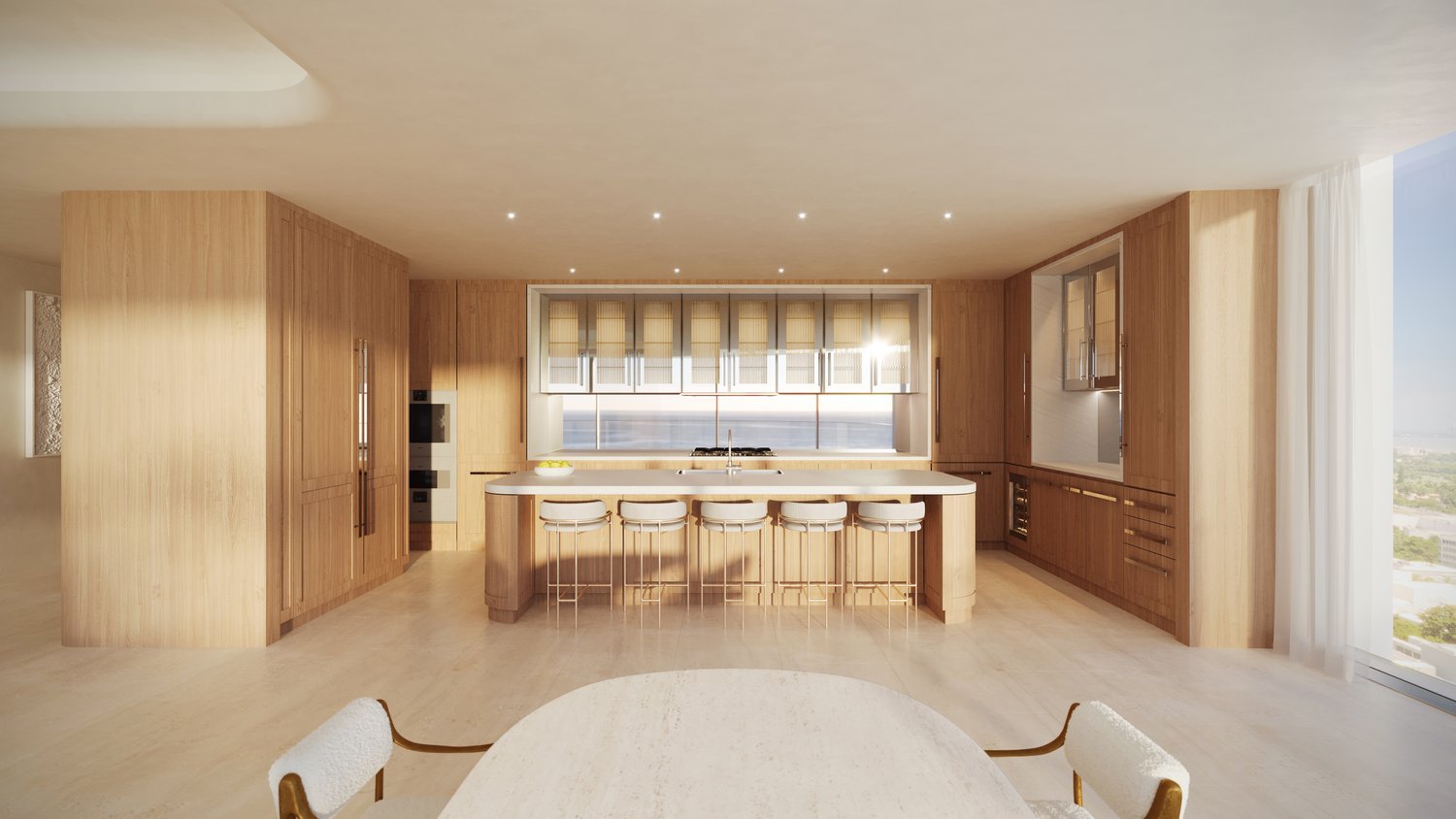
Generous floor area is not a substitute for a usable plan. The test is whether the bedrooms, bathrooms, kitchen, and principal living spaces can support the resident’s routine with enough room for assistance.
Review doorway clearances, bathroom maneuvering space, shower access, and thresholds with a qualified accessibility professional. Neither the advertised residence count nor the overall program establishes those details. For the duplexes, verify movement between levels rather than assuming step-free access.
Assess a potential caregiver bedroom for privacy, bathroom proximity, and nighttime access to the resident. Consider where supplies could be stored without turning principal rooms into work areas. Do not assume the approximately 6,000-square-foot beach house resolves these questions through size alone.
When comparing a candidate home at The Perigon Miami Beach, apply the same floor-plan test rather than treating project identity as evidence of suitability.
The advertised residential amenities include a private pool and lap pool, library, private meeting and dining rooms, and a beach club with dedicated cabana service. For long-term use, indoor destinations deserve attention alongside the ocean: a library or dining room may offer an appealing routine when outdoor recreation is less practical.
Verify both physical access and companion permissions. The amenity descriptions do not establish pool lifts, accessible changing facilities, or wheelchair access across the sand. Ask whether an aide may accompany a resident to the pool, beach, library, or dining room, and whether reservations or charges apply.
The children’s playroom and VR game simulator likewise do not establish supervision or childcare. Review the advertised social membership to Shell Bay Club separately for caregiver and household-staff privileges. An owner benefit does not, by itself, establish who may accompany that owner.
The advertised service program includes 24-hour reception and concierge, Auberge-managed restaurants and bars, direct beach service, and a full-service spa. Wellness offerings also include a beauty atelier, private residential gym, and personal-training suites.
Hospitality can support an enjoyable daily routine, but these offerings do not establish nursing, physical therapy, lifeguarding, or medical-visit coordination. Buyers should distinguish services included in ownership from optional paid services and tasks that must remain with independently retained professionals.
Nor does the 49-home count establish staffing ratios, response times, or priority over hotel guests. Request written service scopes and fees, then test them against an ordinary day: an early caregiver arrival, an equipment delivery, an accompanied swim, and an overnight shift change.
Shore Club’s planned private arrivals and resort services offer a compelling framework. Long-term suitability depends on the verified route, the individual residence, and the operating permissions that make that framework usable.
Explore South Florida residences with a long-term ownership perspective at MILLION.
If branded residences are on your mind — as a home or as an allocation — we would be glad to share what we are seeing, privately.
Begin a quiet conversationThe oceanfront residential-and-hotel development is planned at 1901 Collins Avenue in South Beach, Miami Beach, on approximately three acres.
The program comprises 49 homes: 44 tower residences, four duplexes in the landmarked building, and one approximately 6,000-square-foot beach house.
Separate entrances are planned, with a private residential entrance and dedicated lobby. This does not establish complete separation of internal service routes or hotel traffic.
Step-free routes, doorway clearances, accessible showers, pool lifts, and wheelchair access across the sand are not established. Buyers should verify the full route and individual residence.
Secure underground parking with dedicated elevator access is advertised, but caregiver permissions are not established. Confirm access rights, permitted hours, and fees in writing.
A driver/chauffeur room is advertised, but access for caregivers and other household staff is not specified. Its permitted uses require confirmation.
The advertised 24-hour reception and concierge do not establish nursing, physical therapy, or medical-visit coordination. Hospitality services should be evaluated separately from professional care.
Step-free movement between duplex levels is not established. Review the specific layout and vertical circulation before assessing long-term suitability.
Caregiver privileges for the pools, beach club, other residential amenities, and Shell Bay Club social membership require confirmation. Ask about credentials, reservations, and additional charges.
Request arrival-to-home route plans, service-elevator rules, caregiver-access policies, emergency procedures, and written service fees. Review these alongside the actual residence floor plan.