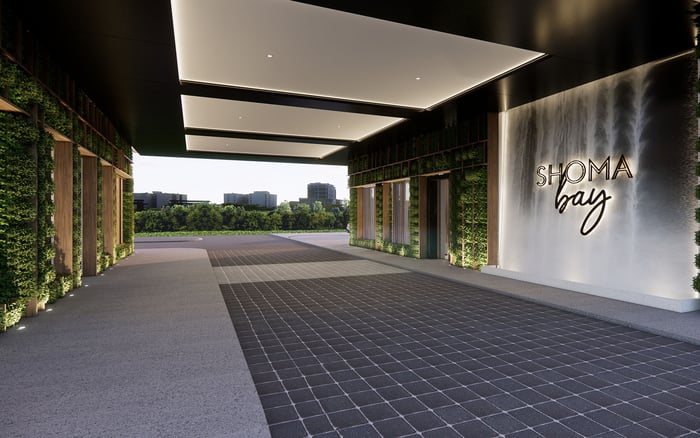
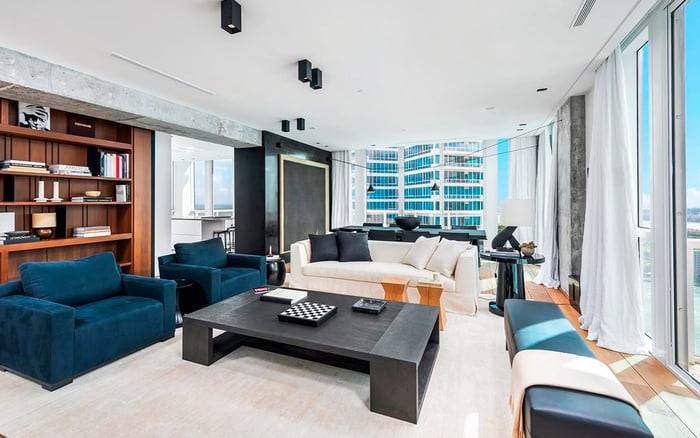
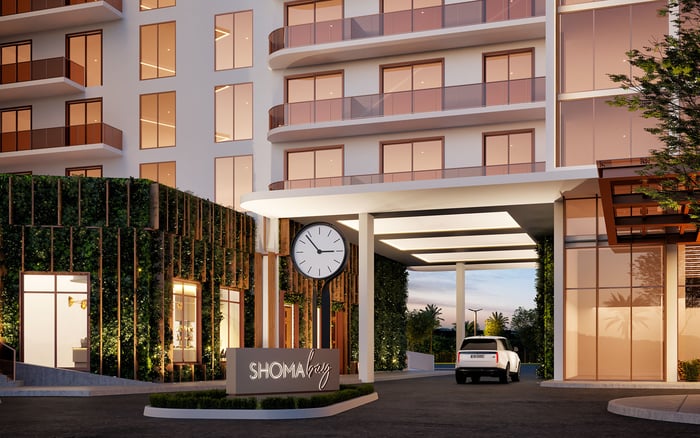
Shoma Bay pairs extensive conveniences with the practical realities of seasonal condominium ownership. For buyers planning long summer absences, genuine lock-and-leave ease begins with written building rules, private-unit safeguards and a clear storm-response plan.
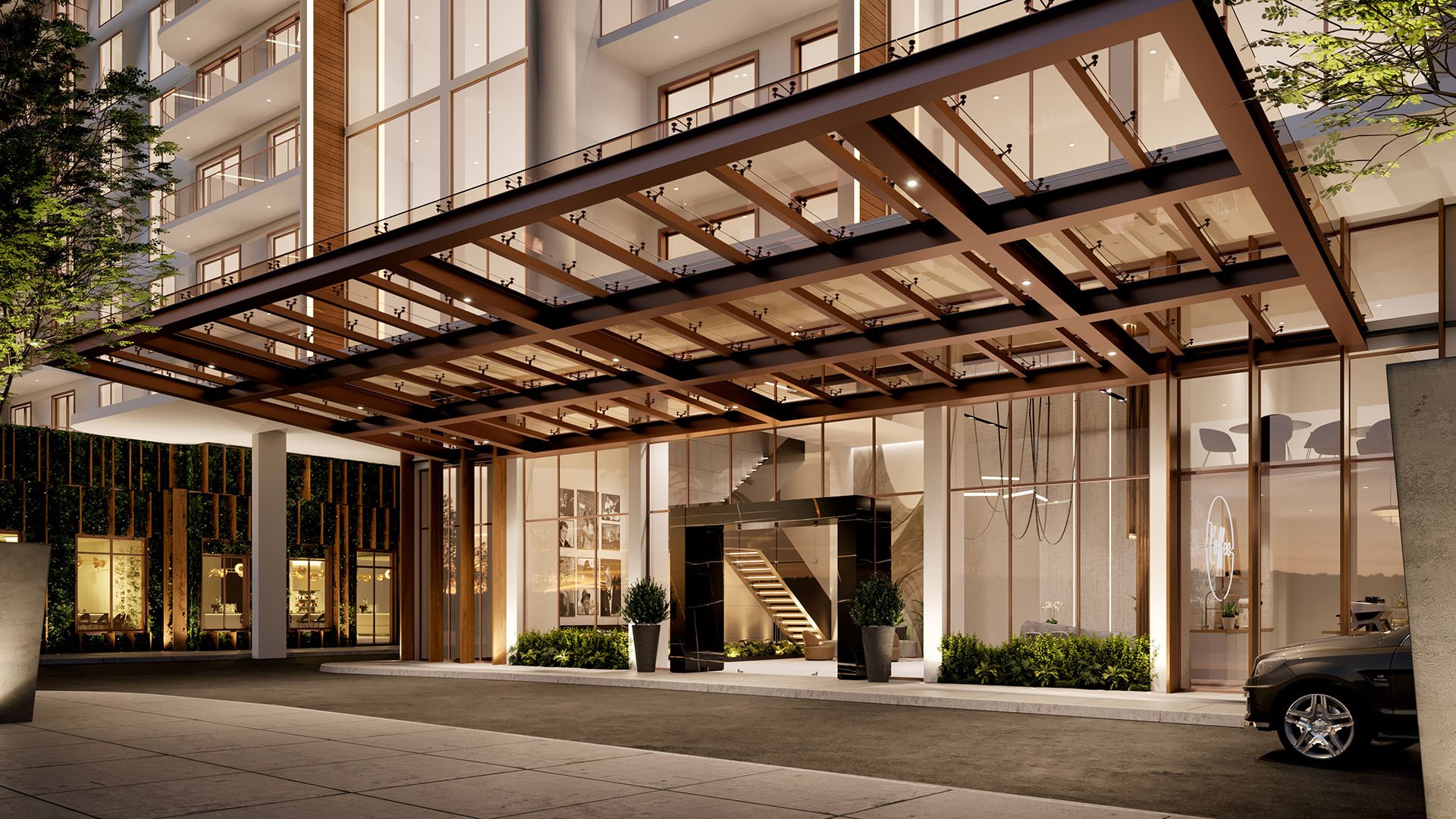
The appeal of Shoma Bay North Bay Village is readily apparent. Planned for 1850 John F. Kennedy Causeway, the 24-story waterfront development is designed to pair 333 residences with a 35,037-square-foot Publix and 15,628 square feet of additional retail. For owners who divide their time among several homes, that mix places daily essentials close at hand and reduces routine friction.
The building's marketed conveniences reinforce the proposition: 24-hour security and video surveillance, a concierge-style lobby, mobile package management, refrigerated grocery storage and resident storage. A gated garage, electric-vehicle charging, bicycle storage and paddleboard storage further support streamlined arrivals and departures.
Yet lock-and-leave is a lifestyle benefit, not a transfer of every ownership obligation. Security oversees the property environment. A concierge facilitates services. Package systems manage deliveries. None should be presumed to secure furnishings on a private balcony, manage hurricane protection, monitor air conditioning or enter a residence after a power loss unless the governing documents and building policies expressly provide for it.
True lock-and-leave ownership depends on documented responsibilities, not assumptions about service.
Atlantic hurricane season runs from June 1 through November 30, overlapping with many owners' summer absences. Seasonal planning therefore needs to be completed before departure, not after a named storm begins to organize.
Owners should continue monitoring official public updates before, during and after severe weather rather than relying solely on building communications. Preparedness planning should encompass hurricane information, evacuation centers, evacuation pickup sites, flooding and pets. Property and objects that could become hazards should also be secured when severe weather threatens.
For a waterfront residence, the practical question is who handles each action-and by what deadline. Building personnel may prepare common areas while owners remain responsible for residence interiors and private outdoor spaces. The eventual Shoma Bay declaration, rules, resident handbook and board policies should define that boundary. Those final documents were not included in the materials reviewed for this article, so buyers should obtain and examine them before closing or any extended absence.
A disciplined summer plan begins with a written vacancy procedure. Ask whether an owner must notify management before leaving, identify an emergency contact or provide authorized access. Confirm how keys, digital credentials and alarm instructions are held; who may enter; what event permits entry; and how the owner will be informed afterward.
The balcony deserves separate attention. Determine when furniture, planters, grills or decorative objects must be moved, where they may be stored and whether staff offers paid or included assistance. A storm watch can leave little time to coordinate vendors, particularly when an owner is abroad.
Next, clarify the residence's operating requirements. Ask whether rules address minimum air-conditioning settings, humidity control, water shutoff, leak detection, appliance preparation or electrical continuity. The objective is not merely storm protection. It is also to prevent mold, water damage and unnoticed mechanical failures during a prolonged absence. Any monitoring arrangement should specify the responsible party, inspection frequency, reporting method and limits of service.
Finally, establish the hurricane-protection protocol. An owner may not act within a unit or on common elements in a manner that adversely affects the property's safety or soundness. Responsibility for removing and reinstalling hurricane protection can depend on the declaration, who installed the protection and board determinations. Buyers should therefore avoid assuming that windows, doors or protective systems are entirely an association matter.
Association insurance and an owner's policy perform different functions. Condominium associations must use their best efforts to maintain adequate property insurance for association property, common elements and other property they are legally required to insure. That obligation does not eliminate the need for owner coverage suited to the residence, its contents, improvements and personal exposures.
Before departure, owners should review deductibles, exclusions, loss-assessment considerations and notification requirements with qualified insurance and legal advisers. They should also document interiors and valuable contents, retain remote access to policy and contact information, and understand whether an extended vacancy affects any coverage or claim condition. Investment objectives do not lessen these operational duties, even when a residence is occupied only intermittently.
Building-specific provisions can be more exacting than general public guidance. Some condominium rules in North Bay Village, for example, require special precautions for certain extended vacancies and part of hurricane season. Those are not Shoma Bay's rules, but they illustrate why a buyer must examine the documents governing the particular building rather than rely on assumptions carried over from another address.
Lock-and-leave buyers often compare more than architecture. They compare staffing, storage, access control, emergency procedures and the clarity of owner obligations. Nearby Continuum Club & Residences North Bay Village and Tula Residences North Bay Village offer useful points of discussion when buyers assess the area's evolving residential choices. Across the water, Onda Bay Harbor broadens the comparison to another island-oriented setting.
The relevant exercise is not to presume identical services, but to ask each property the same practical questions: Who prepares common areas? Who handles private terraces? Are periodic residence checks available? What happens to refrigerated deliveries during an outage? How are garage access and electric-vehicle charging managed when weather disrupts normal operations? Consistent questions make differences in service and governance easier to identify.
Buyers considering Miami Beach or other coastal addresses should apply the same discipline. New-construction quality, extensive amenities and attentive staff can elevate daily life, but they do not replace a residence-specific absence plan.
Shoma Bay's planned amenity program is broad. It includes an owners' lounge, golf simulator, spa, Hammam, sauna, steam room, fitness facilities, yoga and Pilates areas, coworking spaces, a cinema, children's facilities and a pet spa. An approximately 6,030-square-foot pool deck is planned with a pool, cabanas, outdoor showers and a summer kitchen overlooking Biscayne Bay.
These features shape the experience of being in residence. The Publix, additional retail and package facilities can make returning after weeks away notably convenient. For a second-home owner, however, the deeper luxury is confidence that the home has been properly managed during an absence.
That confidence comes through documentation and execution: confirmed responsibilities, current insurance, authorized access, a local contact, remote monitoring where permitted, and a storm checklist that can be activated without improvisation. In this sense, Shoma Bay's convenience proposition is strongest when paired with exacting ownership preparation. This is the central lesson of a practical buyer's-guide approach to seasonal condominium living.
For discreet guidance on Shoma Bay and South Florida lock-and-leave ownership, connect with MILLION.
If branded residences are on your mind — as a home or as an allocation — we would be glad to share what we are seeing, privately.
Begin a quiet conversationAtlantic hurricane season runs from June 1 through November 30, overlapping with many owners' summer absences.
Yes. Marketed features include 24-hour security and video surveillance, along with a concierge-style lobby.
Owners should not assume so. Private-unit responsibilities depend on the condominium documents, rules and board policies.
Confirm vacancy notices, emergency access, balcony requirements, hurricane protection, air conditioning, water shutoff and power-continuity procedures.
Responsibility can depend on the declaration, who installed the protection and determinations made by the board.
No. Association insurance addresses specified association property, while owners should arrange coverage appropriate to their residence and personal exposures.
No. Residents should also monitor official public updates before, during and after severe weather.
Objects that could become hazards should be secured, with particular attention to furniture and other items on private outdoor spaces.
The project plans a 35,037-square-foot Publix and 15,628 square feet of additional retail.
The planned 24-story development includes 333 waterfront residences.