A buyer-focused editorial on how to evaluate Shell Bay by Auberge Hallandale beyond its opening-day landscape imagery, with emphasis on coastal durability, drainage, irrigation, hurricane readiness, and long-term operating costs.
At the ultra-premium end of South Florida real estate, landscape is not decoration. It is part of the daily experience, part of the operating budget, and, over time, part of the resale story. For buyers evaluating Shell Bay by Auberge Hallandale, the essential question is not whether the renderings are beautiful. It is whether the outdoor environment is planned to remain composed after years of salt exposure, wind stress, heavy rain, periodic flooding, and intensive use.
That scrutiny matters in Hallandale, where coastal conditions can test planting, turf, drainage, irrigation, paving, and outdoor amenity zones. Opening-day landscaping often presents a polished, fully mature vision. Long-term performance is different. It depends on root space, soil depth, drainage, plant selection, inspection routines, storm preparation, and the financial structure that pays for maintenance after the first wave of marketing has passed.
For a new-construction buyer, the most refined due diligence is practical rather than cynical. It asks how the landscape is built, who maintains it, what standards apply, and how replacement decisions are funded.
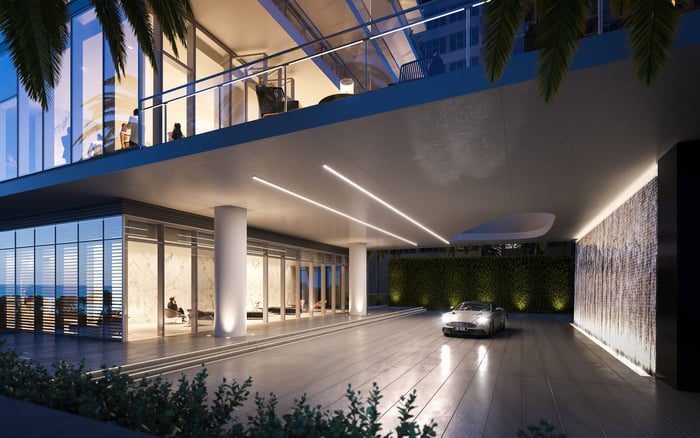
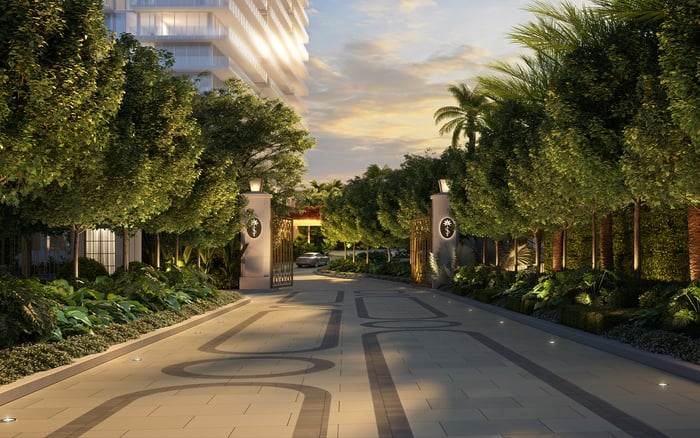
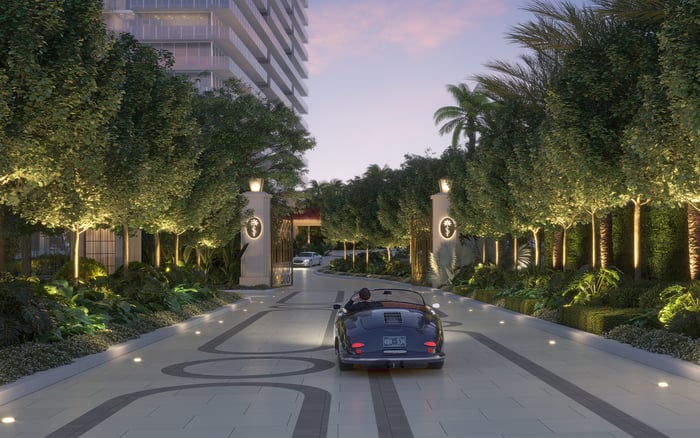
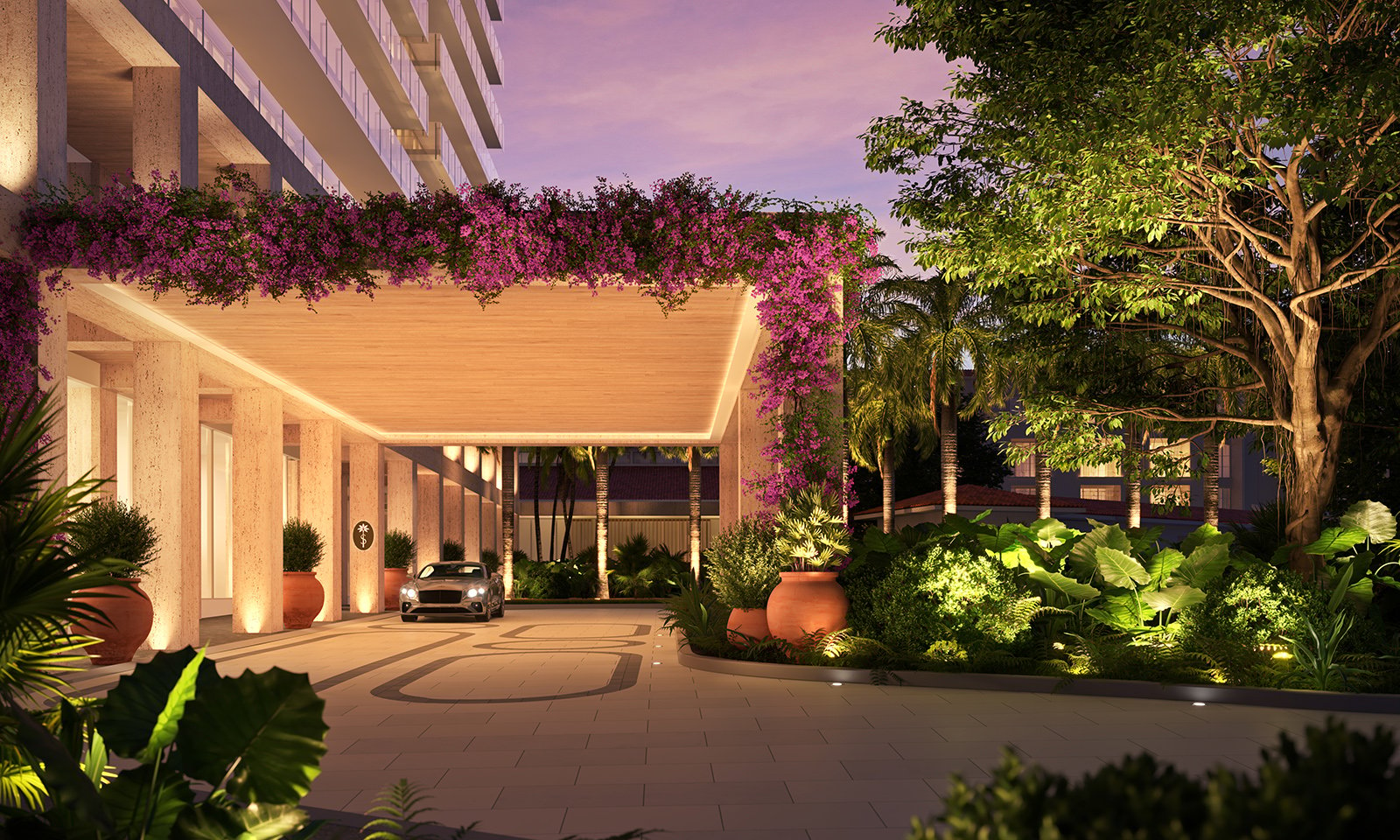
Renderings are designed to convey atmosphere. They may show shaded arrival sequences, lush grounds, manicured pathways, poolside planting, and greenery in a controlled visual language. A buyer’s review should go beneath that surface, separating intended appearance from durability over many years.
The first area to verify is the plant palette. Coastal South Florida landscapes need more than sculptural palms and lush tropical massing. Buyers should ask whether selected species are suited to salt exposure, wind pressure, heavy rainfall, standing water, and periodic flooding. A planting plan can look exceptional in presentation material while still being demanding to maintain if root zones, soils, and irrigation systems are not aligned with local conditions.
The second area is construction detail. Soil depth, planter drainage, root-zone protection, wind exposure, and salt-tolerant material choices all influence whether landscaping settles gracefully or begins to show stress. In luxury buildings, the visual threshold is unforgiving. Entry drives, outdoor approaches, paths, and amenity terraces are expected to feel immaculate even after difficult weather.
Drainage rarely appears in the romance of a sales presentation, yet it may be one of the most consequential elements in the landscape package. Water management affects turf performance, planting beds, pedestrian comfort, hardscape usability, and recurring maintenance costs. If an area holds water too long, the consequences can appear as weakened plant material, soft ground, staining, surface deterioration, or repeated repair cycles.
Buyers should ask how drainage is designed around high-visibility outdoor areas, including entry landscapes, pool decks, walkways, planted courtyards, and any waterfront-adjacent zones where applicable. The question is not only where water goes during normal rain, but how the site is intended to recover after heavier events. A resilient landscape should be planned around the realities of South Florida weather, not a single perfect day.
This is where view value and landscape engineering meet. A beautiful outlook can be diminished if the ground plane below it is difficult to maintain, slow to drain, or costly to restore after storms. For buyers in Broward’s coastal luxury corridor, water management should be reviewed as carefully as finishes, views, and private amenity access.
Irrigation specifications deserve direct review. Buyers should ask about source water, salinity tolerance, zoning, smart controls, and maintenance access. A sophisticated system should not simply keep planting green. It should deliver the right amount of water to different landscape zones, respond efficiently to weather, and allow maintenance teams to service equipment without disrupting the resident experience.
Zoning matters because a turf area, a shaded planting bed, and a wind-exposed edge do not have identical needs. Smart controls may help reduce waste and respond to changing conditions, but they are only as effective as the underlying design and maintenance discipline. Access points matter as well. If service areas are difficult to reach, even excellent systems can become more expensive to maintain over time.
Salt is another quiet variable. Buyers should confirm whether both plant material and irrigation assumptions have been tested against coastal exposure. The issue is not merely survival. In a luxury setting, the expectation is consistent visual quality, controlled growth, and disciplined recovery from stress.
Shell Bay by Auberge Hallandale should also be evaluated through the lens of outdoor maintenance at edges, transitions, and high-use zones. Buyers should ask how perimeter landscapes, waterfront-adjacent areas where applicable, paved approaches, and planted amenity spaces are inspected and cared for over time. These areas can be both visually important and operationally sensitive.
The same level of inquiry should apply to outdoor standards. What is the expected maintenance condition for entry landscapes, pool decks, paths, and shared outdoor spaces? How frequently are these zones inspected? What is considered acceptable plant loss, turf wear, or storm-related disruption before corrective action is taken?
For a buyer comparing Shell Bay by Auberge Hallandale with other premium South Florida offerings, the distinction may be less about the promise of greenery and more about the discipline behind it. Mature luxury landscapes require contracts, schedules, reserves, pruning programs, drainage oversight, irrigation monitoring, and clear accountability.
Landscape maintenance budgets should be evaluated separately from general amenity marketing. Turf, trees, irrigation, drainage, and storm cleanup can drive recurring costs. A broad lifestyle presentation may be elegant, but buyers should still understand which entity pays for routine landscape care, which budget covers capital replacements, and how storm recovery is handled.
The operating model should make responsibility clear. Routine mowing and planting care are one category. Major irrigation repairs, tree replacement, drainage upgrades, and post-storm restoration are another. Buyers should ask whether reserves contemplate replacement cycles and whether future coastal conditions could require upgrades beyond ordinary maintenance.
This is not only an expense question. It is a governance question. The best-maintained properties usually have clarity around standards, responsibility, and funding before a problem appears.
Hurricane preparedness should be part of the landscape operations plan. Buyers should ask about pruning protocols, loose-object removal, post-storm debris response, and replacement reserves. In a high-service environment, recovery time matters. Residents will notice whether paths reopen quickly, outdoor amenity areas are cleaned efficiently, and damaged plant material is replaced with discipline.
Trees are especially important. Their placement, pruning, anchoring, and species selection can influence both safety and long-term appearance. Loose furnishings and decorative landscape elements should also have a defined storm protocol. A luxury property’s outdoor identity depends on the ability to prepare before weather events and restore order afterward.
Long-term resale value may depend partly on whether Shell Bay’s outdoor spaces remain resilient and well maintained after the initial launch period. A buyer touring soon after completion may see the property at its most curated. A future buyer will see how the landscape has aged.
That difference is material. Outdoor areas are among the first signals of stewardship. Healthy trees, functional drainage, clean hardscape, controlled turf, and composed planted edges suggest disciplined ownership and strong operations. Tired planting, recurring washouts, irrigation problems, or slow storm recovery can tell another story.
For Shell Bay by Auberge Hallandale, the right questions are direct: What is designed to last? What will require replacement? Who decides? Who pays? And what standards will preserve the property’s landscape character when the renderings are no longer the reference point?
What should buyers verify first about Shell Bay’s landscaping? Start with the difference between visual renderings and the actual landscape maintenance plan, including plant selection, drainage, irrigation, and replacement responsibilities.
Why is salt tolerance important in Hallandale? Coastal exposure can stress plants, irrigation assumptions, and materials. Buyers should confirm whether the landscape is planned for salt, wind, rain, and periodic flooding.
Should landscape maintenance be reviewed separately from amenities? Yes. Turf, trees, irrigation, drainage, and storm cleanup can create recurring costs that should be understood apart from general lifestyle descriptions.
What drainage questions are most important? Ask how water is moved away from turf, planting beds, walkways, pool decks, and other high-use outdoor areas after ordinary rain and heavier weather.
Why does irrigation access matter? Maintenance access affects how efficiently teams can service valves, controls, lines, and zones without disrupting high-visibility outdoor areas.
What should buyers ask about outdoor edge conditions? They should ask how perimeter areas, planted transitions, paved approaches, and waterfront-adjacent zones where applicable are inspected, maintained, and restored.
How does hurricane planning affect landscaping? A strong plan should address pruning, loose-object removal, debris cleanup, damaged plant replacement, and the reserves needed for recovery.
Can landscape quality influence resale? Yes. Future buyers often read outdoor condition as a sign of operating discipline, capital planning, and long-term property stewardship.
What operating documents should buyers review? Buyers should seek clarity on routine care, capital replacement, storm recovery, landscape standards, and the budget structure for shared outdoor spaces.
Is this only a concern for waterfront buyers? No. Even residences without direct waterfront exposure depend on the shared outdoor environment, arrival experience, amenity grounds, and long-term maintenance quality.
When you're ready to tour or underwrite the options, connect with MILLION.
If branded residences are on your mind — as a home or as an allocation — we would be glad to share what we are seeing, privately.
Begin a quiet conversation