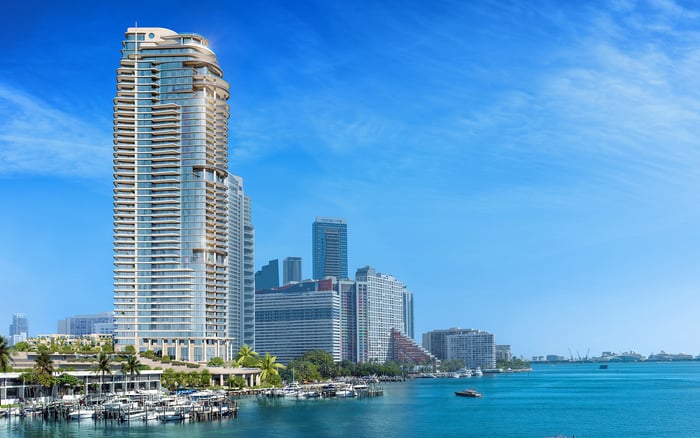
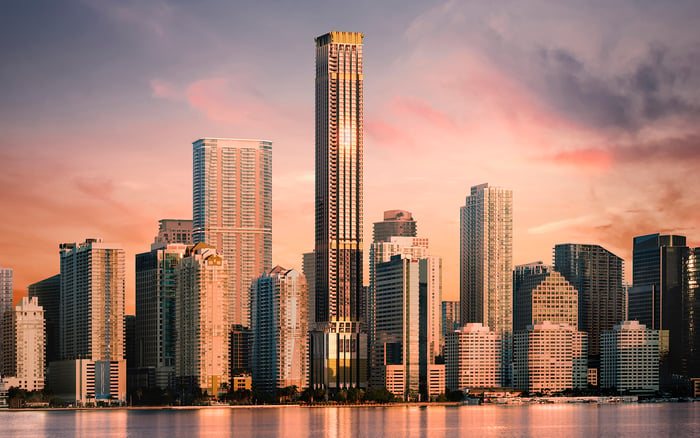
In Miami, the new luxury signal is not louder design, it is quieter logistics. A dedicated house car, an on-call chauffeur, or a resident-only drop-off program can effectively expand your usable day, turning traffic, valet lines, and last-mile friction into a managed service. For buyers who split time between Brickell, Miami Beach, and private aviation corridors, that kind of predictability can matter as much as ceiling height or view corridor. Because service offerings vary by building, management, and season, the most sophisticated approach is to treat “chauffeur” as an amenity category with different operating models. Some properties run a branded vehicle and driver on set schedules. Others coordinate third-party black car partnerships with preferred access and billing. A few pair a house car with a broader lifestyle team that can stage pickups, secure venue arrivals, and synchronize errands and reservations. Below, MILLION Luxury outlines seven Miami developments where a dedicated chauffeur or house car concept is central to the resident experience, followed by a practical framework for evaluating what that promise means on move-in day.
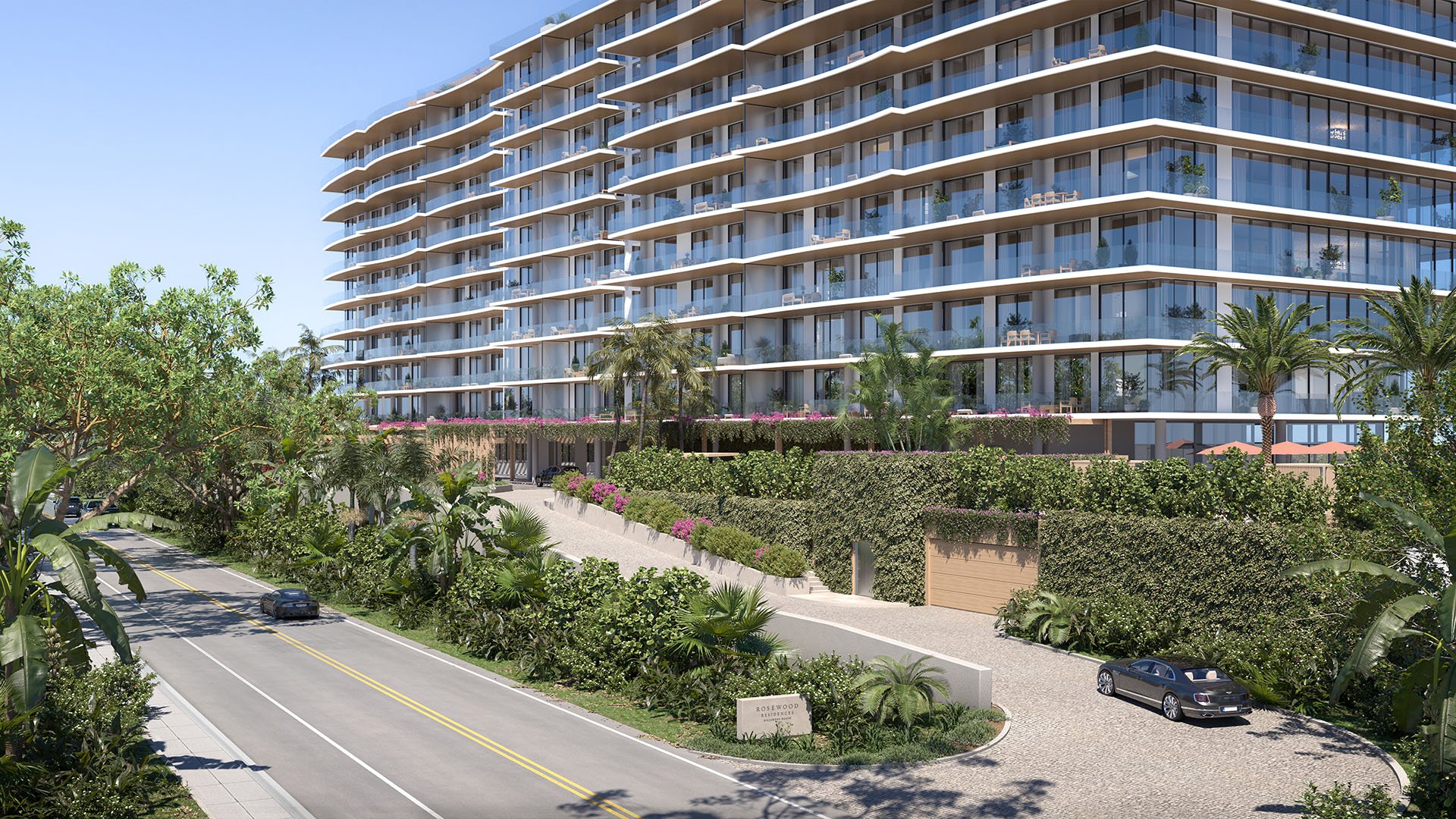
Miami luxury has matured. The market still rewards design names, water views, and dramatic amenity decks, but the most compelling upgrades now live in the margins of the day: on-time departures, smooth arrivals, and the ability to move from Brickell meetings to Miami Beach dinners without thinking about parking, valet lines, or ride availability.
A dedicated chauffeur or house car service doesn’t simply replace a rideshare. At its best, it functions as an extension of the building’s operations-synced with the front desk, valet, security, and concierge. For residents, the payoff is understated but real: discretion at the curb, consistency in the vehicle, and a predictable experience that becomes especially valuable during peak season.
In areas like Brickell and Miami Beach, where restaurant density is high and traffic patterns can shift quickly, a house car can be the difference between a spontaneous evening and one that feels pre-scheduled. In more insulated enclaves, the value takes a different form: a controlled transfer to a club, a marina, or an airport corridor-without exposing personal logistics.
1. The Ritz-Carlton Residences® Miami Beach - Miami Beach
A Ritz-Carlton branded residential experience typically emphasizes arrival choreography, and a house car concept fits naturally within that service DNA. For buyers who want Miami Beach access without the daily friction of parking and congestion, this kind of program can materially elevate day-to-day living.
In practice, the value is less about any single ride and more about the system behind it: coordinated pickups, a familiar driver presence, and a front-of-house team that can anticipate departures and returns.
2. Setai Residences Miami Beach - Miami Beach
In a market where “luxury” is often performative, Setai-style service tends to read more restrained, with an emphasis on calm execution. A dedicated transportation option is most compelling here when it supports seamless movement between the beach, dining, and cultural stops-without the mental overhead of logistics.
For owners who use Miami Beach as a winter base, the house car proposition often comes down to reliability during peak periods, when even simple transfers can become unpredictable.
3. Cipriani Residences Brickell - Brickell
Brickell’s appeal is speed: proximity to offices, restaurants, waterfront promenades, and regional access points. A chauffeur or house car amenity is most valuable when it turns that density into convenience rather than congestion.
The strongest resident transport programs in Brickell feel like an extension of the lobby-where staff can coordinate timing with valet and make the curbside experience feel closer to a hotel arrival.
4. St. Regis® Residences Brickell - Brickell
St. Regis positioning tends to center on ritualized service, and transportation often sits naturally within that narrative. For residents, the house car advantage is not only point-to-point movement, but also the ability to maintain privacy while still living in the center of the city.
Buyers comparing multiple Brickell towers should focus on how the building manages the curb: covered arrivals, guest flow, and whether the transportation service feels primary or secondary.
5. 888 Brickell by Dolce & Gabbana - Brickell
In branded luxury towers, a house car can act as a mobile extension of the brand experience-carrying the aesthetic and service expectations beyond the lobby. In Brickell, where residents often compress business, wellness, and dining into tight windows, a dedicated vehicle matters because it lets you move on your own cadence.
The key question in this category is operational clarity: what is truly “dedicated” in daily use, and how availability is prioritized when demand spikes.
6. Aston Martin Residences Downtown Miami - Downtown
Downtown living is defined by its edges: waterfront access, event traffic, and the ability to pivot quickly between neighborhoods. A chauffeur or house car program becomes especially relevant when it’s designed to manage those transitions, including pre-arranged departures for performances, dinners, or time-sensitive meetings.
For buyers who want a dramatic residential identity paired with practical mobility, a well-run house car can make Downtown feel more navigable and less reactive.
7. Apogee South Beach - South of Fifth
In South of Fifth, privacy, discretion, and effortless access are part of the premium. A house car concept aligns with that sensibility when it minimizes exposure at the curb and lets residents move in and out of the neighborhood without broadcasting routines.
This is also where the experiential difference can be most pronounced: a familiar driver, coordinated timing, and a front desk that can quietly manage departures can feel like a genuine residential advantage.
Not all chauffeur or house car services are created equal. In Miami, the same phrase can describe very different realities. Before you assign value to the amenity, clarify the operating model.
Start with scheduling. Some buildings operate set hours with a defined service radius, typically optimized for nearby dining districts and shopping nodes. Others offer on-demand availability, but with practical limits during peak windows. A third model is concierge-arranged, where the building coordinates a preferred black car network under a consistent billing and access process.
Next, look at vehicle strategy. Is it one flagship vehicle or a small fleet? Is it branded or discreet? Does it align with the building’s overall positioning? A luxury house car is as much about the arrival experience as the drive itself.
Finally, confirm how the service integrates with the building’s front-of-house team. The best programs operate in sync: the doorman knows the timing, valet controls the lane, and the ride is staged without delay. If the curb is chaotic, the amenity will stay theoretical.
Brickell is a prime case for this amenity because it compresses lifestyle into a tight footprint. When the building is well run, a quick trip to dinner becomes effortless. This is where residences such as 2200 Brickell help illustrate the broader trend: buyers increasingly weigh service and operations alongside finishes.
Miami Beach is different. The distances can be short, but congestion can be disproportionate. A house car here is less about miles and more about control-especially for residents who want to keep evenings spontaneous. In this context, 57 Ocean Miami Beach reflects how oceanfront living often pairs best with strong day-to-day logistics.
For those who want a quieter residential cadence with easy access to the city, Bay Harbor and adjacent enclaves can make transportation amenities feel like a bridge between privacy and proximity. Programs vary, but the expectation of curated service is rising, as seen in wellness-forward concepts like The Well Bay Harbor Islands.
A dedicated driver is only as strong as the arrival experience. In Miami, the curb is often where luxury is either confirmed or compromised. Look for covered drop-offs, a clear valet lane, and a lobby team that manages transitions quietly.
Privacy is operational, too. Ask how vehicles are staged, where drivers wait, and how staff handles resident identity and guest flow. A house car should reduce exposure, not increase it. In best-in-class buildings, departures feel nearly invisible: you move from residence to vehicle with minimal interruption.
If you regularly host guests, consider how the program handles non-resident pickups. Some buildings allow concierge-coordinated rides for visitors; others restrict service to owners. Neither is inherently better, but the rule will shape how useful the amenity feels day to day.
Treat this the way you would evaluate a gym, a spa, or a marina partnership. The most telling questions are practical.
Confirm the radius and typical destinations. A house car that consistently covers your preferred dining and shopping corridors will feel far more valuable than a loosely defined service area. Clarify whether airport runs are included or whether the amenity is intended for local transfers only.
Ask about peak-season behavior. Miami’s demand cycles can stress even well-designed amenities. Understanding how the building prioritizes requests, how far in advance you can book, and what happens when the car is already in use will help you value the amenity realistically.
Finally, match the amenity to your personal pattern. If you drive daily, you may care less. If you prefer to avoid parking, entertain often, or keep a lighter footprint in the city, the amenity can materially elevate the ownership experience.
What is the difference between a house car and a chauffeur service? A house car is typically a building-provided vehicle with set availability; a chauffeur service may be broader and arranged through concierge.
Do residents usually pay per ride? Some programs are included as an amenity while others charge per trip or by time; confirm the building’s specific policy.
Is a house car available 24/7 in Miami luxury buildings? Not always. Many operate on defined schedules, with after-hours transportation handled through concierge arrangements.
How far will a typical house car take you? Usually within a local radius suited to dining and shopping corridors, though limits vary by building and management.
Can the house car pick up guests who are not residents? Policies differ. Some allow guest pickups when arranged by the resident; others restrict service to residents only.
Does a house car replace the need for valet parking? It can reduce driving frequency, but valet still matters for resident vehicles, guests, and day-to-day deliveries.
What should I look for during a tour related to transportation amenities? Evaluate the curb layout, staging space, staff coordination, and whether the service feels integrated into operations.
Are house car services more common in Brickell or Miami Beach? Both neighborhoods can support it, but the value proposition differs: density in Brickell, congestion and arrivals in Miami Beach.
Can I reserve the vehicle in advance for a specific time? Many buildings allow advance booking within set windows; ask about lead times and how conflicts are handled.
Does a chauffeur amenity affect resale value? It can strengthen buyer appeal, especially for service-driven purchasers, but its impact depends on consistency and management quality.
For a tailored shortlist and next-step guidance, connect with MILLION Luxury.
If branded residences are on your mind — as a home or as an allocation — we would be glad to share what we are seeing, privately.
Begin a quiet conversation