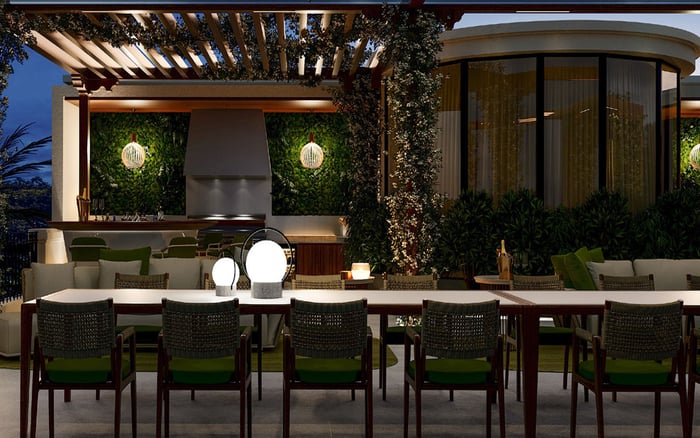
For ultra-premium Miami residences, security staff training is no longer a back-of-house detail. It is a defining element of privacy, access control, emergency judgment, and daily hospitality.

In South Florida’s most visible residential addresses, security is no longer measured only by cameras, gates, uniforms, or a staffed desk. For discerning buyers, the sharper question is whether the people operating those systems have been trained to act with discretion, consistency, and sound judgment. A luxury residence may have sophisticated technology, but the experience ultimately depends on how well its staff manages access, privacy, service, and the unexpected.
That standard is especially relevant in high-profile Miami areas where residents may include executives, founders, collectors, athletes, entertainers, diplomats, and families who value a low-friction lifestyle. Brickell, Downtown, Aventura, Bal Harbour, Fisher Island, and gated communities each carry a different daily rhythm, yet the expectation is similar: residents want to feel protected without feeling watched.
Security staff training sits at the intersection of risk management and hospitality. The best programs are not theatrical. They are calm, practiced, and largely invisible until needed.
A well-run residence should be able to explain how its security staff is trained, supervised, and evaluated. Buyers do not need operational secrets, but they should expect clarity on staffing philosophy. Who greets arrivals? Who verifies vendors? Who responds to after-hours concerns? Who coordinates with management when a resident reports a privacy issue?
Training standards should cover daily access control, visitor management, emergency response, communication discipline, package and delivery protocols, parking entry procedures, and documentation. Just as important, staff should understand the tone of the building. A waterfront tower, a boutique condominium, and a private island residence may each require a different pace, but none can afford improvisation at the front line.
For ultra-luxury residents, a security lapse is rarely only a physical concern. It can become a privacy concern, a reputational issue, or a disruption to family life. Training should prepare staff to avoid unnecessary attention, maintain professional distance, and protect resident information as carefully as physical space.
In high-profile residences, discretion is not a soft amenity. It is a security function. Staff should be trained not to discuss resident schedules, guest names, unit ownership, travel patterns, vehicle details, or household staffing arrangements. This applies in person, by phone, over internal communication channels, and in casual conversations that may seem harmless.
The luxury buyer should look for a culture in which confidentiality is reinforced repeatedly. A concierge who recognizes everyone but reveals nothing is often more valuable than a guard who relies on visible authority. The most secure buildings maintain warmth without overfamiliarity, awareness without intrusion, and confidence without performance.
This standard becomes especially important in residences where owners may use the property seasonally or as a second home. Staff may recognize patterns before anyone else does. Training should make clear what can be shared, what must be escalated, and what remains private.
The most elegant security systems feel effortless because the protocol has already been considered. Staff should know how to distinguish among residents, guests, vendors, household employees, drivers, brokers, delivery personnel, and event support. Each category deserves a clear pathway.
Training should address identity verification in a way that is firm but polished. The goal is not to embarrass guests or delay residents, but to prevent casual exceptions from becoming a building habit. Luxury properties often fail at the margins: a familiar vendor waved through without confirmation, a guest allowed beyond the lobby because they seem expected, or a delivery routed improperly because the desk is busy.
A disciplined staff understands that consistency is part of service. If the procedure is reliable, residents adapt to it and often appreciate it. If the procedure changes depending on who is on duty, confidence erodes.
Training should also prepare staff for moments that do not fit a script. Medical incidents, severe weather, fire alarms, water intrusion, power interruptions, domestic disputes, and suspicious activity all require clear escalation. The first person a resident contacts may be a front desk associate, valet, rover, gate officer, or manager on duty. Each person should know what to do first and whom to notify next.
The quality to look for is calm sequencing. Staff should avoid speculation, keep communication concise, and document the event appropriately. Residents should not receive conflicting messages from different team members. In a luxury environment, composure is part of the protection.
Emergency training is not only about rare events. It also shapes daily readiness. A team that practices handoffs, communication codes, and escalation procedures is better prepared to handle ordinary complexity without drama.
Luxury residences rely on a steady flow of service providers. Designers, contractors, art handlers, yacht crew, housekeepers, chefs, drivers, dog walkers, personal assistants, florists, and wellness professionals may all pass through the property. Without training, this activity can become the softest point in a building’s security posture.
Security staff should be trained to verify authorization, direct service traffic properly, manage elevator access where applicable, and document arrival and departure. They should also understand that many residents have private household teams who require both convenience and control. The distinction between known and authorized matters.
Buyers should ask how the residence handles recurring vendors, temporary workers, delivery surges, move-ins, renovations, and private events. Strong buildings do not rely on memory alone. They use processes that protect the resident while preserving a refined arrival experience.
Cameras, access systems, license plate recognition, package rooms, digital visitor logs, and elevator controls can all strengthen a building, but only when staff are trained to use them properly. Technology should support judgment, not replace it.
A buyer should be cautious of any residence that presents equipment as the entire answer. The better question is how staff respond to an alert, how they verify information, how access permissions are updated, and how exceptions are handled. Poorly trained teams can turn sophisticated systems into expensive ornaments.
The strongest residences align technology with human procedure. Staff should know what the system is designed to catch, what it does not catch, and when a manager must be involved.
Security diligence should be part of the luxury purchase conversation, especially for buyers comparing buildings in high-profile areas. The questions can be direct without being adversarial: How is staff trained? How often are procedures reviewed? Who supervises third-party security vendors? How are incidents documented? What is the building’s policy for resident confidentiality?
Buyers should also observe the front entrance during a showing. Notice whether staff are attentive without staring, courteous without being casual, and consistent with visitors. The lobby often reveals the culture of the property before any formal answer does.
For families, seasonal residents, and owners with public visibility, the right training standard creates ease. It allows daily life to proceed with fewer explanations, fewer exceptions, and fewer moments of uncertainty.
In Miami’s upper tier, security is most successful when it disappears into the rhythm of the residence. Residents want to host dinner, receive guests, travel, manage household staff, and return home late without thinking about the system behind the scenes. That confidence is built by people as much as architecture.
Training is what turns a staffing roster into a protective culture. It defines how information is handled, how access is granted, how emergencies are escalated, and how privacy is preserved. For the luxury buyer, those standards deserve the same attention as floor plan, views, amenities, and finishes.
What should buyers ask about security staff training before purchasing? Ask how personnel are trained, supervised, and evaluated, and how visitor, vendor, and emergency protocols are handled.
Is visible security always better in a luxury residence? Not necessarily. The strongest security often feels discreet, calm, and integrated into hospitality rather than visibly forceful.
Why is confidentiality part of security training? Resident schedules, guests, vehicles, and household routines can be sensitive information and should be treated with care.
How important is vendor management? It is essential because service providers move through luxury properties daily and require clear authorization procedures.
Should technology replace trained staff? No. Technology supports security, but trained personnel make the judgment calls that protect residents in real time.
What makes access control feel luxurious? It should be consistent, respectful, and efficient, with staff verifying arrivals without creating unnecessary friction.
How can buyers evaluate a building’s security culture? Observe the entrance, staff communication, visitor handling, and whether procedures appear consistent during the showing.
Are emergency protocols part of staff training? They should be. Staff should know how to escalate medical, weather, fire, building, and safety concerns calmly.
Does a boutique residence need the same training focus as a larger tower? Yes, though the staffing model may differ. Smaller properties still require clear procedures and confidentiality standards.
What is the ultimate security standard for high-profile Miami residences? Quiet confidence: a trained team that protects privacy, manages access, and responds calmly without disrupting daily life.
To compare the best-fit options with clarity, connect with MILLION.
If branded residences are on your mind — as a home or as an allocation — we would be glad to share what we are seeing, privately.
Begin a quiet conversation