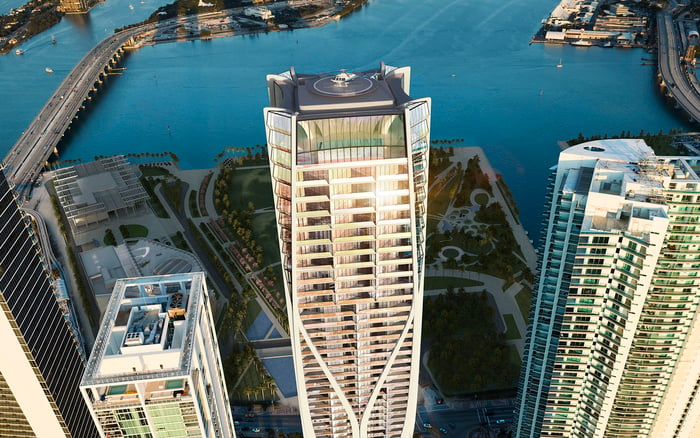
A privacy-focused due-diligence framework for asking about access control, staffing, surveillance, data governance, valet operations, deliveries, waterfront entry points, and residential circulation at The Cove Residences Edgewater.

At a waterfront condominium, privacy depends on the interaction of design, staffing, technology, service procedures, and governance. Buyers evaluating The Cove Residences Edgewater should therefore look beyond general security language and ask how each control would work in daily use.
The review should identify every route by which residents, guests, staff, vendors, delivery workers, service providers, and public-facing visitors could approach private residential areas. Buyers should request written answers wherever possible and confirm which documents govern the stated procedures.
Ask for a circulation plan showing the boundaries among public-facing spaces, resident entrances, parking areas, service routes, amenity areas, and elevator cores. The goal is to determine where different user groups might cross paths and which physical or operational controls would separate them.
Waterfront access deserves its own review. Buyers can ask about operating hours, lighting, barriers, cameras, visitor procedures, staff responsibilities, and the route from any waterside area toward residential spaces.
Privacy-minded purchasers can apply the same circulation audit when comparing nearby options such as EDITION Edgewater and Aria Reserve Miami. The useful comparison is not simply the number of amenities, but how clearly private residential movement is separated from service and visitor activity.
Ask what credentials would be used for residents, guests, staff, vendors, and service providers. If mobile or biometric access is contemplated, request details on consent, alternatives, account ownership, storage, deletion, administrator privileges, third-party access, and procedures during an outage.
Elevator controls should be reviewed separately. Buyers should ask whether permissions are restricted by floor or zone, how temporary credentials expire, and whether visitors or service personnel require an escort. Lost-device and lost-credential procedures should also be documented.
A useful surveillance plan identifies camera locations, blind spots, retention periods, authorized viewers, export controls, sharing procedures, and incident-response responsibilities. Buyers should ask whether footage can be accessed by building staff, management, contractors, technology vendors, or other parties and under what conditions.
Camera placement should support safety without creating unnecessary observation of private activity. The review should cover entrances, elevator approaches, parking and service areas, waterfront boundaries, and shared spaces while accounting for discretion near residences.
Buyers should not infer staffing hours or personnel qualifications from general descriptions. Ask who staffs each post, during which hours, what training or licensing applies, how incidents are escalated, and who reviews access logs and reports.
Valet and vehicle services can involve keys, access records, and visibility into resident routines. Relevant questions include how keys are secured, how vehicles are released, how personnel are screened, how incidents are documented, and how long operational records are retained.
Service-rich properties require equally clear controls for contractors and vendors. Buyers comparing projects such as Villa Miami should ask how each provider's credentials, confidentiality duties, system privileges, and access to resident information are limited.
Ask where couriers stop, who accepts items, how packages are logged, whether delivery personnel can enter residential corridors, and how residents are notified. The chain of custody should also address missing, damaged, refrigerated, oversized, or misdirected deliveries.
Guest registration deserves a parallel review. Buyers should ask what identification is collected, who can retrieve it, how long it remains available, whether hosts can limit destinations, and how access is revoked after a visit.
Any connected feature inside a residence can create questions about account control and data access. Buyers should determine whether systems operate locally, through a building-managed network, or through a third-party cloud service.
For each connected system, ask who owns the account, who has administrator rights, how updates are handled, what data is retained, and how access changes when a residence is sold or occupied by a new user. Privacy obligations should also address changes in vendors, software, and management.
Marketing language should not replace review of the purchase agreement, condominium declaration, exhibits, association rules, budgets, contracts, and other controlling materials. Buyers and their counsel should determine whether stated security and privacy practices are mandatory, funded, changeable, or left to future operational decisions.
A practical written security schedule can address staffed posts and hours, access zones, visitor rules, surveillance retention, vendor standards, emergency escalation, cyber responsibilities, credential changes, and incident reporting. Privacy protections are easier to evaluate when responsibilities are specific and auditable.
Is round-the-clock security confirmed at The Cove Residences Edgewater? This article does not establish staffing hours. Buyers should request written schedules and role definitions.
Will residential elevators restrict access by floor? Buyers should ask for written confirmation of elevator permissions, escort requirements, and temporary-access rules.
How should buyers evaluate public and residential circulation? Request plans identifying entrances, service paths, shared spaces, barriers, and every route toward residential elevator cores.
What should buyers ask about waterfront access? Ask about hours, lighting, barriers, surveillance, visitor registration, staff oversight, and connections to private areas.
What matters if biometric access is contemplated? Review consent, non-biometric alternatives, storage, deletion, administrator access, and third-party data handling.
How should surveillance policies be evaluated? Examine coverage, retention, authorized access, export controls, sharing procedures, and incident response.
Why do valet operations affect privacy? Valet services may involve keys, vehicle records, and knowledge of resident routines, making custody and access procedures important.
What delivery safeguards should buyers review? Focus on courier routes, package logging, resident notification, storage, and a documented chain of custody.
Can connected home systems create privacy concerns? Yes. Buyers should establish whether controls are local or cloud-based and who can administer accounts or retain data.
Which documents should govern the security review? Review the purchase agreement, declaration, exhibits, association rules, budgets, contracts, and other controlling materials with counsel.
For a tailored shortlist and next-step guidance, connect with MILLION.
If branded residences are on your mind — as a home or as an allocation — we would be glad to share what we are seeing, privately.
Begin a quiet conversation