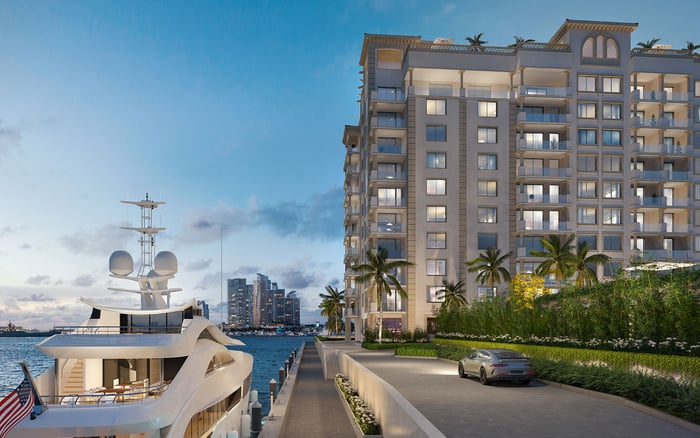
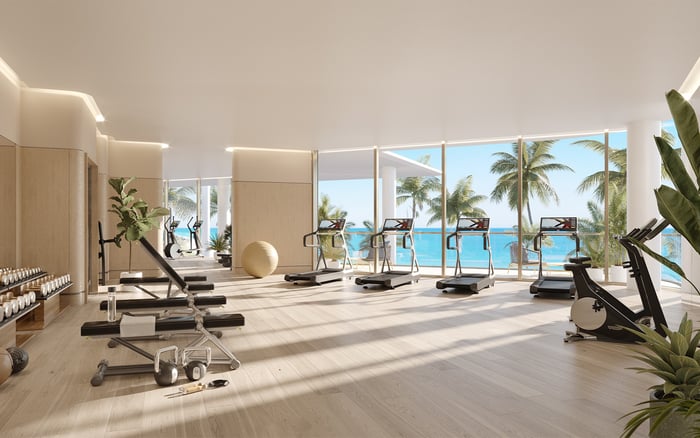
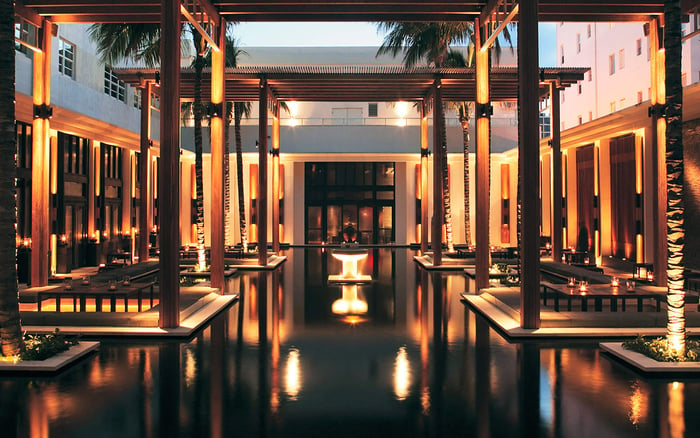
For serious collectors, Fisher Island provides an unusual first layer of discretion through regulated private-yacht and auto-ferry access. Palazzo del Sol leads for established privacy and acoustic separation, while Palazzo della Luna stands out for glazing, interior zoning, connectivity, and light-control potential. Neither eliminates the need for residence-specific conservation and security planning.
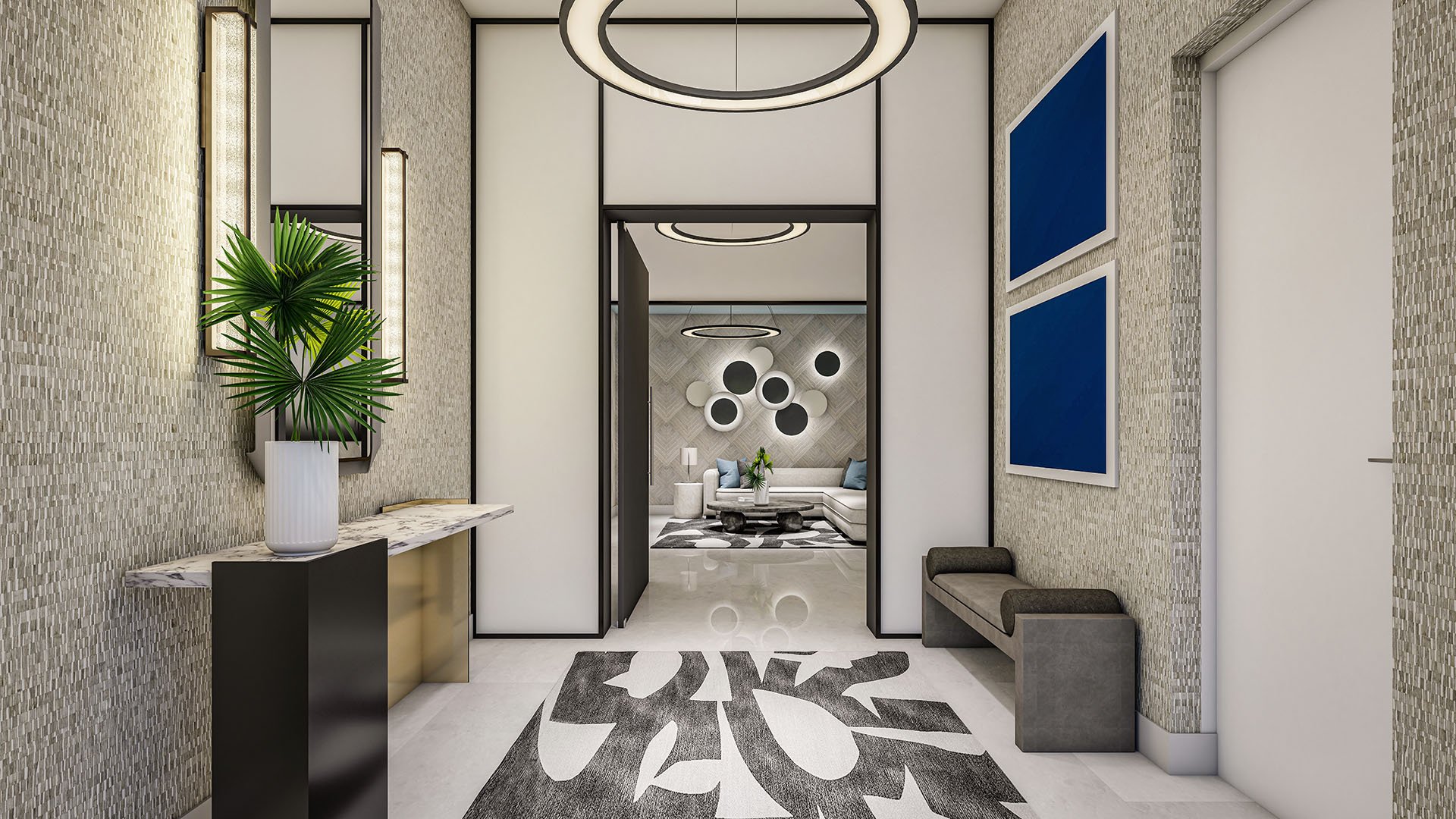
An art collection changes the definition of residential luxury. Privacy must extend from island arrival to the elevator vestibule. Daylight becomes something to manage, not merely maximize. Security must protect people and objects without making the home feel institutional.
Fisher Island offers a compelling starting point. Transportation is regulated and monitored through private yacht or auto ferry, creating a layer of access control before a visitor reaches the building. The island also maintains round-the-clock security services and an on-island fire station. For collectors considering branded residences in Miami Beach, that broader setting can be as consequential as the specifications within the residence.
Two properties deserve particular attention. Palazzo del Sol presents the stronger overall privacy proposition, while Palazzo della Luna offers notable potential for controlled light, room separation and integrated monitoring.
1. Palazzo del Sol - 7000 Fisher Island Drive
Palazzo del Sol ranks first for its layered approach to residential privacy. Private elevator entrances reduce exposure to shared corridors, while precisely closing “zero-tolerance” entrance doors reinforce the threshold between public and private space. STC 55 sound attenuation between residences is a meaningful consideration for quiet galleries, confidential conversations and private entertaining.
The building combines Fisher Island’s controlled arrival sequence with 24-hour security, multilingual concierge service and valet operations. Its 24-hour ferry system is operated by trained staff, with visitor identities verified. Collectors should still examine service circulation, delivery procedures and the precise elevator-to-entry sequence for the residence under consideration.
2. Palazzo della Luna - Fisher Island, Miami Beach
Palazzo della Luna takes second place but leads in light-control and technology potential. Every residence has a private elevator entry. Full-height, impact-resistant insulated windows support storm protection and improve thermal and acoustic isolation, while Lualdi doors with magnetic-lock hardware can help separate display, storage and entertaining zones.
High-speed fiber-optic connectivity and multilayer electrical safeguards provide a useful foundation for integrated alarms, cameras, access logs and environmental sensors. Custom Boffi kitchens include dimmable LED lighting, although displayed art requires a separately designed, museum-grade lighting plan. The building’s media room, video-conferencing business center and lounges can also accommodate private meetings away from the collection.
A collector should evaluate privacy from the ferry manifest to the front door. The essential questions concern visitor verification, valet custody, staff access, elevator control, delivery routing and the visibility of art from terraces or neighboring properties. A private elevator entrance is valuable, but its benefit depends on who can call the elevator and how service personnel reach the home.
This is where Palazzo del Sol’s acoustic specification becomes especially relevant. Visual privacy alone is incomplete when conversations or gatherings can carry between residences. Buyers comparing other island formats, including The Residences at Six Fisher Island and The Links Estates at Fisher Island, should apply the same end-to-end test rather than assume every Fisher Island address performs identically.
Impact-resistant insulated glazing is not equivalent to museum-grade UV protection. Before acquisition, request the precise glass composition and verify whether the building permits interior films, automated shades or secondary treatments. Then map direct and reflected sunlight across the seasons, with particular attention to full-height windows and terrace reflections.
A conservation plan should specify dimmable, low-UV illumination, shade zones and scene controls for entertaining, cleaning and viewing. During Art Basel season, when a home may host more guests or private viewings, preset lighting scenes can protect works while preserving atmosphere.
Island controls and staffed building security are valuable outer layers, not substitutes for a residence-specific system. The collector’s program should address intrusion detection, room-by-room access permissions, camera placement, alarm escalation and auditable access logs. Network design matters because environmental sensors and security devices may rely on the residence’s connectivity.
Conservation infrastructure is equally important. Temperature and humidity monitoring, leak detection, electrical safeguards and an appropriate backup-power strategy should be evaluated for the individual home and collection. Magnetic-lock interior doors can support zoning, but their behavior during a power interruption must be understood.
A collector’s review should involve the relevant art, security, lighting, insurance and building-system specialists before closing. For a buyer accustomed to a gated community, Fisher Island adds an unusual waterborne threshold, yet due diligence still belongs at the level of the room, system and operating protocol.
Choose Palazzo del Sol when acoustic separation, controlled arrival and proven layers of residential privacy take priority. Choose Palazzo della Luna when insulated glazing, interior zoning and technology infrastructure provide the more useful canvas for a tailored collection environment. In either case, the best residence is the one whose orientation, circulation and building rules permit a complete conservation plan without compromising the pleasure of living with art.
Why is Fisher Island attractive to private art collectors? Regulated yacht and auto-ferry access creates a security layer before visitors reach a residence, supported by round-the-clock island security.
Which residence ranks best overall for privacy? Palazzo del Sol leads for private elevator entrances, precisely closing entrance doors and STC 55 separation between residences.
Which property offers stronger light-control potential? Palazzo della Luna offers a promising foundation through full-height, impact-resistant insulated glazing, but museum-grade protection must be specified separately.
Does impact-resistant glass protect art from UV exposure? Not necessarily. Buyers should verify the exact glass specification and rules governing films, shades or other treatments.
Are private elevators enough to secure a collection? No. Buyers should also review elevator permissions, service access, delivery routes, alarms and access logging.
Why does acoustic separation matter to collectors? It supports quiet gallery spaces and greater discretion during private conversations, viewings or entertaining.
Can Palazzo della Luna support environmental monitoring? Its fiber-optic connectivity and electrical safeguards can support integrated systems, subject to residence-specific design and installation.
What conservation systems should a buyer consider? Temperature, humidity and leak monitoring, appropriate backup power, controlled lighting and a documented response plan are central considerations.
Should terrace sightlines be reviewed? Yes. Buyers should assess visibility into display areas and study direct or reflected sunlight for the specific floor plan.
What should be confirmed before making an offer? Confirm glazing, shade permissions, circulation, building rules, security protocols and the feasibility of the proposed conservation systems.
For a confidential assessment and a building-by-building shortlist, connect with MILLION.
If branded residences are on your mind — as a home or as an allocation — we would be glad to share what we are seeing, privately.
Begin a quiet conversation