For seasonal owners with significant art collections, Cove and Lilli call for a closer look beyond arrival amenities. A buyer-focused guide to confirming delivery routes, handling responsibilities, environmental controls, and care during extended absences.
A seasonal residence should feel effortless when its owner returns. For a collector, that ease depends on decisions made long before the first painting arrives: how a crate reaches the apartment, who supervises its movement, and how the interior environment is managed during months of absence. In Edgewater, these questions deserve the same attention as a floor plan or a view.
The Cove Residences Edgewater and Lilli Miami Edgewater advertise different residential features, but amenity language alone cannot establish either building’s suitability for art logistics. Dedicated art handling, professional art storage, and museum-grade environmental controls are not established for either project. That is a reason to ask precise questions, not evidence that a service is unavailable.
The objective is a building-specific plan connecting the collection, the residence, and the people responsible for both. A gracious arrival experience and a workable art-delivery route are separate considerations.
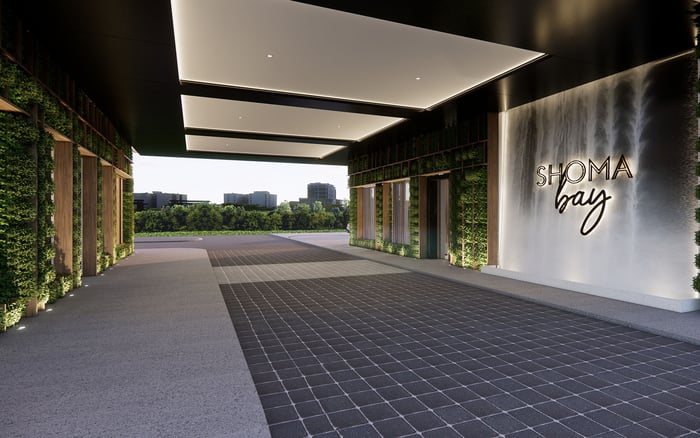
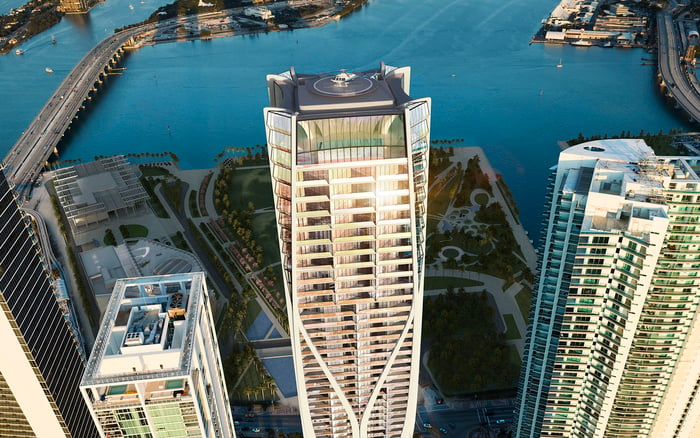
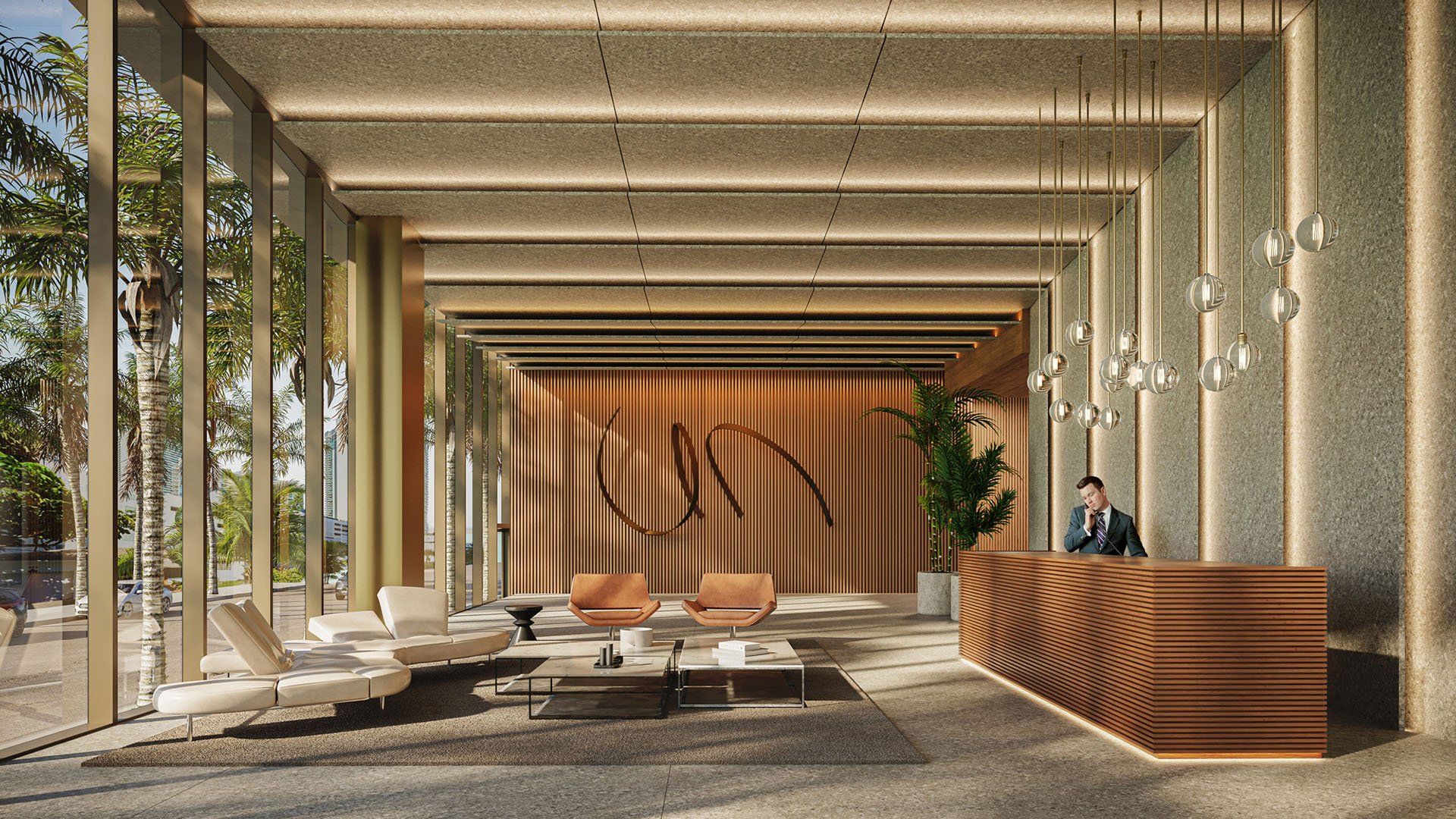
Cove Miami is marketed at 456 NE 29th Street, with 116 residences in a 40-story tower. Its advertised arrival provisions include an attended lobby, valet parking, and a parking garage. These describe the owner experience; they neither identify a fine-art receiving area nor establish who may accept a valuable shipment.
Cove also advertises a waterside restaurant, private dining room, owners’ lounge, theater, and game and billiards room. Offices, guest rooms, and a pet spa complete the offering. Buyers should not interpret this breadth of hospitality as a commitment to specialist collection care.
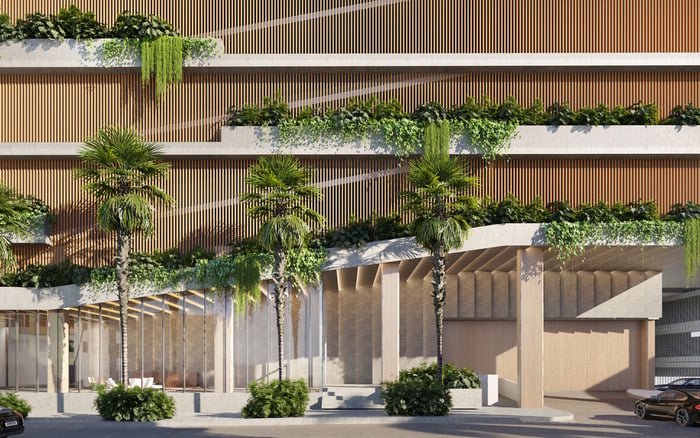
Lilli advertises 117 residences with private balconies and direct elevator access to residences. Direct access matters to arrival planning, but it does not establish a freight elevator, loading-bay dimensions, or clearance for an oversized crate. For either property, ask which advertised provisions will be available at occupancy and which operating procedures will govern deliveries.
Cove advertises direct boardwalk access and a dock for water-sports access. Neither establishes an art-delivery loading point. The same distinction applies to an attended lobby or parking garage: a space designed for people or vehicles is not automatically an approved receiving route for a collection.
Ask the building team to identify the authorized delivery entrance and trace the route from vehicle to apartment. Request dimensions for every relevant doorway, corridor, turn, elevator opening, and vestibule. Assess elevator cabin dimensions and rated capacity against the packed work, its handling equipment, and the proposed crew.
The owner’s art handler should review the route before transport is booked. Ask about vehicle restrictions, reservation windows, protective coverings, contractor credentials, insurance documentation, deposits, and supervision. These are items to confirm, not established requirements at either building.
Resolve potential delays in advance. If a delivery cannot proceed, where may the crate wait, under whose custody, and in what environmental conditions? Never presume that a conditioned staging area is available.
Cove specifies 10-foot ceilings in living spaces. That may inform placement decisions, but it says nothing about elevator clearance or the narrowest point on the delivery route. Start with the packed object’s dimensions, not those of the installed artwork.
For Lilli, ask how direct elevator access works for contractors and deliveries. Which elevator may be reserved? Does the approved route reach the intended installation room without an unworkable turn? Who controls access when the owner is away? The phrase direct elevator access answers none of these questions.
Before approving a purchase or installation plan, ask the appropriate professionals to review wall construction, proposed mounting methods, and any building permissions. Distinguish the installer’s scope from the transporter’s, specifying who unpacks, documents condition, removes packaging, and signs for completion.
If the search also includes Aria Reserve Miami, apply the same collection-specific questions rather than assuming another residence will accommodate the same work or handling plan.
Central cooling is identified for individual Cove residences. That does not establish dedicated humidity control, humidity monitoring, or performance throughout an extended vacancy. Request residence-specific HVAC information and clarify what can operate continuously, what the owner controls, and what maintenance remains necessary during an absence.
Rather than choosing a universal temperature or humidity target, have the collection’s conservator advise on appropriate conditions. Then ask a qualified HVAC professional whether the proposed residence can support those requirements and whether additional equipment would need approval. Do not assume portable equipment or alterations are permitted.
Cove specifies pre-wiring for automatic blinds, not installed automated shading. Confirm what is included, then discuss light exposure and shading with the collection adviser. Any proposed automation should have an identified installer, operating sequence, and maintenance responsibility.
At both projects, distinguish a thermostat setting from environmental monitoring. Ask whether readings can be reviewed remotely, whether excursions trigger alerts, and who is expected to respond. These remain buyer questions, not confirmed building capabilities.
A seasonal ownership plan should name people, not simply services. Establish who may enter the apartment, who receives environmental alerts, and who has authority to engage an HVAC contractor or contact the art handler. Confirm which responsibilities the building accepts and which require a separately appointed representative.
Ask how emergency entry, cooling interruptions, water incidents, and communications failures would be handled. Seek a clear explanation of any backup power provisions relevant to the residence. Do not assume building backup systems serve in-unit cooling or monitoring equipment.
Arrange an inspection schedule suited to the collection and the length of absence. A written record can distinguish routine checks from matters requiring specialist attention. Before departure, consider testing remote readings, alert delivery, and authorized access with the people expected to respond.
The essential question is not whether an alert can be sent. It is whether someone can assess the situation and take the agreed action when the owner is elsewhere.
Before committing to a collection-dependent residence, assemble a concise file: the approved delivery route, elevator specifications, handling permissions, staging arrangements, installation approvals, HVAC responsibilities, monitoring plan, and emergency contacts. Distinguish confirmed answers from proposals.
Keep responsibilities explicit. An attended lobby is not a commitment to accept custody of art; direct elevator access is not freight approval; pre-wiring is not installed shading. Where an answer is pending, ask who can authorize it and when it can be documented.
For Cove and Lilli, the strongest seasonal ownership decision reconciles architectural appeal with a practical, written care plan. The collection should not depend on assumptions made during a viewing.
For a considered approach to seasonal ownership in South Florida, explore MILLION.
If branded residences are on your mind — as a home or as an allocation — we would be glad to share what we are seeing, privately.
Begin a quiet conversationDedicated art handling and professional art storage are not established for either project. Buyers should seek written confirmation rather than interpret undisclosed services as unavailable.
Cove is described as a 40-story tower with 116 residences. Lilli advertises 117 residences with private balconies.
No. Direct elevator access does not establish a freight elevator, loading-bay dimensions, or a viable route for oversized art crates.
No. The specification applies to living spaces, not elevator openings, corridors, or other delivery-route clearances.
Cove advertises its dock for water-sports access. That does not establish permission or suitability for art deliveries.
Cove specifies pre-wiring for automatic blinds, not installed automated shading. Buyers should confirm the included equipment and any proposed installation requirements.
No. Cove’s unit-level central cooling information does not establish humidity monitoring or museum-grade environmental controls.
Ask the handler to review the authorized route, packed dimensions, elevator capacity, clearances, and staging arrangements. Delivery permissions and custody responsibilities should also be confirmed.
Have the collection’s conservator advise on suitable conditions, then ask a qualified HVAC professional to assess whether the residence can support them.
Document authorized access, inspection responsibilities, environmental monitoring, alert recipients, and emergency response. Clarify which duties belong to the building and which require an owner-appointed representative.