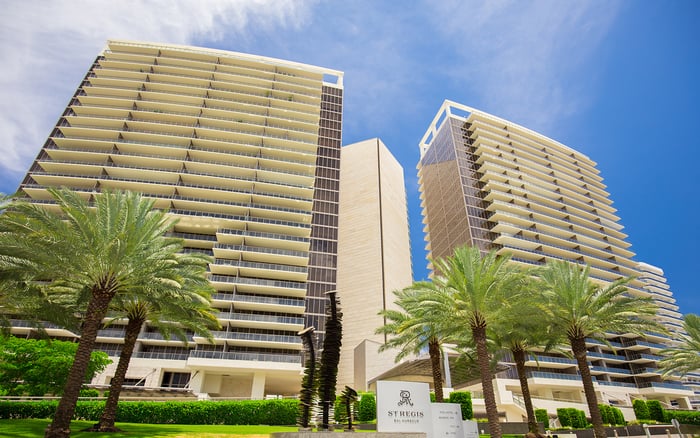
A discreet framework for seasonal ownership in Bal Harbour, aligning entertaining plans with clearly delegated house-manager authority, owner-set spending limits, emergency instructions, and purposeful recordkeeping.

A well-considered seasonal residence feels effortless on arrival. Behind that ease should be a clear arrangement: a house manager who knows what may be decided independently, what requires approval, and what must happen when the owner cannot be reached. In Bal Harbour, entertaining plans deserve the same precision.
For an owner considering Oceana Bal Harbour, the operational question is not simply who will prepare the residence. It is who may commit funds, authorize access, change arrangements, and document decisions during an absence. Those questions belong alongside the more visible considerations of interiors and hospitality.
The framework below is an owner-planning recommendation, not a statement of Village requirements or any particular condominium’s policies. Spending authority, emergency discretion, and household reporting should be expressly agreed, never assumed.
Bal Harbour maintains an official calendar of Village events and meetings, with the option to add upcoming dates to personal calendars. Programming includes Miami Spice in Bal Harbour, Full Moon Yoga on the Beach, The Market at Bal Harbour, and Movie Night on the Beach. These provide useful reference points for visits without requiring every gathering to take place at home.
One date-specific example is the 2026 Fall Festival, scheduled for October 24, from 7:00 to 9:00 p.m., at Bal Harbour Beach North, by the jetty, at 10301 Collins Avenue. Treat this as a specific 2026 date, not a standing annual commitment, and reconfirm arrangements before organizing guests around it.
For household planning, consider bringing arrival dates, private dinners, vendor appointments, and public outings onto one working calendar. Ask the manager to distinguish confirmed commitments from provisional plans and identify who can approve changes. A calendar entry should not, by itself, authorize a deposit, an expanded guest count, or a replacement booking.
A written delegation can distinguish between arranging work, approving its cost, and granting access. These are separate decisions. An owner might permit a manager to obtain proposals while reserving contract approval, or authorize an agreed service without permitting substitutions that increase the cost.
Buyers evaluating Rivage Bal Harbour can make this distinction part of their diligence: ask which proposed household arrangements need to be reconciled with the residence’s applicable documents and operating procedures. Do not infer a manager’s permissions from a project name or residential positioning.
For private entertaining, request confirmation of any applicable guest, catering, delivery, access, or shared-space conditions before making commitments. Registration for a Village program does not establish permission to host a private event in a condominium. An owner’s instructions to a house manager should never substitute for checking building-level permissions.
This framework establishes no universal Bal Harbour house-manager spending cap. The prudent approach is to set limits expressly for the household, with professional review where appropriate, rather than borrow an unexplained number from another property.
Consider three distinct categories: routine operations, entertaining, and urgent protective work. For each, decide whether authority is limited by transaction, event, or period, and whether an aggregate ceiling also applies. A manager should not have to guess whether an approved dinner budget includes delivery charges, additional staffing, or cancellation costs.
Define the approval trigger as well as the limit. An owner could, for example, require renewed consent when the scope changes, even if the revised cost remains within budget. Consider prohibiting split purchases intended to avoid an approval threshold. These are suggested controls, not local mandates.
Reimbursement deserves a separate instruction. Decide whether personal advances are permitted, what evidence is expected, and who approves repayment. An owner-set spending limit is useful only if everyone understands which commitments count toward it.
Florida’s hurricane season runs June 1 through November 30. The October Fall Festival date falls within that window-a useful reminder that entertaining plans and storm readiness can overlap. A seasonal arrival should not be the first occasion to discuss protective decisions.
Consider preparing a separate emergency instruction sheet with the owner’s contact sequence, an alternate decision-maker, relevant building contacts, and the boundaries of any preauthorized protective work. Distinguish urgent action to limit damage from permanent replacement or discretionary improvement.
Specify what the manager should do if neither the owner nor the alternate responds, including any narrowly defined spending authority and notification expectations. Have the arrangement reviewed against applicable building procedures, insurance terms, and legal considerations. Do not assume a household memo overrides them.
No financial approval process should delay contacting emergency services when needed. For follow-up, request a concise account of the situation, attempted contacts, actions taken, costs committed, and unresolved decisions. This is a recommended household practice, not a prescribed Village incident format.
For a privately occupied residence, consider keeping approvals, proposals, invoices, payment confirmations, access instructions, and relevant correspondence together. The objective is continuity: another authorized person should be able to understand what was agreed and what remains unfinished without reconstructing a season from scattered messages.
An owner-defined decision log can be brief. Suggested fields include the date, issue, decision-maker, approval, financial commitment, and follow-up. Limit circulation of household and guest information to those who need it, and agree who maintains the file when personnel change.
Separately, operators in Bal Harbour must retain resort-tax records for three years. Those records must be sufficient to determine resort taxes collected or due, and the Finance Director has the right to inspect them at all times. This is not a blanket three-year retention rule for every private household document. If the residence has an operating or rental use, ask an appropriate adviser which obligations apply.
A comparison extending to Fendi Château Residences Surfside should bring the same practical questions to Surfside, without assuming that Bal Harbour’s municipal provisions apply there. Ask how the proposed ownership routine would work during absence, arrival, entertaining, and departure. Verify the answers for the particular residence rather than transferring assumptions between buildings.
Before each season, consider reviewing delegated authority, spending categories, emergency contacts, and unfinished work. After departure, request a reconciliation of commitments and an updated list of pending decisions. The aim is not to burden a well-run home with paperwork, but to preserve the owner’s intent when circumstances change.
For a considered approach to South Florida seasonal ownership, explore MILLION.
If branded residences are on your mind — as a home or as an allocation — we would be glad to share what we are seeing, privately.
Begin a quiet conversationFlorida’s hurricane season runs June 1 through November 30. Seasonal arrivals and entertaining plans within that period should include a review of emergency instructions.
No universal spending cap is established here. Owners should expressly agree on household-specific limits rather than assume a standard amount applies.
Consider separating authority to arrange work, approve costs, and grant access. Identify decisions that remain reserved for the owner.
Consider defining both event-level and aggregate limits, including which associated charges count toward them. Specify when changes in scope require fresh approval.
An owner-defined plan should identify an alternate decision-maker and any narrowly defined preauthorized action. Financial approvals should not delay contacting emergency services when needed.
No. Public-program registration does not establish permission to host a private event in a condominium; applicable building conditions should be checked separately.
The listing gives October 24, 2026, from 7:00 to 9:00 p.m. at Bal Harbour Beach North, by the jetty, at 10301 Collins Avenue. Reconfirm arrangements before planning around the event.
Listed programming includes Miami Spice in Bal Harbour, Full Moon Yoga on the Beach, The Market at Bal Harbour, and Movie Night on the Beach. Check current dates when coordinating visits.
No. It concerns operators’ resort-tax records, which must support determination of taxes collected or due and remain subject to the Finance Director’s inspection.
Consider retaining approvals, proposals, invoices, payment confirmations, and a concise decision log. This is a recommended household practice, not a mandatory Village reporting format.