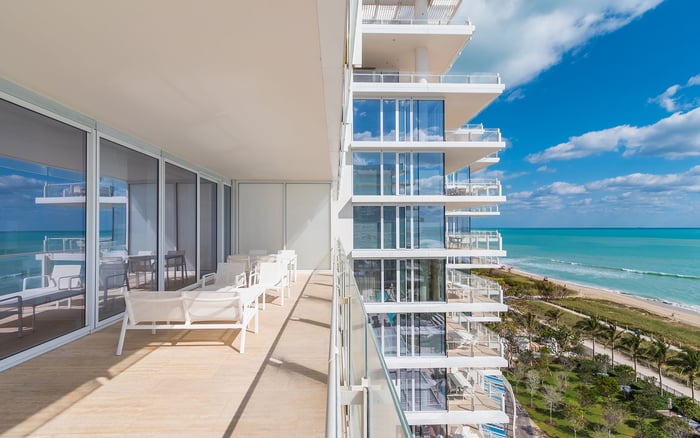
A discreet, step-by-step framework for coordinating airport transfers, porte cochère handoffs, residence readiness, vehicles, belongings, staff, and guests at The Surf Club.

For a part-time owner, returning to The Surf Club Four Seasons Surfside is less a single moment than a sequence of precisely timed handoffs. The property combines Four Seasons hospitality with private condominium ownership, so a seasonal return must reconcile service, building rules, security, and the resident’s preference for privacy.
That sequence begins before departure and concludes only when passengers, luggage, vehicles, personal items, and residence staff are where they need to be. At an oceanfront property of this caliber, ease comes from preparation rather than improvisation.
A concise arrival brief is therefore essential. It should identify the travel party, flight mode, estimated arrival window, transfer plan, luggage profile, vehicle requirements, residence-readiness priorities, and any expected guests. This is not a substitute for management procedures, but a practical way to give the residential team one coherent picture of the return.
The first major decision is whether the owner will arrive through a commercial airport terminal or a private-aviation facility. That choice shapes every subsequent step, including pickup coordination, baggage handling, vehicle capacity, security expectations, and the probable route into Surfside.
Owners should not treat the flight’s scheduled landing as the property arrival time. The ground plan should account for the transition from aircraft to automobile, then allow for traffic on the approach to Surfside. Because preferred airports, terminals, transfer times, and transportation vendors are not universal, each element should be confirmed for the specific journey.
For a second-home household, the most effective approach is to establish a primary transfer plan and a simple contingency. If timing changes, one designated person should communicate the revised arrival window to the relevant transportation and residential contacts. Clarity protects discretion and prevents duplicated calls.
Once the vehicle reaches the property, the physical arrival proceeds through the driveway and porte cochère. Passengers and belongings are then handed from the transportation provider to the on-site team, with bell services facilitating the movement of luggage and personal items toward the residence.
The owner’s arrival note should distinguish ordinary luggage from seasonal belongings, fragile pieces, or items requiring separate handling. It should also clarify whether a vehicle is dropping off, remaining on the property, or arriving independently. Parking allocation, valet procedure, access credentials, and any charges should be verified directly rather than assumed.
This disciplined handoff is relevant across branded residences, though every property expresses it differently. Buyers comparing the operating character of Four Seasons Hotel & Private Residences Fort Lauderdale can apply the same lens: who receives the resident, who receives the belongings, and how does information pass between them?
A seasonal return may follow an extended period of intermittent occupancy. The operational team may therefore need to align staffing with the owner’s confirmed arrival, while maintenance activity may need to be completed, paused, or rescheduled around the household’s return.
The owner should define what “ready” means without presuming an undocumented service menu. Priorities might be grouped into residence access, completion status of approved maintenance, expected staff presence, package disposition, and routing for seasonal belongings. Specific requests remain subject to the residence’s procedures, ownership agreement, security requirements, and available coordination.
Front-of-house and residential staff form the final service bridge between transportation and private entry. A clear division of responsibility helps preserve the lifestyle owners expect while respecting condominium governance. The goal is not visible activity, but a quiet transition in which each team knows its role and the residence is prepared for occupancy.
Vehicles, packages, and seasonal possessions belong to a broader access and storage workflow. Before travel, owners should confirm how each category will be received, identified, routed, or held. Storage limits and package rules should never be inferred from past visits, particularly when seasonal occupancy changes demand across the property.
The same operational questions matter when evaluating nearby Surfside ownership. Arte Surfside, Fendi Château Residences Surfside, and Eighty Seven Park Surfside may enter a buyer’s broader consideration set, but arrival procedures should be assessed property by property. Service style does not eliminate the need to understand access, privacy, and condominium rules.
For the returning owner, a useful principle is to create one movement plan for everything arriving that day. Passenger vehicles, luggage, shipped belongings, and packages should not become disconnected streams of communication. Where separate arrivals are unavoidable, each should have a clear owner-side contact and an approved property-side destination.
Guest arrivals require the same precision as owner arrivals, but not necessarily the same process. Before inviting family, friends, household employees, or service personnel, the owner should confirm the current guest-access procedure, required notice, vehicle instructions, and appropriate point of contact.
Names, arrival windows, transportation details, and host availability should be communicated only through approved channels. This supports a balance central to The Surf Club Four Seasons Surfside: polished hospitality within the rules and privacy expectations of condominium living.
The most discreet welcome is also the most legible operationally. Staff should understand who is expected and how the host wishes the arrival to unfold, without receiving unnecessary personal information.
Several days before travel, confirm the aviation and transfer plan, then provide management with the best available arrival window. Review residence access, maintenance timing, staff coordination, vehicle needs, luggage volume, seasonal belongings, packages, and guests. Closer to departure, communicate material timing changes through the designated contact.
Procedures can vary with the ownership agreement, season, occupancy, and security requirements. Direct confirmation with the residence management team is therefore the final and most important step. Luxury, in this context, is not excess instruction. It is the confidence that every handoff has been considered.
Should an owner choose the airport before arranging ground transportation? Yes. Flight mode and airport choice shape pickup, baggage, security, and routing into Surfside.
Can the scheduled landing time serve as the property arrival time? It is better to provide an estimated window that accounts for the transition from aircraft to vehicle and prevailing traffic conditions.
What happens when the vehicle reaches the property? Arrival proceeds through the driveway and porte cochère, followed by the passenger, luggage, and staff handoffs.
What role do bell services play? Bell services facilitate the movement of luggage and personal items from the arriving vehicle toward the residence.
Should valet or parking arrangements be assumed from a previous stay? No. Current vehicle procedures, parking allocations, credentials, and possible charges should be confirmed directly.
How should an extended absence affect residence preparation? Maintenance timing and staffing may need to be coordinated around the owner’s confirmed return after intermittent occupancy.
Can packages and seasonal belongings follow the same plan as luggage? They are part of the broader access and storage workflow, but their specific routing and limits should be verified.
How should guests be incorporated into the arrival plan? Confirm the current access process, notice requirements, vehicle instructions, and approved communication channel.
Who completes the final handoff into the residence? Front-of-house and residential staff provide the service bridge between transportation and private entry.
Why is direct confirmation with residence management essential? Procedures may vary by ownership agreement, season, occupancy, condominium rules, privacy, and security requirements.
For a tailored shortlist and next-step guidance, connect with MILLION.
If branded residences are on your mind — as a home or as an allocation — we would be glad to share what we are seeing, privately.
Begin a quiet conversation