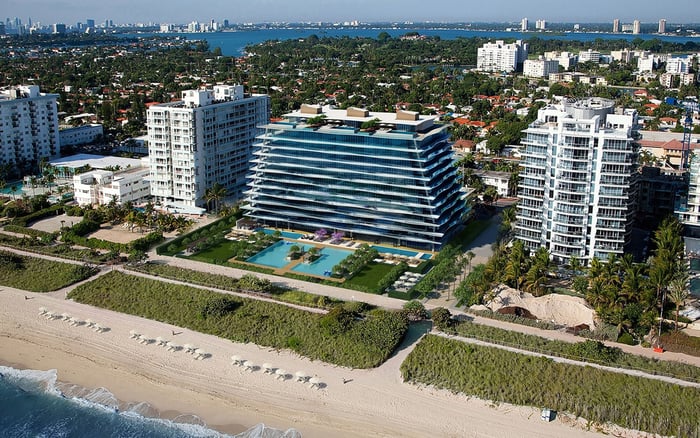
An owner-focused review of Ocean House Surfside insurance diligence, from replacement-cost valuation and ordinance-and-law endorsements to the boundary between association coverage and private interior improvements.
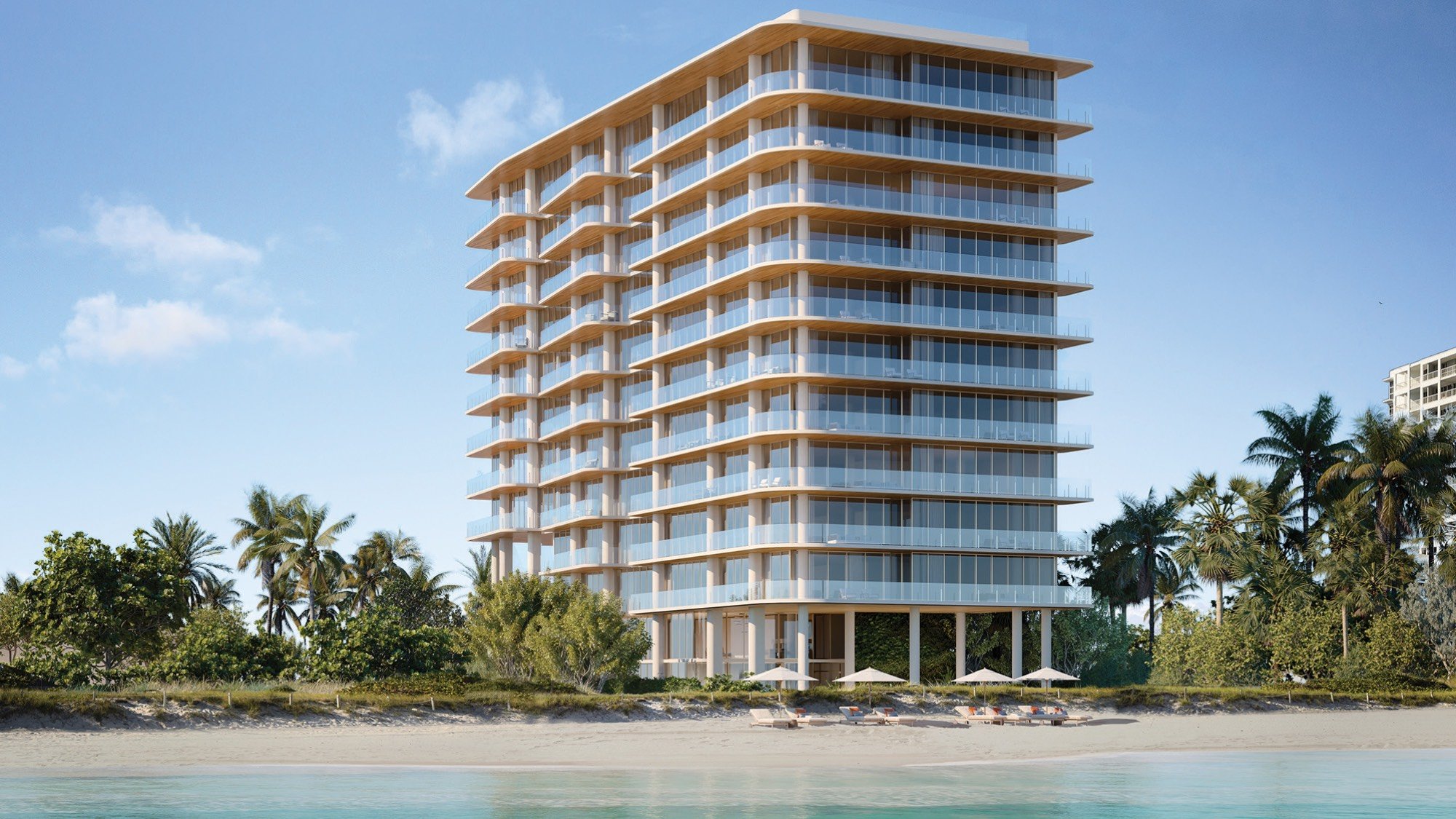
At Ocean House Surfside, the appeal of a luxury oceanfront residence warrants an equally considered review of ownership obligations. Architecture, finishes, and views shape the residential experience. They do not establish what an association’s insurance will rebuild after a covered loss.
The essential owner-operations review has three parts: whether the master policy reflects an appropriate rebuilding value, whether ordinance-and-law coverage addresses the relevant reconstruction exposures, and whether the owner’s policy accounts for improvements outside the association’s responsibility. Each question deserves a separate answer, followed by a coordinated review.
Ocean House’s actual insurer, policy limits, deductibles, appraisal value, ordinance-and-law sublimits, and claims history are not established here. None should be inferred from its positioning or advertised construction features. The objective is to identify the documents and decisions needed for a useful ownership review-not to deliver an unsupported verdict on its insurance.
Florida law requires condominium associations to maintain adequate property insurance. The valuation framework is replacement cost, not the price a buyer would pay for a residence. Market value and insurance rebuilding value answer different questions.
The appraisal cadence calls for a new or updated appraisal at least every three years. Under the 2024 statutory framework, adequate insurance is expressly tied to replacement cost determined through an independent insurance appraisal or an update to a prior appraisal. Because statutory editions can differ, an owner’s adviser should confirm the operative requirements rather than treating dated language as interchangeable with current law.
Request the latest appraisal and compare it with the policy’s statement of values. Ask whether the valuation accounts for debris removal, professional fees, permitting, code upgrades, and inflation-or whether those costs are addressed separately. These are review questions, not confirmed features of Ocean House’s coverage.
The distinction also matters when considering The Delmore Surfside alongside Ocean House. Each property requires its own valuation and policy review. Neither a purchase price nor another building’s insurance arrangements establish the appropriate rebuilding baseline.
Replacement-cost valuation does not, by itself, establish the scope of ordinance-and-law protection. Obtain the actual endorsement and examine three components separately: coverage for undamaged portions of the building, demolition, and increased construction costs associated with applicable requirements.
For undamaged portions, ask how the endorsement responds when reconstruction requirements affect property that was not itself damaged. For demolition, identify which costs fall within the wording. For increased construction costs, determine how the endorsement treats work needed to satisfy applicable codes or ordinances. The policy language must answer each question.
Then review each applicable limit or sublimit, together with its governing conditions and exclusions. Ask the insurance adviser to reconcile those provisions with the appraisal assumptions. A valuation that considers code-related expenses is no substitute for confirming how the policy covers them.
For Ocean House, no particular ordinance-and-law protection or dollar amount should be assumed. A useful review yields a written explanation of the endorsement’s scope and its relationship to the master policy-not a general assurance that the building is adequately insured.
Ocean House advertises floor-to-ceiling, impact-resistant sliding glass doors and windows, with the qualification that certain features may not be included in every residence. Those specifications provide construction context, not confirmation of insurance treatment. Marketing materials cannot replace original plans, the recorded declaration, or policy documents.
The general association insurance baseline concerns condominium property as originally installed, or replaced with like kind and quality, consistent with original plans and specifications. The framework also includes applicable authorized alterations or additions to condominium or association property. That does not mean everything presently installed inside a residence is covered.
Unit-only, nonstandard improvements require particular attention. The 2025 statutory framework addresses improvements installed by a current owner, former owner, or developer that the association is not obligated to fund in reconstruction. A developer-installed upgrade does not automatically become an association obligation simply because it was present at first delivery.
For a buyer comparing Ocean House with Fendi Château Residences Surfside, the useful question is not whether an interior feels original. It is whether each finish belongs to the applicable standard construction baseline or requires separate owner-level insurance review. Apply that question independently to each residence.
An owner’s interior inventory should distinguish original-standard finishes from developer options, later renovations, and other private improvements. Flooring, cabinetry, millwork, fixtures, and similar installations warrant particular attention: their insurance treatment cannot safely be inferred from appearance or installation date alone.
Organize available plans, finish schedules, invoices, renovation approvals, and photographs around that distinction. Ask the association and insurance adviser to clarify responsibility. Approval of an alteration is no substitute for determining whether it falls within association-insured property or remains a unit-specific improvement.
Next, reconcile the inventory with the HO-6 or equivalent owner policy. Review additions, alterations, betterments, and improvements coverage alongside contents coverage. Ask the adviser to evaluate the rebuilding amount for the owner’s responsibility rather than assuming the master policy will restore an upgraded interior.
Additional-living-expense coverage belongs in the same discussion. Review its terms against the owner’s circumstances without presuming that a particular loss, reconstruction period, or relocation expense will be covered.
The declaration helps establish which condominium property the association must maintain, repair, and replace. Maintenance responsibility and insurance-funded reconstruction nevertheless require separate review, particularly for unit-specific improvements. Responsibility for upkeep is not a complete answer to an insurance claim question.
Loss-assessment coverage is a distinct owner-policy issue within Florida’s condominium-unit insurance framework. Check it alongside the master-policy deductible schedule, but do not assume it will absorb every assessment or deductible-related expense. The owner policy’s actual terms require review.
Ask for a coordinated explanation of the association’s responsibilities, applicable deductibles, and the owner’s loss-assessment protection. Keeping these subjects distinct makes unresolved exposures easier to identify without confusing maintenance duties with insurance benefits.
The working file should contain the full master policy and endorsements, statement of values, latest insurance appraisal, deductible schedule, flood coverage documents, loss runs, and recorded declaration. Original plans and unit-level finish records provide the construction detail needed to interpret that file.
The final review should connect those documents to a concise owner-level inventory and policy analysis. Its value lies in identifying what is insured, what remains uncertain, and what requires adjustment or clarification. For a refined Surfside residence, this is practical stewardship: protecting the financial structure behind the living experience with the same care devoted to the residence itself.
For a considered approach to South Florida luxury ownership, explore MILLION.
If branded residences are on your mind — as a home or as an allocation — we would be glad to share what we are seeing, privately.
Begin a quiet conversationNo. Its insurer, limits, deductibles, appraisal value, ordinance-and-law sublimits, and claims history must be established through the actual insurance documents.
No. The relevant insurance baseline is the cost to rebuild, not the residence’s market or resale value.
The supplied Florida insurance guidance identifies a new or updated appraisal at least every three years. Confirm the operative statutory requirements with an adviser.
Examine coverage for undamaged portions, demolition, and increased construction costs separately. Confirm the applicable limits, conditions, and exclusions in the actual endorsement.
No. Advertised construction features provide context, but original plans, the declaration, and insurance documents are needed to assess coverage.
No. A unit-only, nonstandard improvement does not automatically become an association reconstruction obligation because the developer installed it.
Flooring, cabinetry, millwork, fixtures, and other private renovations warrant review. Reconcile them with the owner policy’s additions, alterations, betterments, and improvements coverage.
No. The declaration’s maintenance assignments and insurance-funded reconstruction responsibilities should be examined separately, particularly for unit-specific improvements.
They are separate but related owner-level review issues. Do not assume loss-assessment coverage will pay every assessment or deductible-related expense.
Request the full master policy, endorsements, statement of values, latest appraisal, deductible schedule, flood coverage documents, loss runs, and recorded declaration. Add original plans and unit-level finish records.