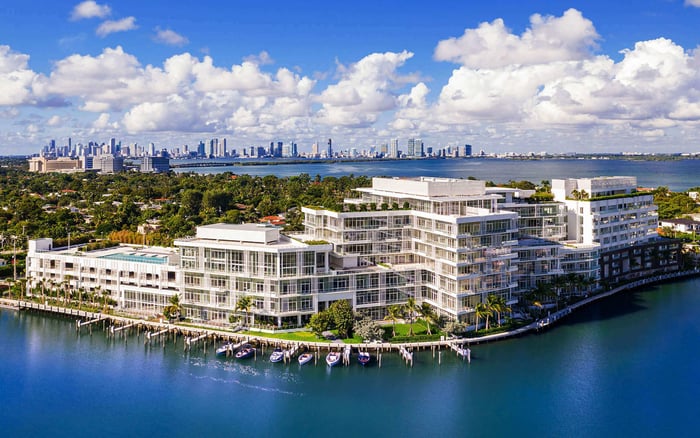
A practical due-diligence guide for part-time owners evaluating airport transfers, valet procedures, residence preparation, staff access, guest arrivals, and seasonal departure planning in Miami Beach.

For a part-time owner, the quality of an arrival depends on a coordinated sequence rather than a single amenity. Airport transportation, building access, luggage handling, residence preparation, staff credentials, guest instructions, and late-arrival contingencies should work together.
Buyers evaluating Shore Club Private Collections Miami Beach should request current written procedures instead of assuming that hotel-style service automatically answers residential needs. The most useful review follows the journey from the airport to the residence and identifies who is responsible at every handoff.
South Florida travel times can vary, so transfer planning should include a reasonable buffer. Before departure, the owner or designated assistant can confirm the correct arrival point, provide the driver with passenger and luggage details, and establish a contact for delays.
The transfer brief should address child seats, mobility needs, pets, oversized luggage, separate staff transportation, and a flight arriving outside standard service hours. Owners should also determine how a delayed flight affects any scheduled residence preparation or vendor appointment.
Valet availability alone does not explain how the service operates. Buyers should ask for written details covering operating hours, vehicle retrieval, guest parking, authorization for assistants or drivers, electric-vehicle charging, oversized vehicles, fees, gratuities, and after-hours support.
Long absences create additional questions. An owner may need to know whether a vehicle can remain on-site, who may access it during the vacancy, how keys are controlled, and what happens if maintenance or relocation becomes necessary. Luggage procedures deserve the same attention, particularly when bags arrive separately or require temporary storage.
A repeatable checklist can reduce uncertainty at the start of every stay. It may cover cleaning, linens, climate settings, groceries, package placement, maintenance observations, dining requests, and any appointment the owner wants completed before arrival.
Each requested service should be confirmed against current terms. Relevant details include advance notice, hours, charges, gratuities, cancellation rules, vendor access, and the person authorized to approve additional work. Owners should avoid relying on informal expectations when written operating guidance is available.
Seasonal ownership often involves several categories of visitors: family, overnight guests, drivers, assistants, chefs, nannies, security personnel, maintenance providers, and delivery teams. A written access matrix can identify who requires advance registration, identification, owner authorization, or a time-limited credential.
The process should also address remote approval, credential expiration, guest parking, package acceptance, food delivery, emergency access, and arrivals when the owner is not present. Household staff should receive only the access needed for their role, with a clear method for changing or withdrawing authorization.
Service-oriented buyers can apply the same review to nearby alternatives, including Setai Residences Miami Beach and The Ritz-Carlton Residences® South Beach. The comparison should focus on current written procedures, not assumptions based on branding.
Deliveries may begin before a seasonal stay, making package management an important part of the arrival plan. Owners should ask what can be accepted, where items are held, how they are logged, whether storage limits apply, and who may collect or place them inside the residence.
Large furniture, temperature-sensitive goods, contractor materials, and high-value items may follow different procedures. The owner should confirm scheduling, insurance, elevator or loading requirements, and the consequences of a missed delivery before arranging one.
A strong plan includes contingencies for flight delays, lost luggage, a driver cancellation, an unavailable staff member, or an access problem. Owners should keep current contact details for the appropriate residential team and understand the escalation path for an urgent issue.
Instructions should be simple enough for a guest or assistant to follow without improvisation. A concise arrival document can list the designated entrance, approved contacts, authorization status, transportation details, and the steps to take when plans change.
Before relying on a seasonal service model, review current governing documents, operating procedures, service menus, fee schedules, insurance requirements, access rules, emergency contacts, and owner obligations during vacancy. Any important representation should be confirmed in writing.
A paper rehearsal is useful: trace the route from airport pickup through vehicle handoff, luggage transfer, building entry, residence access, and final setup. Buyers comparing new South Florida residences can use the same framework when considering The Perigon Miami Beach or another service-oriented property.
What should a part-time owner confirm before an airport pickup? Confirm the arrival point, driver contact, passenger details, luggage needs, authorization requirements, and a backup plan for delays.
Why should transfer plans include extra time? Travel conditions can change, and a buffer helps protect connected arrangements such as residence preparation, staff access, or scheduled deliveries.
Which valet details deserve written confirmation? Ask about hours, retrieval procedures, authorized drivers, guest parking, charging, oversized vehicles, fees, gratuities, and late-night support.
How can an owner prepare the residence before returning? Use a recurring checklist and confirm which requests are available, how much notice they require, and what charges or approvals apply.
What should be included in a guest-access plan? Include registration steps, identification requirements, arrival instructions, parking details, credential duration, and an emergency contact.
How should household-staff access be managed? Define each person’s permitted access, required credentials, working schedule, remote-approval process, and procedure for withdrawing authorization.
What package questions should seasonal owners ask? Confirm acceptance rules, storage limits, notification procedures, collection authority, placement options, and any restrictions on special deliveries.
What should happen if a flight arrives late? The owner should know whom to contact, whether access procedures change, and how transportation or residence-preparation plans can be adjusted.
Which documents are important for arrival due diligence? Review current access rules, service terms, fee schedules, insurance requirements, emergency contacts, and vacancy responsibilities.
How can buyers compare service-oriented Miami Beach residences? Use the same written checklist for each property and compare procedures, availability, costs, authorization rules, and exception handling.
To compare the best-fit options with clarity, connect with MILLION.
If branded residences are on your mind — as a home or as an allocation — we would be glad to share what we are seeing, privately.
Begin a quiet conversation