A discreet buyer’s guide for San Francisco owners evaluating a seasonal South Florida pied-à-terre, from Fisher Island privacy to Brickell convenience and Miami Beach lifestyle.
For a San Francisco buyer, a South Florida pied-à-terre is rarely an impulse purchase. It is a lifestyle instrument: part refuge, part social base, part family gathering point and part long-view asset. The right choice depends less on a postcard view than on the rhythm of use. Will the residence support long winter stays, a sequence of extended weekends, or a handful of high-season visits shaped by family, business and culture?
That distinction matters because South Florida offers several expressions of luxury. Fisher Island speaks to buyers who value discretion, separation and a more private daily cadence. Brickell suits those who want a polished urban base with dining, offices and a vertical lifestyle close at hand. Miami Beach, from quieter beachfront corridors to South of Fifth, offers the coastal vocabulary of sand, terraces, restaurants and social energy. In practical search terms, the brief may move from Miami Beach energy to Fisher Island privacy, with second-home discipline shaping every decision.
A seasonal residence should be chosen around how it will actually be lived. A buyer coming from San Francisco may be accustomed to layered neighborhoods, strong design culture and a premium on walkability. In South Florida, the equivalent may be a building that solves daily life through service: valet, concierge, maintenance coordination, beach or pool programming, wellness spaces and an easy arrival experience.
Before comparing residences, define the household pattern. Couples who plan to arrive with little notice need a building team that can receive deliveries, prepare the home and manage vendors. Families may prioritize guest rooms, flexible dens, storage, parking and proximity to schools, clubs or grandparents. Buyers who entertain should study elevator privacy, terrace usability, acoustic separation and the quality of common spaces. The most elegant pied-à-terre is not necessarily the largest one. It is the one that removes friction.
The same discipline applies to ownership structure. Seasonal buyers should review association rules, renovation policies, pet standards, leasing limitations, insurance obligations, reserves and service expectations before the emotional pull of a view takes over. A beautiful apartment that is difficult to use is not a pied-à-terre. It is a project.
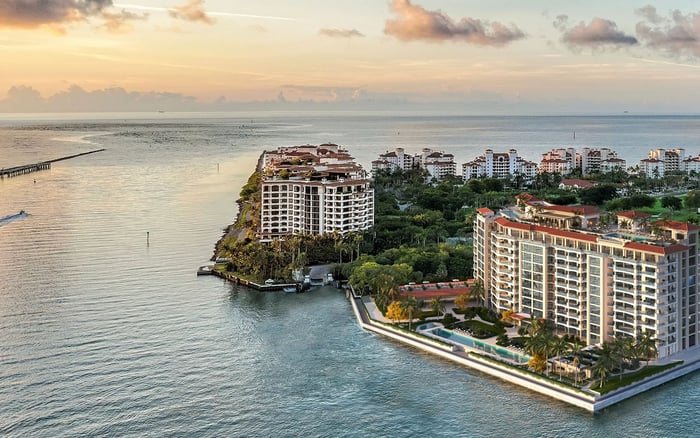
For buyers focused on Fisher Island, the core appeal is not merely water or status. It is the promise of a quieter perimeter around daily life. The residence should be evaluated as part of a larger private routine: arrival, security posture, staff coordination, wellness, dining habits, guest access and the ability to leave the home unattended between visits.
This is where newer and highly serviced residential offerings can be especially relevant. A project such as The Residences at Six Fisher Island belongs in the conversation for buyers who want a contemporary seasonal base on the island and prefer a residence planned around modern expectations rather than a retrofit. For a different kind of Fisher Island buyer, The Links Estates at Fisher Island may enter the discussion when the brief leans toward a more house-like sense of privacy and space.
The practical test is simple. Imagine arriving after a long flight, staying five nights, hosting dinner twice and leaving again with confidence that the home will be cared for. If the building, staff and layout support that sequence gracefully, the residence is functioning as a true seasonal pied-à-terre.
Brickell is often the counterpoint to Fisher Island. It is more vertical, more immediate and more connected to the city’s business and dining rhythm. For a San Francisco buyer who still wants urban energy, it can feel familiar in spirit, though the architecture, climate and waterfront orientation create a distinctly Miami version of city living.
The right Brickell pied-à-terre should offer efficiency without feeling transient. Private elevator access, thoughtful service areas, strong parking logistics and a plan that separates guests from the primary suite can make a compact residence feel composed. Buyers should also consider how often they will want to cross bridges, reach the beach, dine within walking distance or host visiting family. In this context, St. Regis® Residences Brickell is a natural reference point for those who associate seasonal ownership with hospitality-grade service and a recognized residential identity.
Brickell is not the choice for every buyer seeking quiet. It is the choice for those who want their second residence to participate in the city. If the seasonal calendar includes meetings, dinners, arts events, medical appointments and visiting friends who prefer an urban hotel alternative, Brickell can be highly practical.
Miami Beach requires a more nuanced read. Some buyers want the social pulse. Others want a serene building that simply happens to be on or near the beach. The distinction matters. A pied-à-terre that feels glamorous for a weekend may not feel restful for a month, while a quieter residence may become the place the family returns to year after year.
For buyers drawn to refined beachfront living, The Perigon Miami Beach can sit within the discussion of design-led coastal residences. For those considering the South of Fifth lifestyle, The Ritz-Carlton Residences® South Beach may appeal to buyers who want brand service, beach proximity and a more hospitality-informed residential experience.
The key is to test the neighborhood at the hours you will actually use it. Morning walks, late dinners, weekend traffic, guest arrivals and the path from car to residence all matter. So does terrace orientation. A seasonal home should not only photograph well. It should make the first coffee, the afternoon swim and the last evening drink feel effortless.
A sophisticated buyer should underwrite lifestyle first, then documents. Review building governance, upcoming capital needs, maintenance culture, rules around guests and staff, and the ease of arranging repairs while absent. Ask how packages are handled, how vendors are admitted, how storms are prepared for and how quickly management communicates. Seasonal ownership depends on trust.
Interior planning deserves equal rigor. Prioritize durable finishes, shaded outdoor areas, storage for seasonal wardrobes, blackout capability, humidity awareness and furniture that can withstand real use. A pied-à-terre should be ready within hours of arrival. If every visit begins with errands, the residence is not doing its job.
Finally, consider exit logic. Even if the plan is long-term enjoyment, buy a property that another discerning seasonal buyer can understand quickly. Privacy, service, views, parking, condition and building reputation are easier to communicate than idiosyncratic renovations or overly personal design choices. The most successful seasonal homes feel personal in use and broadly legible in value.
Is Fisher Island the right choice for every San Francisco buyer? No. It is best suited to buyers who place a premium on privacy, controlled routines and a quieter seasonal rhythm.
How should I compare Fisher Island with Brickell? Compare privacy with convenience. Fisher Island tends to suit retreat-oriented living, while Brickell suits buyers who want an urban base.
What makes a strong seasonal pied-à-terre? A strong pied-à-terre is easy to arrive to, easy to leave and supported by reliable building services while the owner is away.
Should I buy new construction or resale? New construction may offer modern planning and amenities, while resale may offer immediacy and an established building culture. The better choice depends on timing and use.
Is Miami Beach better for entertaining? It can be, especially for buyers who want beach access, dining and a more social cadence. The exact building and micro-location matter greatly.
How important is building staff? Very important. For a seasonal owner, management quality can determine whether the residence feels effortless or demanding.
Should I prioritize views or floor plan? Prioritize the plan first, then the view. A beautiful outlook cannot compensate for poor storage, awkward guest flow or limited daily comfort.
Can a smaller residence work as a luxury second home? Yes. A smaller residence can work beautifully if it has strong service, smart storage, privacy and a layout aligned with real use.
What should I review before making an offer? Review association rules, maintenance obligations, leasing limits, renovation policies, insurance matters and the building’s service standards.
How far ahead should I begin the search? Begin before the season you hope to use the home. The best decisions usually require time to compare buildings, documents and daily logistics.
To compare the best-fit options with clarity, connect with MILLION.
If branded residences are on your mind — as a home or as an allocation — we would be glad to share what we are seeing, privately.
Begin a quiet conversation