The advertised wellness offering is extensive, but its practical value depends on capacity, booking rights, guest eligibility, and practitioner permissions. Here is what buyers should resolve in writing before committing.
At The Ritz-Carlton Residences® Palm Beach Gardens, the appeal of a residential wellness routine is clear: training, restorative treatments, and quiet recovery close to home. The waterfront project at 2200 PGA Boulevard, Palm Beach Gardens, Florida 33408, advertises an extensive amenity offering. For a buyer, however, the decisive question is not simply what is planned, but how reliably it can be used.
A treatment room is not the same as an available appointment. A guest suite is not an unrestricted wellness pass. Before assigning value to these spaces, separate three issues: physical capacity, eligibility to enter and book, and permission to use a preferred practitioner. Public amenity details leave important elements of each unresolved. That does not establish overcrowding or restrictive policies; it identifies questions to resolve before purchase.
More than 20,000 square feet of indoor and outdoor amenities are advertised, but that figure covers multiple uses, not wellness facilities alone. Other advertised amenities include a resort-style pool with private cabanas, pickleball courts, a dog park, a children’s club, and dining areas. The total does not establish how much space is available for a morning workout or private treatment.
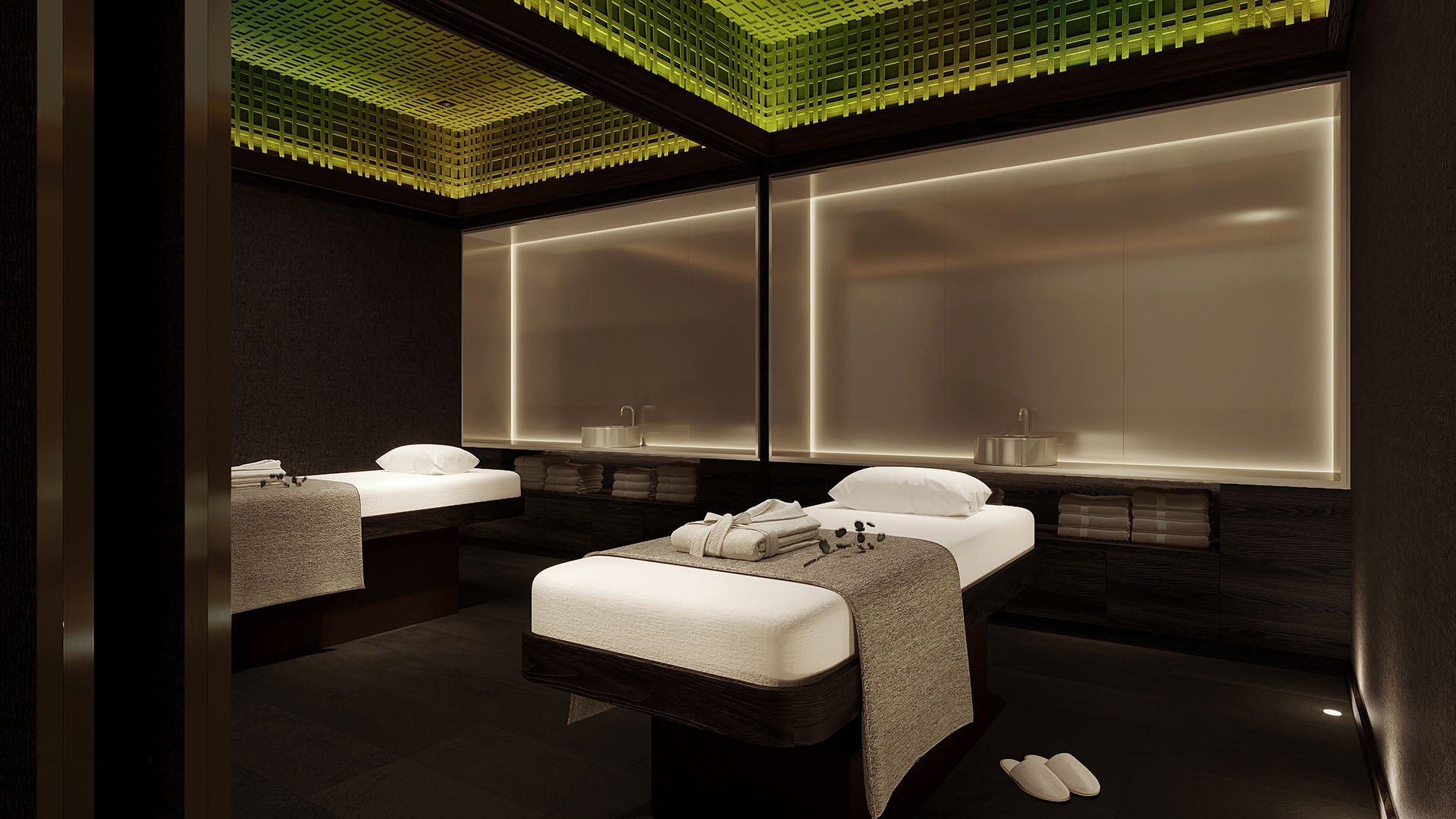
The planned spa and wellness center includes relaxation rooms, private treatment rooms, steam rooms, saunas, and rain showers. Advertised fitness spaces include a fitness center, a dedicated fitness breakout room, and a waterview yoga/fitness studio intended for group classes and private instruction.
Public amenity details do not specify room-by-room occupancy, class size, or the allocation of space among residents, guests, classes, and private appointments. Request written limits and an operating schedule for each facility. Distinguish maximum permitted occupancy from the number of appointments or class places that staffing will actually support.
If you train at a fixed hour, ask how that hour would work when a class and private instruction are scheduled simultaneously. The answer should identify shared spaces, booking priorities, and any limits on independent use.
Concierge services include assistance with spa reservations. That is a service description, not a complete reservation policy. Public amenity details do not specify which wellness uses are first-come, reservation-based, or appointment-only. Nor do they establish booking windows, cancellation rules, late-arrival policies, waitlist priority, or recurring-reservation rights.
Request those terms facility by facility. A recurring training appointment, an occasional massage, and an unscheduled sauna visit may require different permissions. Ask whether a private session closes a room to others, whether residents have priority over guests, and whether peak-period or holiday restrictions apply.
If The Ritz-Carlton Residences® West Palm Beach is also on the shortlist, ask the same questions there rather than assuming a shared brand confers identical access rights. Compare written operating terms, not the familiarity of the name.
Request a concise reservation schedule showing who can book, how far ahead, at what charge, and subject to which cancellation or priority rules. Where policies are not yet final, ask when they will be established and who may amend them.
Two fully serviced guest suites are advertised for residents to reserve for overnight visitors. They support overnight hosting, but do not establish unrestricted wellness access for their occupants.
Public amenity details do not clearly distinguish the rights of owners, tenants, overnight guests, accompanied day guests, and unaccompanied day guests. Accompaniment requirements, identification, check-in procedures, numerical limits, and wellness-access fees are also unspecified. Independent guest booking rights for treatments, personal training, and yoga instruction remain unresolved.
Second-home buyers should test the exact visits they expect to host. Could an overnight visitor attend a class while the owner is elsewhere? Could a family member book a treatment independently? Would a day guest need the resident present throughout a workout? These questions call for written confirmation, not assumptions based on hospitality branding.
Request an eligibility table covering each user category and facility, including age restrictions and charges. Confirm separately whether guest-suite occupancy changes any of those rights. Permission to stay overnight and permission to reserve a treatment should be documented as distinct matters.
For buyers with established trainers, massage therapists, or physical therapists, continuity of care may matter more than the breadth of an amenity menu. Public wellness details do not establish whether outside practitioners are permitted or what approval and facility-use restrictions would apply.
Ask first whether each intended practitioner category is allowed. Then establish licensing and insurance requirements, resident sponsorship, approval timelines, and any exclusive-provider arrangements. Permission to visit a residence should not be treated as permission to use a shared treatment room or fitness facility.
Operational questions matter just as much. Which entrance must a practitioner use? What equipment may they access? Can payment be made directly, and may they serve multiple residents? Clarify whether approval applies to the practitioner, the resident, or each appointment.
For a broader shortlist that includes The Well Bay Harbor Islands, apply the same practitioner-access test. Compare documented permission to maintain your routine, without presuming any particular policy at either property.
The wellness spaces are presented as residential amenities, not as a separately documented public day spa. That presentation does not imply unrestricted public access or unlimited resident service. Confirm what is included in ownership costs and what requires separate payment, including instruction, treatments, guest use, or reservations where applicable.
Also request the final equipment specifications, staffing plan, operating hours, and anticipated availability of the amenities at occupancy. Ask counsel to examine what the purchase documents provide if facilities are delayed, altered, or delivered with a different service arrangement.
The offering is made only through the condominium prospectus, and statements should not be relied upon unless included in that prospectus. Written operational explanations are useful, but counsel should determine their contractual significance and reconcile them with the governing documents.
The purchase decision need not wait for a promise of unlimited access. It should rest on a clear match between documented rights and the buyer’s actual routine: preferred hours, expected visitors, trusted practitioners, and acceptable costs. That is the distinction between an attractive wellness offering and one that meaningfully supports daily life.
For a discreet perspective on your next South Florida residence, connect with MILLION.
If branded residences are on your mind — as a home or as an allocation — we would be glad to share what we are seeing, privately.
Begin a quiet conversationThe waterfront residential project is at 2200 PGA Boulevard, Palm Beach Gardens, Florida 33408.
No. The more than 20,000 square feet advertised covers multiple indoor and outdoor amenity uses, not wellness facilities alone.
The planned spa and wellness center includes relaxation rooms, private treatment rooms, steam rooms, saunas, and rain showers.
The offering includes a fitness center, a dedicated fitness breakout room, and a waterview yoga/fitness studio for group classes and private instruction.
Public amenity details do not state room-by-room occupancy limits or a schedule allocating capacity. Buyers should request written limits and operating schedules.
Concierge assistance with spa reservations is advertised, but it does not establish guaranteed availability or booking procedures for every wellness facility.
Two fully serviced guest suites are advertised, but unrestricted wellness access for their occupants is not established. Confirm eligibility separately from the overnight reservation.
Public amenity details do not clarify independent guest booking rights. Ask whether reservations require resident sponsorship or accompaniment and whether fees apply.
Public information does not establish whether outside practitioners are permitted. Confirm approval requirements, licensing, insurance, and access to shared rooms and equipment in writing.
Review the condominium prospectus and applicable governing and purchase documents with counsel. Request written operating policies and clarify their contractual significance, including terms addressing delayed or changed amenities.