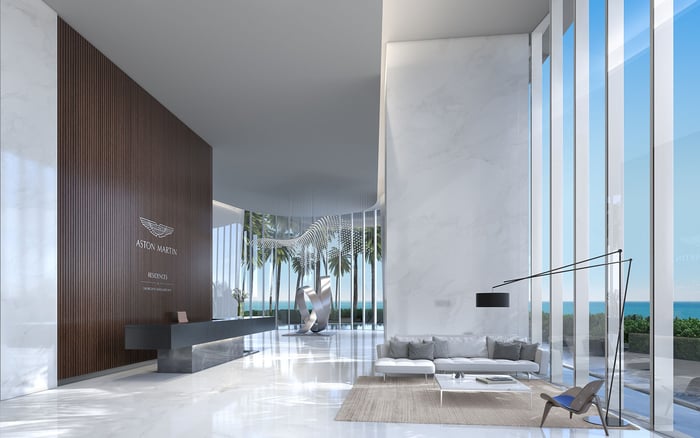
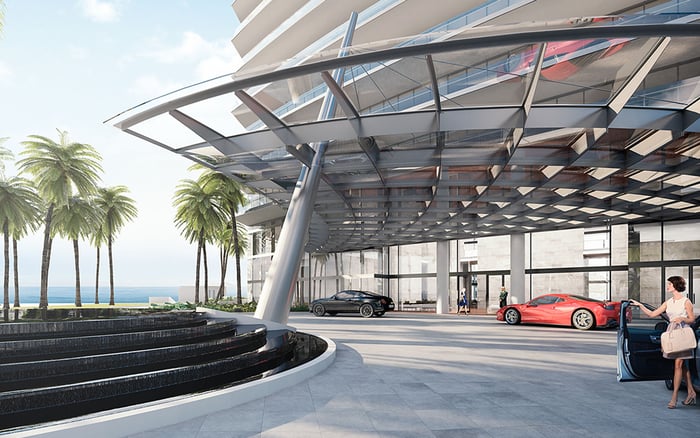
Casa Bella’s Italian-design identity and private-elevator arrival offer a compelling second-home proposition. The decisive diligence lies at street level: confirming retail uses, delivery routing, valet operations and access arrangements when owners are away.
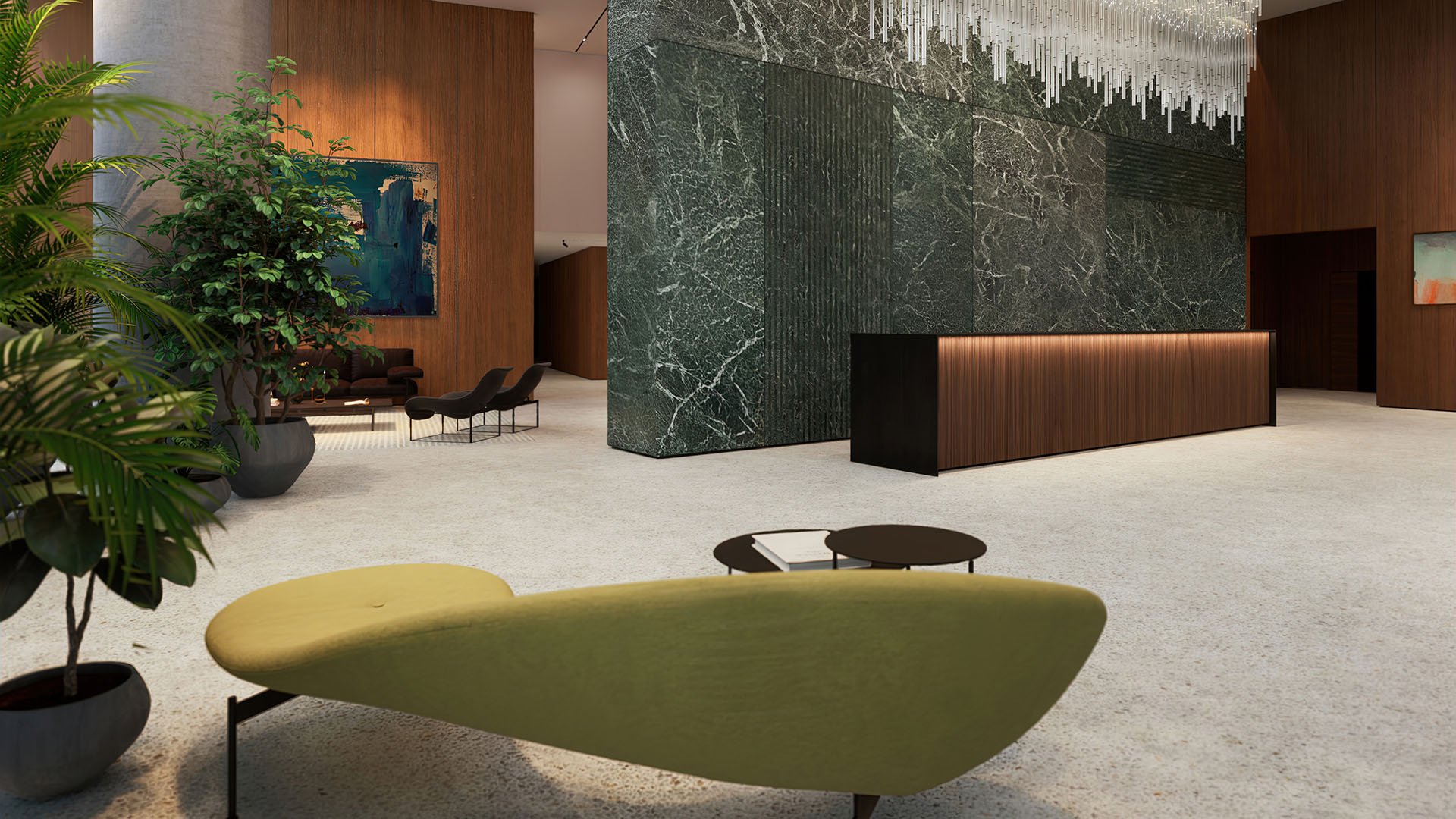
For a second-home buyer, luxury is partly the absence of friction: arriving with luggage, finding the residence prepared and entering without unnecessary exposure. At Casa Bella by B&B Italia Downtown Miami, the advertised private-elevator sequence is central to that proposition. Yet the journey from car to residence warrants as much attention as the interiors.
Located at 1400 Biscayne Boulevard in Miami’s Arts & Cultural District near Downtown, Casa Bella brings an Italian-design identity to an urban address. The 56-story, approximately 650-foot tower is developed by Related Group and Alta Developers. The buyer’s question is not simply whether the residence feels private, but whether deliveries, visitors and household support can be accommodated without compromising that experience.
Residence-entry privacy and street-level privacy are separate considerations. That distinction allows buyers to appreciate Casa Bella’s strengths while examining the operational details that matter most during intermittent stays.
Piero Lissoni and the collaboration with B&B Italia are central to Casa Bella’s design identity. For an owner who values a coherent interior aesthetic, that connection matters. It does not, however, establish that a public B&B Italia furniture store operates within the property.
The distinction matters because the question of retail adjacency remains unresolved. A residential collaboration, a sales gallery and a public furniture showroom are different uses, with potentially different visitor and delivery patterns. The sales gallery at 1400 Biscayne Boulevard, PH 5303, should not be treated as confirmation of furniture retail.
Neither the presence nor the absence of adjacent retail is established here. Before purchasing, ask management to identify any operating commercial spaces, their entrances and whether customers share any part of the residential arrival route. Seek a current description of those uses and a circulation plan, rather than drawing an inference from the brand name.
B&B Italia distributes products through its stores and authorized dealers, with delivery timing obtained from the relevant seller. Buyers should therefore separate furniture procurement from building delivery approval. A purchase arrangement does not explain where a truck may stop, how pieces reach the residence or whether installation requires a reserved elevator.
For an owner furnishing a second home remotely, those distinctions can determine whether a delivery proceeds smoothly or requires rescheduling. Request the building’s current move-in and delivery manual before committing to shipment dates. Confirm permitted vehicle dimensions, insurance requirements, elevator dimensions and oversized-furniture procedures.
Establish who can accept a delivery in the owner’s absence and whether that authorization extends to installers. Treat the design relationship as an aesthetic proposition; assess furniture delivery through written operating rules.
The advertised configuration gives all residences two private elevators opening into a private vestibule, with biometric access control. This sequence offers an alternative to arrival through a conventional shared residential hallway.
For a privacy-conscious buyer, that is meaningful at the residence threshold. It does not establish a separately screened curbside entrance, exclusive valet circulation or complete separation from vendors at every stage of arrival.
Ask management to demonstrate the full route: vehicle drop-off, lobby access, elevator authorization and vestibule entry. Then examine how guests, household staff and contractors receive temporary access, how permissions expire and who can revoke them. Evaluate biometric control alongside visitor procedures, rather than treating it as a complete privacy system on its own.
No building-specific delivery-vehicle count supports a quantified congestion claim for Casa Bella. The Biscayne Boulevard address alone cannot establish how frequently trucks arrive, how long they remain or whether they interfere with resident drop-off.
The practical diligence is more specific. Request confirmation of loading locations, delivery windows, truck-staging rules and service-elevator reservation procedures. These details remain unconfirmed here. Ask whether deliveries use a dedicated service entrance and whether couriers, furniture crews and residents intersect at the lobby or elevators.
Visit during a weekday arrival period and, with permission, during a scheduled delivery window. Observe where vehicles wait, how staff direct them and whether residents can move comfortably while deliveries are underway. A site visit is useful, but should complement written procedures rather than replace them.
Advertised services include valet parking, housekeeping and pre-arrival grocery shopping and delivery. These are directly relevant to an owner who wants to arrive to a prepared residence. Their value depends on how they are arranged and who is responsible for each handoff.
Grocery service, for example, does not establish whether deliveries follow a dedicated service route, use a freight elevator or pass through resident-facing areas. Confirm who receives groceries, whether refrigerated storage is available and how purchases reach the residence before the owner arrives.
Housekeeping warrants the same precision. Ask whether staff can enter while the owner is away, what authorization is required and how completed work is communicated. Confirm the process for maintenance access as well. A written absence-and-arrival plan can clarify responsibility without relying on informal understandings.
Buyers considering One Thousand Museum Downtown Miami alongside Casa Bella can apply the same arrival checklist without assuming the properties operate alike. Ask each management team to explain curbside access, visitor screening, loading arrangements and the route to the residence. Compare documented procedures, not simply the vocabulary of privacy.
Including Aston Martin Residences Downtown Miami in a broader search offers another opportunity to test the same ownership priorities. Keep the comparison operational: who receives packages, who admits vendors and what happens when several arrivals coincide.
For Casa Bella itself, the strongest evidence would combine current rules with a demonstrated arrival sequence. Confirm that the procedures apply to the particular residence under consideration, especially those governing temporary access and furniture movement.
Casa Bella’s design identity, private vestibules and advertised support services present a compelling second-home proposition. The key distinction is between what those features establish and what still requires confirmation. Private elevators support residence-entry privacy; they do not resolve every question about the curb, commercial visitors or delivery traffic.
A buyer comfortable with the design proposition should make the next review operational. Confirm commercial uses, walk the arrival route, obtain delivery rules and document how the home will be managed between visits. The purchase decision can then rest on a complete ownership experience rather than an attractive but incomplete arrival narrative.
For a discreet perspective on your South Florida second-home search, explore MILLION.
If branded residences are on your mind — as a home or as an allocation — we would be glad to share what we are seeing, privately.
Begin a quiet conversationCasa Bella is at 1400 Biscayne Boulevard in Miami’s Arts & Cultural District near Downtown.
Related Group and Alta Developers developed the 56-story, approximately 650-foot condominium tower.
The project’s Italian-design positioning centers on a collaboration with B&B Italia and Piero Lissoni. That relationship does not establish an operating public furniture store at the property.
No. The sales gallery designation at 1400 Biscayne Boulevard, PH 5303, is not confirmation of a public furniture retail showroom.
Residential descriptions state that all residences have two private elevators opening into a private vestibule. The elevators are also described as having biometric access control.
No. Residence-entry privacy is distinct from street-level screening, and the elevator descriptions do not establish a separate, fully screened resident curbside entrance.
No building-specific delivery-vehicle count is established. Buyers should examine written loading procedures and observe an authorized delivery window rather than infer congestion from the address.
Request the current move-in and delivery manual, including loading locations, scheduling rules, vehicle limits, insurance requirements and elevator dimensions. Confirm oversized-furniture procedures and vendor access as well.
Valet parking, housekeeping and pre-arrival grocery shopping and delivery are advertised. Buyers should confirm how each service operates when they are away.
Confirm who receives groceries, whether refrigerated storage is available and how purchases enter the residence. A dedicated service entrance or freight-elevator route is not established by the service descriptions.