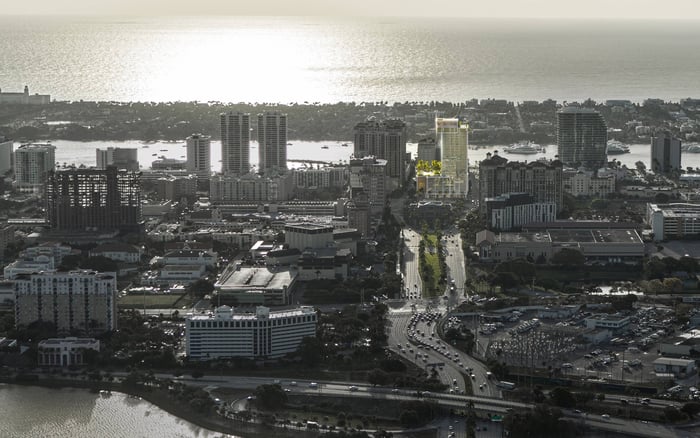
A discreet buyer’s framework for evaluating Palm Beach connectivity, backup service, cybersecurity responsibility, and records retention, without confusing public-sector infrastructure with private-property capabilities.
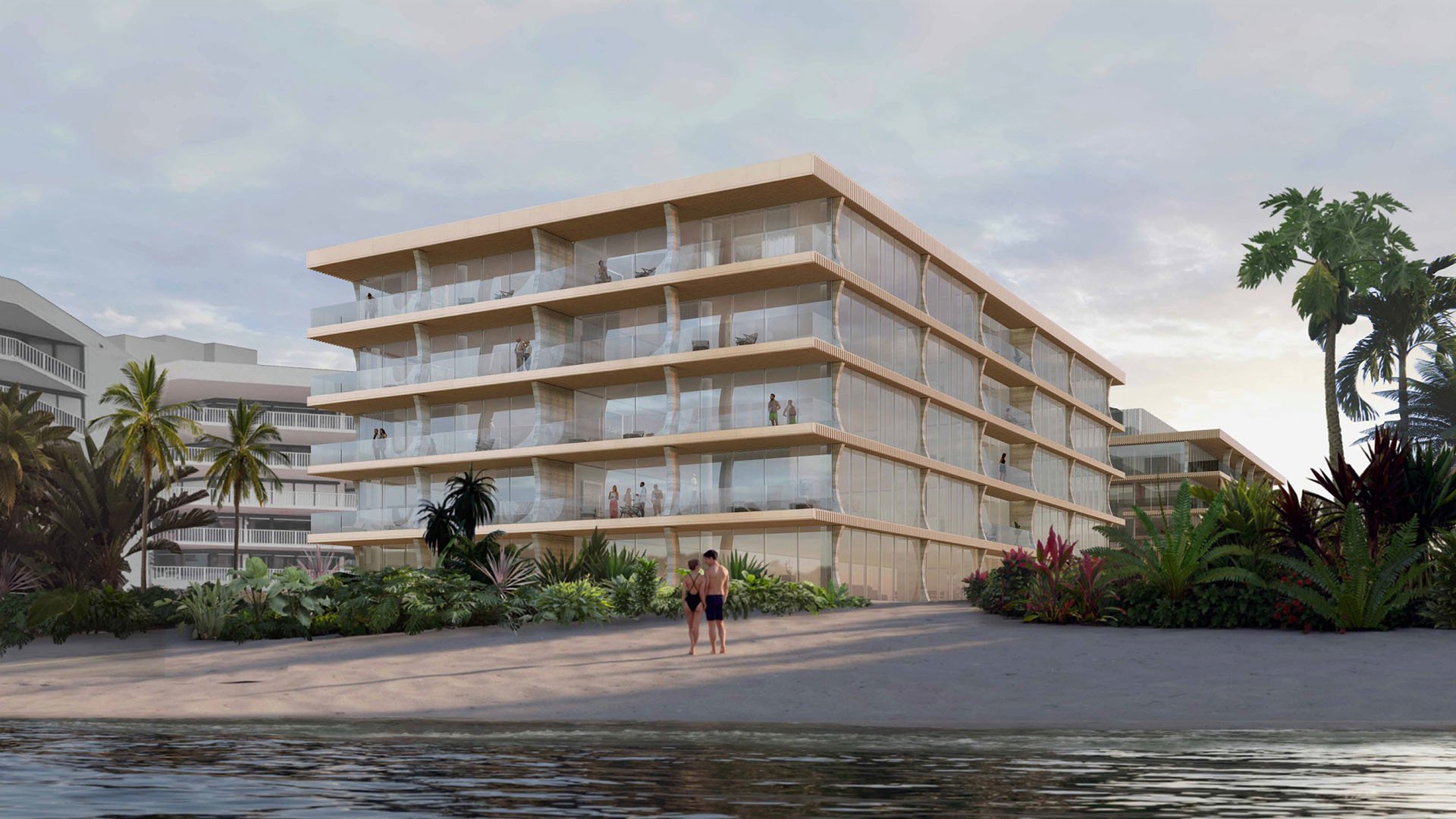
In Palm Beach, a residence should support privacy and continuity as convincingly as it delivers light, proportion, and a gracious arrival. For buyers who work remotely, manage a household from abroad, or expect dependable communication during disruption, connectivity belongs beside the more visible elements of due diligence.
The question is not simply whether a property has fiber. It is which service reaches the exact address, what remains available if that service fails, who controls the supporting systems, and what records survive an incident. A polished presentation cannot substitute for a documented operating arrangement.
This framework applies equally to an estate and a condominium search extending into West Palm Beach. When considering Alba West Palm Beach, for example, buyers can include connectivity documentation in their property review without presuming any particular carrier, backup configuration, or cybersecurity capability.
Area-level availability should begin the conversation, not conclude it. Before relying on a service description, request confirmation of the connection type, plans, and speeds available at the home under consideration.
For a condominium, ask management to distinguish common-area service from service available inside the unit. For an estate, ask where the carrier’s responsibility ends and the owner’s equipment begins. These are due-diligence questions, not assumptions about a property’s configuration.
A useful written response identifies the proposed carrier, connection type, available plan, installation requirements, and support contact. Establish pricing and service guarantees directly for that address. An advertised speed is not evidence of continuity during an outage.
At Forté on Flagler West Palm Beach, the same address-specific review belongs alongside other purchase inquiries. What matters is the arrangement available to the buyer, not a general description of neighborhood connectivity.
Public-sector infrastructure should not be treated as evidence of a private residence’s service, physical routing, or resilience. Two carrier names alone are likewise not proof that a property’s connections follow independent physical routes.
For a prospective home, request a plain-language explanation of the primary and secondary connections. Ask whether they share a building entry point or other infrastructure, what activates the backup, and which household or building functions it supports. If cellular failover is proposed, request property-specific performance evidence rather than assuming coverage will translate into usable service.
Power belongs in the same discussion. Ask which communications equipment receives backup power, what runtime is documented, and under what conditions that runtime was established. Seek an explanation of the complete service path; a description of one component is not reassurance about the whole system.
Continuity and cybersecurity warrant separate questions. For private-property diligence, begin with accountability: who makes decisions about the systems supporting the residence?
Ask management or the owner to identify who administers shared systems, approves vendor access, responds to incidents, and communicates with residents. Clarify where building responsibilities end and an owner’s responsibilities begin. The objective is a clear chain of responsibility, not a collection of technical assurances.
Buyers may also ask whether multifactor authentication, separate networks, or controls on vendor remote access are used. These remain questions about the property’s actual arrangements-not assertions that a particular control is legally required or already installed.
When reviewing Mr. C Residences West Palm Beach, request the same clarity about shared-system administration and resident responsibilities. No project-specific security capability should be inferred from its name or presentation.
“Access logs” is too broad a phrase for a meaningful retention commitment. Computerized security-event logs, records of information-system privileges, and physical door, gate, elevator, or visitor records are distinct categories. A retention period for one does not automatically apply to another.
Ask the property’s representatives to identify each record category, its retention schedule, who may retrieve it, how it is protected, and how preservation requests are handled. Ask specifically how records are protected against unauthorized access or modification.
Do not assume a County retention period governs a private residence or condominium. Applicable obligations require separate confirmation for the property and record category. If representatives cite a policy, request its scope and an explanation of how it applies to the systems under review.
Recorded communications deserve separate treatment. If a property records calls or maintains other communications records, ask what its own policy covers, how long records are kept, and who authorizes disposal. Do not assume those records share the retention period used for entry-system data or cybersecurity events.
Recovery also extends beyond internet transport. Ask what can be restored after an interruption and who performs that work. At Shorecrest Flagler Drive West Palm Beach, as elsewhere, request property-specific answers rather than infer recovery arrangements from regional infrastructure.
Before committing, seek a concise package covering address-level service, backup arrangements, power dependencies, cybersecurity responsibility, and retention by record type. Ask that proposed capabilities be distinguished from installed ones and that performance claims be supported by relevant documentation. Confirm any failover-testing schedule with the responsible operator rather than assuming one exists.
The goal is proportionate confidence: knowing what is available, what has been demonstrated, and who will respond when something changes. That clarity is a quieter, more useful expression of luxury than an unqualified promise of uninterrupted service.
Explore Palm Beach residences and West Palm Beach opportunities with MILLION.
If branded residences are on your mind — as a home or as an allocation — we would be glad to share what we are seeing, privately.
Begin a quiet conversationRequest an exact-address check identifying the carrier, connection type, available plans, and installation requirements. Area coverage alone does not establish service at a particular residence.
No; public-sector arrangements do not establish a residence’s carrier service, routing, or backup capabilities. Request documentation specific to the property.
Two carrier names do not establish physical route independence. Buyers should request property-specific documentation of routing and any shared infrastructure.
Ask what activates the backup, which functions it supports, and what performance has been demonstrated at the property. Also confirm backup power for the communications equipment and its documented runtime.
Buyers should ask management to identify the parties responsible for shared-system administration, vendor access, incident response, and resident communication. Responsibilities inside an individual residence should be clarified separately.
Security-event logs and user-privilege records are distinct from physical door, gate, elevator, and visitor records. Their retention policies should be reviewed separately.
Request each record category, its retention schedule, authorized retrieval procedures, and protections against unauthorized access or modification. Also ask how preservation requests are handled.
Do not assume a County retention period governs a private residence or condominium. Confirm the applicable obligations and policies for the property and record category.
Do not assume the schedules are the same. If calls are recorded, request the property’s recording, retention, and disposal policies separately.
Ask what can be restored after an interruption, who performs that work, and what supporting documentation is available. Distinguish proposed capabilities from installed systems and confirm any failover-testing schedule.