Fort Lauderdale’s luxury condominium market rewards careful distinctions. A buyer-oriented framework for testing layout scarcity, everyday privacy, and financial discipline without mistaking desirable features for proven resale premiums.

A residence can be exceptional to inhabit without being exceptional to resell. In Fort Lauderdale, that distinction deserves particular attention when the purchase thesis rests on a rare floor plate, a discreet arrival sequence, or an extensive amenity offering. Each may enrich ownership. None, on its own, establishes how the next buyer will value the property.
The more useful question is whether those qualities remain persuasive as competing inventory expands and carrying costs draw closer scrutiny. Scarcity, privacy, and operating-cost discipline are best treated as underwriting hypotheses: characteristics to test against comparable transactions, building documents, and the alternatives available to a future purchaser.
No quantified local resale premium is established here for full-floor layouts, private elevators, or disciplined operating costs. That does not make these qualities irrelevant. It makes the evidence behind the asking price more important.
Fort Lauderdale’s overall condominium market had 12.3 months of supply in Q2 2025. Luxury condominiums, defined as the top 10% of the market, had approximately 18.1 months. These measures cover different market segments; the broader figure should not be read as waterfront-only inventory.
Within the luxury segment, the median sale price was approximately $1.80 million, the marketing period approximately 84 days, and the listing discount approximately 10.4%. Together, these figures describe a market in which an elevated price point did not eliminate negotiation. They do not establish the appropriate discount for any individual residence.
By Q1 2026, market activity remained highly selective, with waterfront locations, redevelopment lots, and newer condos performing best. The condominium list-to-sale differential was approximately 17%. That later figure reflects a different period and measure from the Q2 2025 luxury listing discount; it should not be treated as a directly comparable increase.
For a buyer, the implication is straightforward: anchor an offer in relevant closed sales, then examine competing inventory. Neither an ambitious asking price nor a broad market discount substitutes for that work.
A rare plan is not necessarily a plan with few substitutes. Begin by defining what would be difficult to replace: frontage, view orientation, usable outdoor space, room proportions, elevator configuration, or the relationship between entertaining and private rooms. Interior square footage alone cannot answer those questions.
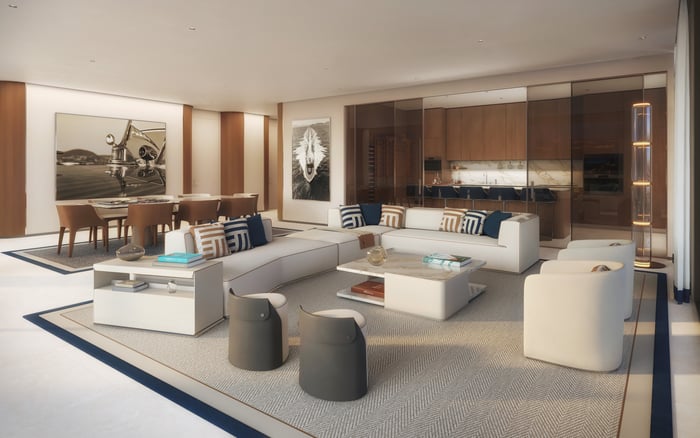
For a residence under consideration at Sixth & Rio Fort Lauderdale, build the comparison around the specific plan, not the project name. Ask which closed sales offer a similar living arrangement and which available residences could satisfy the same buyer. This is a test to conduct, not an assertion about the project’s layouts or resale performance.
Distinguish three forms of scarcity: few examples in the building, few available today, and few credible alternatives across the buyer’s search area. Only the last directly addresses substitution beyond a single address. Even then, rarity needs demand. A distinctive layout suited to a narrow lifestyle may require more patience at resale rather than command a premium.
Request plans for the subject residence and relevant alternatives. Compare how each functions before assigning value to its apparent uniqueness.
Evaluate privacy as a sequence of experiences. Who shares the arrival route? What can be seen when the elevator or front door opens? How do visitors, deliveries, and service personnel move? Can bedrooms remain separate from entertaining areas? Are terraces exposed to neighboring sightlines?
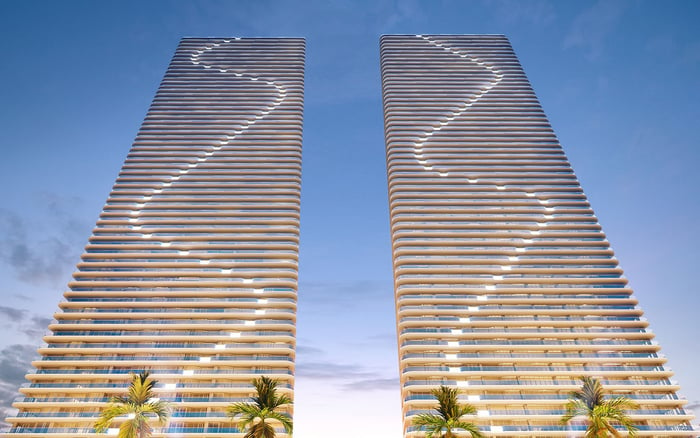
When evaluating Four Seasons Hotel & Private Residences Fort Lauderdale, request the relevant access arrangements and residence plans rather than inferring privacy from the name. Confirm the configuration of the particular home and the rules governing shared spaces.
A private elevator, where present and verified, answers only part of the inquiry. It does not establish acoustic separation, terrace privacy, or how deliveries are handled. Nor does it establish a measurable resale premium.
For an owner who values discretion, these details may justify a personal willingness to pay. Keep that lifestyle value separate from any price increment supported by comparable sales. The distinction helps prevent a deeply personal preference from becoming an unsupported resale assumption.
Operating-cost discipline is not synonymous with the lowest monthly charge. The question is whether the budget credibly supports the building’s obligations and the service level the buyer expects. A modest charge is not sufficient evidence of efficiency, just as a higher charge is not sufficient evidence of waste.
For a purchase under consideration at Auberge Beach Residences & Spa Fort Lauderdale, request association budgets, reserve materials, insurance terms, assessment information, and engineering materials before deciding whether ownership costs fit the intended holding period. Apply the same standard to every shortlisted address.
Review recurring expenses separately from potential capital obligations. Ask what is funded, what remains uncertain, and how anticipated work is reflected in the financial documents. Examine insurance coverage and deductibles alongside premiums. Where the materials raise technical or financial questions, seek qualified interpretation rather than relying on a summary of monthly dues.
Then build a holding-cost scenario that allows for a longer sale period and higher expenses. This is not a forecast. It tests whether ownership remains financially comfortable without requiring a quick exit or uninterrupted appreciation.
Waterfront condos recorded 251 closings in Q2 2025, with an average sale price of approximately $797,353 and a median of $512,000. Those figures describe waterfront condominiums broadly, not the luxury top decile. They should not substitute for the luxury segment’s approximately $1.80 million median.
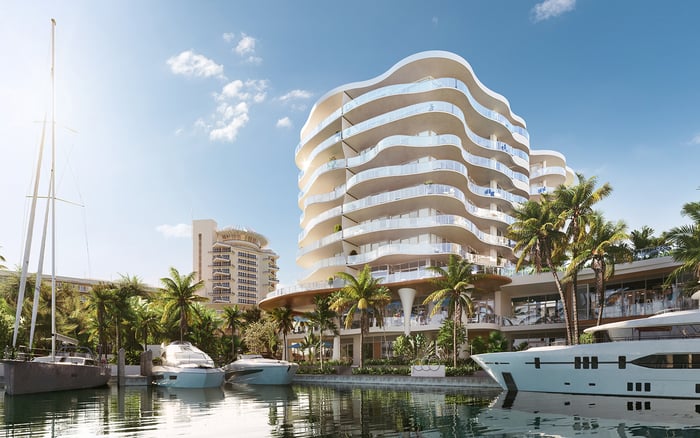
The same discipline applies when assessing St. Regis® Residences Bahia Mar Fort Lauderdale: establish the appropriate residence-level comparison before drawing conclusions from a waterfront market headline. Project identity alone does not make two homes comparable.
Constrained dockage and ocean-access property have supported the high-end waterfront single-family narrative. That is not evidence of a condominium floor-plan premium. Distinguish the scarcity of a particular property type from the scarcity of a particular interior arrangement.
Before committing, write down three conclusions: what makes the residence difficult to substitute, which privacy advantages are verified, and whether its financial obligations are sufficiently understood. Where evidence is weak, leave the benefit unpriced rather than assigning it an assumed resale premium.
Resilience is a purchase discipline, not a promise of appreciation. The strongest decision balances enjoyment today with a defensible acquisition price, transparent carrying costs, and enough financial flexibility to avoid depending on perfect resale timing.
Explore Fort Lauderdale residences with a more discerning ownership perspective at MILLION.
If branded residences are on your mind — as a home or as an allocation — we would be glad to share what we are seeing, privately.
Begin a quiet conversationThe luxury condominium segment had approximately 18.1 months of supply, compared with 12.3 months for the overall condominium market.
Luxury condominiums represented the top 10% of the market. That segment had a median sale price of approximately $1.80 million.
No. It describes Fort Lauderdale’s overall condominium market, not waterfront-only inventory.
No quantified local premium is established here. Buyers should test layout scarcity against comparable closed sales and competing inventory rather than assume appreciation.
Compare frontage, views, outdoor space, room arrangement, and elevator configuration. Consider alternatives across the buyer’s search area, not just within one building.
No. Buyers should also examine sightlines, acoustic separation, visitor access, delivery arrangements, and the relationship between entertaining and bedroom areas.
Request association budgets, reserve materials, insurance terms, assessment information, and engineering materials. Review recurring expenses separately from potential capital obligations.
No. A lower charge alone does not demonstrate adequate funding or efficient management; the budget must be evaluated against the building’s obligations and expected service level.
No. The approximately 10.4% figure concerns the Q2 2025 luxury-condo listing discount, while the approximately 17% figure concerns the Q1 2026 condominium list-to-sale differential.
No. Scarcity associated with dockage and ocean-access single-family property does not establish a premium for a condominium’s floor plan.