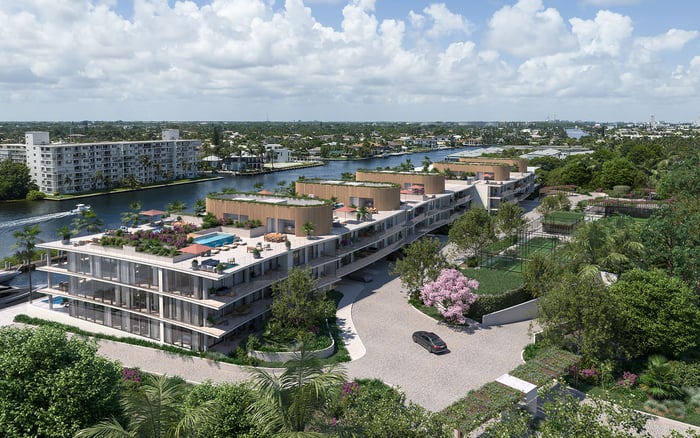
For Hillsboro Beach buyers, parking diligence begins with separating ownership, exclusive-use rights, and service access. The governing documents determine what accompanies a residence, what may be transferred, and which operational details deserve attention before closing.
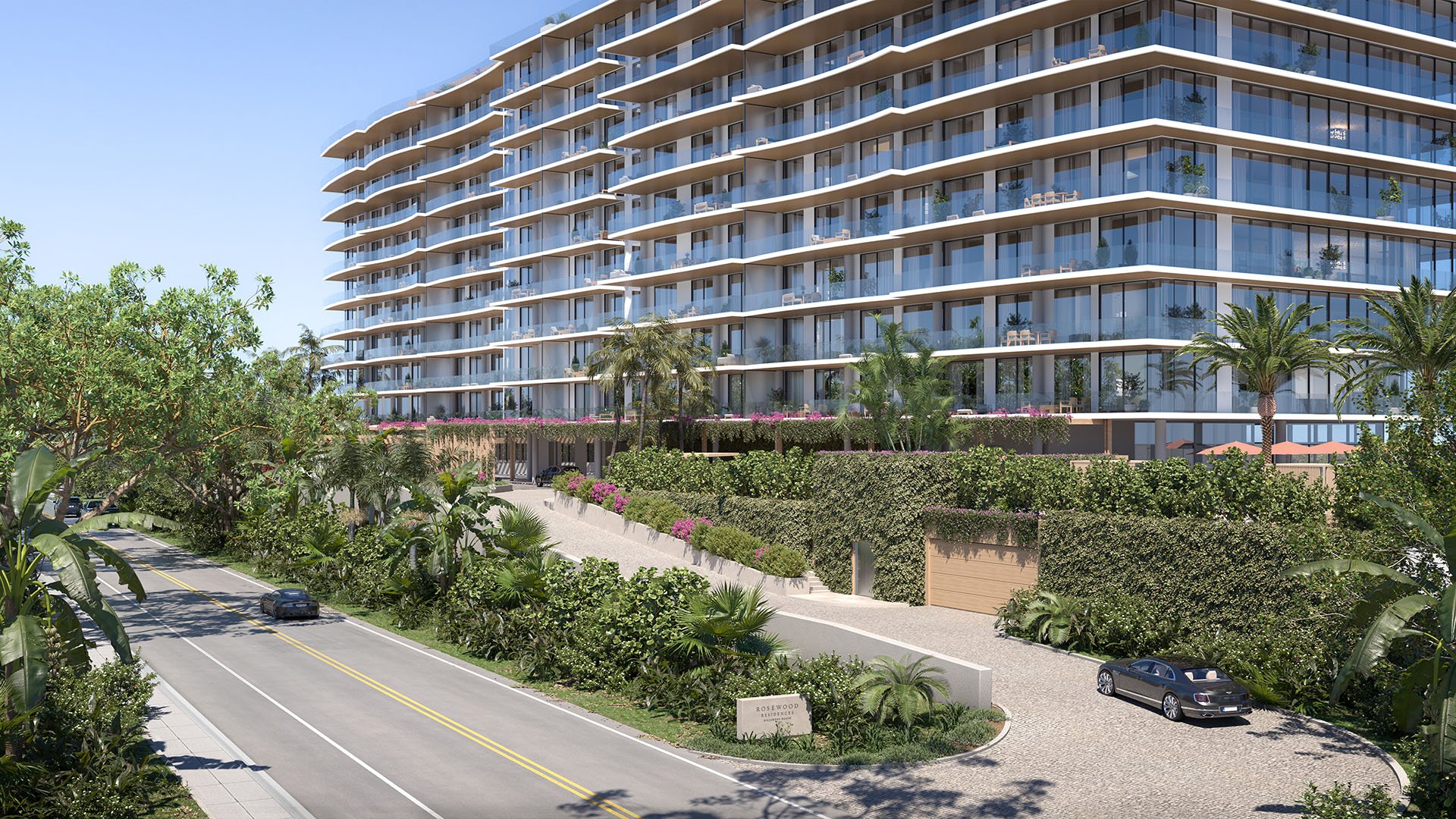
A residence should accommodate the owner's arrival as thoughtfully as daily life. In Hillsboro Beach, that means looking beyond the number of parking spaces offered with a home. A designated bay, an exclusive-use right, and access to valet may offer similar convenience during a viewing yet represent distinct legal and operational arrangements.
Florida condominium law supplies the framework. The decisive question is not simply where a vehicle will sit, but what right supports that placement, how it accompanies the residence, and which conditions govern its use.
For a buyer considering Rosewood Residences Hillsboro Beach, the starting point is a unit-specific review of the deed, declaration, amendments, and recorded plans. The same discipline applies to any condominium acquisition; a project's identity does not establish its parking structure.
Treat “deeded parking” as a description to investigate, not a conclusion about ownership. A recorded right associated with a residence is not necessarily separately owned parking real estate. An appurtenant limited common element right, for example, can secure exclusive use without conveying separate ownership of the physical space.
Ask counsel to identify precisely what the deed conveys and reconcile that language with the declaration and plans. The review should establish whether the documents support ownership of a parking space, an exclusive-use entitlement attached to the unit, or another arrangement. A space number alone does not resolve the distinction.
Keep transferability separate from ownership terminology. Even a documented parking entitlement should not be treated as independently saleable or mortgageable without checking the governing restrictions. The acquisition requires a clear statement of what accompanies the residence, supported by the relevant documents rather than shorthand in a property description.
Common elements are the portions of condominium property outside the individual units. Limited common elements, often called LCEs, are common elements reserved through the declaration for specified units' exclusive use. A parking space can therefore remain a common element while one residence enjoys its exclusive use.
A unit carries an undivided share of the common elements and the exclusive common-element use rights provided by its declaration. Association operation or maintenance of a garage does not, by itself, make that garage association-owned property.
The declaration is critical to LCE status. Calling a space “exclusive,” issuing an assignment, or placing a unit number on a bay does not alone establish that status. Assigned parking can remain general common area when the declaration has not established it as an LCE.
For the buyer, the distinction warrants a documentary check: identify the provision establishing the right, confirm the benefiting unit, and reconcile the allocation with the parking plan and assignment records. Management's written explanation can complement, but should not replace, the governing language.
Evaluate valet separately from the legal classification of a space. The ability to hand over keys does not establish ownership of a bay or an LCE entitlement. Nor does the presence of valet prove that every related privilege is revocable at will.
Determining whether service can change or end requires a review of the governing documents, applicable rules, and service contracts. Do not assume a board can eliminate it by a simple vote, or that an amenity description guarantees a particular operating arrangement indefinitely.
When comparing a Hillsboro Beach residence with Ocean 580 Pompano Beach, apply the same questions wherever valet forms part of the proposed parking arrangement. Seek written clarity on guaranteed capacity, hours, fees, vehicle restrictions, storage access, and termination provisions. These are diligence questions, not statements about either property's services.
Test the answers against household requirements. Ask how an early departure, a guest's arrival, or retrieval of a stored vehicle would work. Service convenience and the durability of the underlying right deserve separate consideration.
An exclusive-use parking right is not automatically a separately tradable asset. Transfers of LCE use rights to other units or owners depend on authorization in the declaration and compliance with its procedures.
Some declarations prohibit separate conveyance or encumbrance of appurtenant parking rights. That is a document-specific restriction, not a universal rule for every Florida condominium. Investigate before assuming an extra space can be sold, pledged, or shifted to another residence.
If a second space is material to the purchase, request the documents supporting its allocation and any proposed transfer. Ask counsel to identify required approvals, paperwork, and restrictions before treating a seller's offer as an entitlement the buyer will receive. Apply the same care to an informal arrangement with a neighboring owner.
Exclusive use does not automatically determine maintenance responsibility. Maintenance of common elements is generally the association's responsibility, but the declaration may assign LCE maintenance obligations to the benefiting owner.
Distinguish who performs the work from who bears the expense. Request the governing allocation of responsibilities rather than assuming that access control, proximity to the residence, or exclusive use settles the question.
Buyers also considering Glass House Boca Raton can apply this document-led approach to their Boca Raton comparison. Compare each residence's documented obligations rather than assuming similar parking descriptions carry equivalent responsibilities.
Charging requires its own review. Qualifying owner installations of EV charging stations within an owner's LCE or exclusively designated parking area receive legal protection, subject to statutory conditions and reasonable association requirements. That protection is not categorically confined to separately deeded or LCE spaces. Confirm the area's designation and applicable installation requirements before treating charging as assured or unavailable.
For an owner who divides time between residences, condense the findings into a practical parking brief. Record the space identifiers, legal classification, documents establishing use, transfer conditions, maintenance obligations, and any charging requirements. Add valet terms separately to keep service expectations distinct from property rights.
Reconcile the brief with the household's vehicles and arrival patterns. Where a crucial question remains unresolved, seek written clarification and legal review before relying on the arrangement. The aim is not paperwork for its own sake, but a residence whose daily operation matches the owner's expectations.
The strongest parking strategy aligns three things: the right acquired, the service available, and the responsibility accepted. None should be inferred from the other.
For a considered approach to your next South Florida residence, explore MILLION.
If branded residences are on your mind — as a home or as an allocation — we would be glad to share what we are seeing, privately.
Begin a quiet conversationNo. Review the deed, declaration, amendments, and recorded plans to distinguish separate ownership from an appurtenant exclusive-use right.
It is a common element reserved through the declaration for specified units' exclusive use. That right does not amount to separate ownership of the physical space.
No. LCE status must be established through the declaration; an assignment or an exclusive-use description alone is insufficient.
No. Association operation or maintenance does not itself establish ownership, and unit owners hold undivided shares in the common elements.
Transfer depends on authorization in the declaration and compliance with its procedures. Do not assume an exclusive-use right is independently transferable.
The governing documents must be checked. Some declarations prohibit separate conveyance or encumbrance of appurtenant parking rights, but that restriction is not universal.
No universal conclusion should be drawn. Review the governing documents, rules, and service contracts to establish the terms for changes or termination.
Confirm guaranteed capacity, operating hours, fees, vehicle restrictions, storage access, and termination provisions. Evaluate these service terms separately from the underlying parking entitlement.
Common-element maintenance is generally the association's responsibility, but the declaration may assign LCE maintenance obligations to the benefiting owner. Exclusive use alone does not settle responsibility.
No. Florida law also covers qualifying installations in an owner's exclusively designated parking area, subject to statutory conditions and reasonable association requirements.