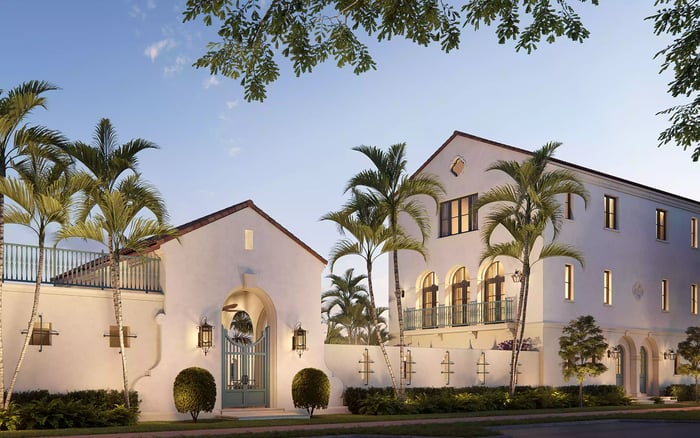
For Coral Gables buyers, a considered ownership strategy connects reserve funding, insurance renewal terms and capital-project commitments. Read these records together to distinguish routine operating costs from future obligations and assess the clarity of an association’s financial planning.

A beautifully considered residence is only part of a luxury purchase. The less visible question is whether the arrangements supporting it are equally sound: routine operations, major replacements, insurance protection and the timing of capital work. In Coral Gables, these deserve a coordinated review, not separate approvals in a closing file.
For a buyer considering Ponce Park Coral Gables, the starting point is not an assumed reserve percentage or a reassuring monthly charge. It is a request for the records applicable to the residence and its ownership structure. No project name, design language or location substitutes for that review.
The recommended sequence is straightforward: establish the operating position, reconcile reserve contributions with the latest study, then place insurance renewals and capital commitments on the same calendar. This is a due-diligence framework, not a legally mandated reading order.
Begin with the latest annual budget, year-to-date financials, balance sheet and prior-year income-and-expense statements. Read them together. The budget sets out the annual plan; the financial statements show how that plan compares with actual activity and help establish the association’s financial position.
Keep operating expenses and reserves distinct. Operating budgets cover routine annual expenses; reserve accounts fund major repairs and replacements. A comfortable operating position is not proof that future capital obligations are adequately funded. Nor does a reserve balance alone explain the resources available for daily operations.
Ask management to identify the annual reserve contribution separately from operating spending. Then request the reserve study and written reserve funding policy. The study describes projected needs; the policy explains the association’s approach to funding them. Compare those needs with planned contributions and funds already held, rather than simply measuring this year’s charge against last year’s.
Florida requires milestone inspections for residential condominium and cooperative buildings of three or more habitable stories, subject to applicable age requirements. Inspections generally begin at 30 years and recur every 10 years, although an earlier threshold can apply. Three stories alone does not establish an immediate inspection deadline.
Covered condominium buildings of three or more habitable stories must also undergo a structural integrity reserve study, or SIRS, at least every 10 years. The distinction matters: a milestone inspection evaluates structural safety, while a SIRS estimates the funding needed for future major repairs and replacement of covered components.
Structural inspection records and reserve studies are association official records and form part of required purchaser disclosures under applicable rules. Request the applicable documents rather than relying on a verbal assurance that an inspection is complete. Completing an inspection and funding the work it identifies are different questions.
For SIRS-covered structural items, reserve amounts must reflect the most recent study’s findings and recommendations. Review the relevant components alongside their projected repair or replacement timing, then compare the funding approach with the adopted budget. Ask for a written explanation of any apparent mismatch.
Florida’s broader condominium reserve framework also addresses capital expenditures and deferred maintenance, including roof replacement, building painting and pavement resurfacing. Do not assume that every project falls into the same reserve category or that one funding rule answers every question.
A comparison that includes Cora Merrick Park should follow the same document-based discipline. Confirm requirements for the particular property rather than inferring them from another address.
Conditional relief deserves careful reading. Subject to statutory conditions, an association that completed a milestone inspection within the previous two calendar years may pause or reduce reserve contributions for up to two consecutive annual budgets to fund recommended repairs. Approval requires a majority of all voting interests. This is not blanket permission to waive structural reserves. Ask counsel to confirm eligibility and management to explain the subsequent funding plan.
Insurance review should include declarations, coverages, deductibles and claims history. For planning purposes, also confirm the renewal date and distinguish current policy terms from any proposed renewal terms. An existing policy describes current protection, not necessarily protection for the next budget period.
Read the insurance allocation in the operating budget alongside those documents. Ask which figures are confirmed and which remain estimates. Where renewal information is pending, keep that uncertainty explicit rather than treating an unchanged budget line as a settled future cost.
Apply the same restraint to capital work. Ask whether the insurer has communicated any requirements relevant to pending projects, and request the written terms. Do not assume unfinished work will produce a particular premium increase, exclusion, deductible change or lending consequence. Those conclusions require property-specific evidence. The combined review should identify unanswered questions, not predict an adverse outcome.
A capital-project discussion should distinguish recommendations from approvals and contractual commitments. Request the scope, current cost information, anticipated payment dates and proposed funding source for each material item. Keep preliminary estimates separate from committed amounts.
Then compare those payments with the reserve schedule and insurance renewal calendar. Ask whether the planned work is already reflected in the study and budget, and whether any proposed assessment or other funding arrangement has actually been approved. Avoid counting the same available funds against more than one obligation.
For buyers weighing The Village at Coral Gables, first establish which responsibilities belong to the owner and which belong to an association. Base the review on that allocation rather than assuming identical obligations across every residential offering. These project references are comparison points, not assessments of their finances, insurance or pending work.
For an owner who travels frequently, a consolidated calendar can make the financial review more useful. Bring together the next budget decision, documented insurance renewal, reserve contributions and anticipated project payments. Assign each unresolved question to management, counsel or the insurance adviser, and request written clarification before relying on an answer.
Do not import municipal reserve targets into this exercise. Coral Gables’ municipal reserve policies concern city finances; they do not establish a suitable reserve percentage for a condominium association. A residential funding assessment must remain tied to the building’s obligations and applicable requirements.
The strongest ownership plan is not necessarily the one with the lowest apparent annual cost. It is the one that makes existing commitments, future needs and unresolved assumptions clear before purchase.
For a considered approach to your next Coral Gables residence, explore MILLION.
If branded residences are on your mind — as a home or as an allocation — we would be glad to share what we are seeing, privately.
Begin a quiet conversationRequest the latest annual budget, year-to-date financials, balance sheet and prior-year income-and-expense statements. Review them alongside the reserve study and written reserve funding policy.
Operating budgets cover routine annual expenses, while reserve accounts fund major repairs and replacements. Strength in one does not establish adequate funding in the other.
Florida requires milestone inspections for residential condominium and cooperative buildings of three or more habitable stories, subject to applicable age requirements. Inspections generally begin at 30 years and recur every 10 years, although an earlier threshold can apply.
A milestone inspection evaluates structural safety. A structural integrity reserve study estimates funding needed for future major repairs and replacement of covered components.
Covered condominium buildings of three or more habitable stories must undergo a SIRS at least every 10 years. Reserve amounts for covered structural items must reflect the most recent study’s findings and recommendations.
Subject to statutory conditions, an association that completed a milestone inspection within the previous two calendar years may pause or reduce contributions for up to two consecutive annual budgets to fund recommended repairs. Approval requires a majority of all voting interests.
Review declarations, coverages, deductibles and claims history. For planning, confirm the renewal date and distinguish current terms from proposed renewal terms.
No automatic premium outcome should be assumed. Any conclusion about insurance changes requires property-specific evidence and review of written terms.
Distinguish recommended work from approved work and contractual commitments. Request the scope, cost information, payment timing and funding source, then compare them with the reserve schedule and budget.
No. Municipal reserve policies concern city finances, while a condominium’s funding needs must be assessed against its own obligations and applicable requirements.