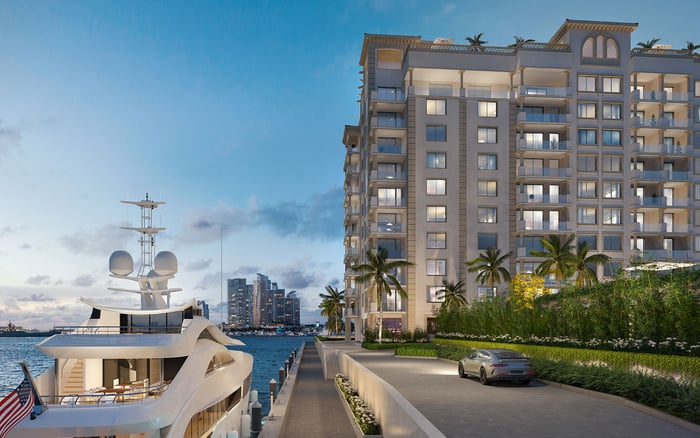
A second-home buyer’s guide to evaluating master-policy rebuilding values, code-upgrade protection, and interior insurance responsibilities at The Ritz-Carlton Residences® Pompano Beach, without presuming a project-specific coverage outcome.

A second home should offer an elegant escape, but its insurance deserves the same attention as its floor plan. For buyers considering The Ritz-Carlton Residences® Pompano Beach, that review should begin with documents rather than assumptions about branded ownership.
For a buyer, the insurance review has three distinct parts: the association’s rebuilding valuation, protection against additional costs imposed by building laws, and the owner’s responsibility for interiors. The purchase price answers none of those questions. Neither does the name above the entrance.
A project-specific coverage verdict requires the operative policies, valuation documents, limits, deductibles, and endorsements. The questions below provide a framework for purchase diligence-not a finding that this development is underinsured.
The first distinction is between a residence’s value and the cost of rebuilding insured property. Purchase price, land value, resale expectations, and brand premium are not substitutes for an insured reconstruction estimate. A premium acquisition warrants a precise valuation review, not an assumption that an equally impressive policy limit is sufficient.
Before the applicable contract deadline, request the complete master policy, declarations, endorsements, property schedule, valuation provisions, and replacement-cost appraisal. Review them together; a headline coverage figure is not the full answer.
Ask the association’s insurance adviser to explain what the appraisal includes. Does it account for demolition, debris removal, professional fees, permitting, and construction-cost escalation? Which amounts fall within the principal limit, and which depend on separate provisions? Ask how the appraisal aligns with the property schedule and which portions of the development each policy covers.
For a Broward buyer also considering Armani Casa Residences Pompano Beach, requesting the same documents can make comparisons more meaningful. This compares diligence standards; it does not imply that the developments have equivalent insurance arrangements.
Rebuilding what existed and rebuilding what applicable law requires are not necessarily the same expense. Ordinance-and-law coverage addresses additional repair or reconstruction costs required by laws and ordinances after a covered loss, subject to policy terms. Its value lies as much in the operative wording as in the limit.
Ask the insurance adviser to identify the relevant endorsements and explain the treatment of damaged portions, undamaged portions, demolition, and increased construction costs. Do not assume that a code-related requirement affecting one part of a property automatically creates coverage for the entire building.
For both the master policy and the owner’s policy, request the actual ordinance-and-law limit and its calculation basis. Then ask how those protections coordinate when a loss affects both building components and owner-insured interiors. A familiar percentage is no substitute for that explanation.
One easily overlooked distinction is between an original finish and an association-insured component. Do not assume that developer installation establishes the association’s insurance responsibility. Have Florida counsel confirm the current legal requirements and review the governing documents alongside the policies.
Request an item-by-item allocation for floor, wall, and ceiling coverings; electrical fixtures; appliances; water heaters; water filters; built-in cabinets; countertops; and window treatments and associated hardware. Ask which items the association insures, which require owner coverage, and how the allocation applies to replacements and upgrades.
For a buyer selecting bespoke interiors, the practical response is an itemized inventory. Compare the developer’s standard finish schedule with purchased upgrades and any subsequent renovations. Obtain an interior reconstruction estimate for HO-6 Coverage A rather than assuming the association will restore everything visible inside the residence.
An HO-6 policy typically addresses interior fixtures, personal property, and liability, complementing association coverage. Seek written confirmation of coverage for custom finishes and prior-owner improvements. Retain invoices, change orders, specifications, and photographs. Ask the adviser to identify the appropriate coverage category for each material item.
For a seasonally occupied residence, ask the owner-policy insurer how the intended occupancy affects the proposed coverage. Describe the home’s actual use rather than relying on a generic description. Separately, establish who will coordinate owner and association claims when the buyer is away.
Request the hurricane and water deductibles under both policies, their calculation bases, and the association’s deductible-allocation rules. Ask for a written explanation of how a loss affecting both the building and the unit would be handled. Do not assume that the association’s deductible and the owner’s deductible are interchangeable obligations.
Loss-assessment coverage requires equally careful review. It generally depends on an assessment arising from a covered loss; it is not a substitute for funding reserve shortfalls, deferred maintenance, or non-covered structural work. Review the covered causes, limits, and relevant terms before assigning it a role in the ownership budget.
Finally, standard condominium property coverage should not be treated as flood or storm-surge protection. Review association and unit-owner flood arrangements separately, including how they coordinate with the rest of the insurance program.
If the shortlist includes Waldorf Astoria Residences Pompano Beach, apply the same review rather than allowing brand preference to settle insurance questions. Each purchase should stand on its own policy language, reconstruction valuation, and interior responsibilities.
Before the applicable contract deadline, bring the master-policy documents, interior estimate, and proposed owner coverage to the insurance adviser and Florida counsel. Request a written allocation of responsibilities: what the association insures, what the owner insures, and which deductibles or exclusions could remain the buyer’s responsibility.
The objective is not to eliminate every uncertainty. It is to understand the obligations that accompany the residence before committing to them-and to weigh interior coverage and rebuilding protection as carefully as the address itself.
For a discreet perspective on your South Florida second-home search, connect with MILLION.
If branded residences are on your mind — as a home or as an allocation — we would be glad to share what we are seeing, privately.
Begin a quiet conversationBegin with the association’s reconstruction valuation, ordinance-and-law protection, and allocation of interior insurance responsibilities. Brand recognition and purchase price do not establish coverage.
Describe the residence’s intended use to the owner-policy insurer and ask how it affects coverage. Establish who will coordinate claims while you are away.
No. A project-specific conclusion requires review of the operative policy, valuation documents, limits, deductibles, and endorsements.
Purchase price is not a substitute for an insured reconstruction estimate. Land value, resale value, and brand premium should be distinguished from rebuilding cost.
Request the complete policy, declarations, endorsements, property schedule, valuation provisions, replacement-cost appraisal, and deductible-allocation rules before the applicable contract deadline.
It addresses additional repair or rebuilding costs required by applicable laws and ordinances after a covered loss, subject to policy terms. The actual limit and covered scope require policy-specific review.
No; request its calculation basis and the operative endorsements. Ask how the policy treats damaged and undamaged portions, demolition, and increased construction costs.
Do not assume that original installation establishes association coverage. Have Florida counsel and the insurance adviser confirm the applicable legal requirements, governing documents, and policy allocation.
Compare standard finishes, upgrades, and renovations, then obtain an interior reconstruction estimate for HO-6 Coverage A. Seek written confirmation for custom finishes and prior-owner improvements.
Do not assume either: loss-assessment coverage generally depends on a covered loss and should not be treated as funding for maintenance or reserve shortfalls. Flood and storm-surge protection require separate review.