An art-led address is not the same as a collection-ready residence. For buyers considering Faena’s riverfront and oceanfront properties, the decisive questions concern documented services, unit-level environmental performance, and written installation approvals.
For a collector, a residence’s most consequential feature may be invisible during a viewing: whether its management arrangements and physical systems can support the works intended for it. At Faena’s two distinct Miami addresses, art is part of the residential identity. That does not establish a service for caring for an owner’s collection.
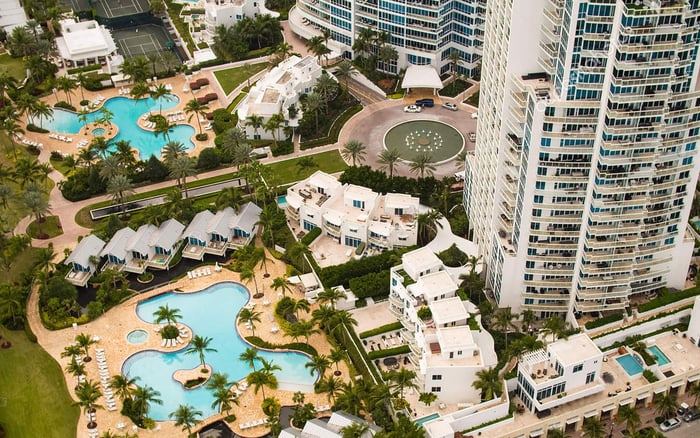
Faena House Miami Beach is an oceanfront condominium designed by Foster + Partners. Faena Residences Miami Downtown Miami is a separate riverfront project on the Miami River, with planned cultural spaces and site-specific artworks. Neither property’s documented offering establishes private collection management, museum-grade residential lighting, or a complete art-installation approval process.
This distinction is not a judgment on either address. It is the starting point for a more precise purchase decision: identify what the collection requires, then establish in writing what the residence and its management will provide.
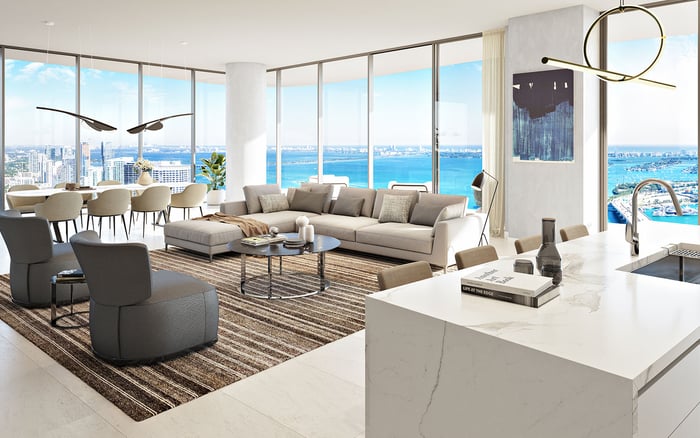
Faena House’s architecture offers a compelling setting for living with art. Foster + Partners also custom-designed or selected residential fixtures and appliances. Floor-to-ceiling windows and the wraparound terrace known as an “Alero” shape the relationship between the interiors and the oceanfront setting.
For a collector, those features call for a daylight assessment, not an assumption of protection. The terrace and glazing do not, by themselves, establish artwork-safe conditions. Before assigning a painting or photograph to a wall, ask a conservation specialist to evaluate the proposed position and its exposure.
Residential specifications list integrated motorized blinds in dual-tone fabric, a multizone fan-coil system intended to improve temperature and humidity control, and Crestron automation with a 15-inch wall touchscreen controlling lighting, thermostats, and shades. Individual-room temperature and humidity controls are also advertised. These features are relevant, but none establishes independently verified conservation performance.
The inspection should therefore focus on the actual unit. Ask what equipment remains installed, how it is maintained, whether shade coverage suits the intended display walls, and whether environmental conditions can be monitored. Have the collection adviser define the required conditions before asking the mechanical specialist to assess whether the residence can maintain them.
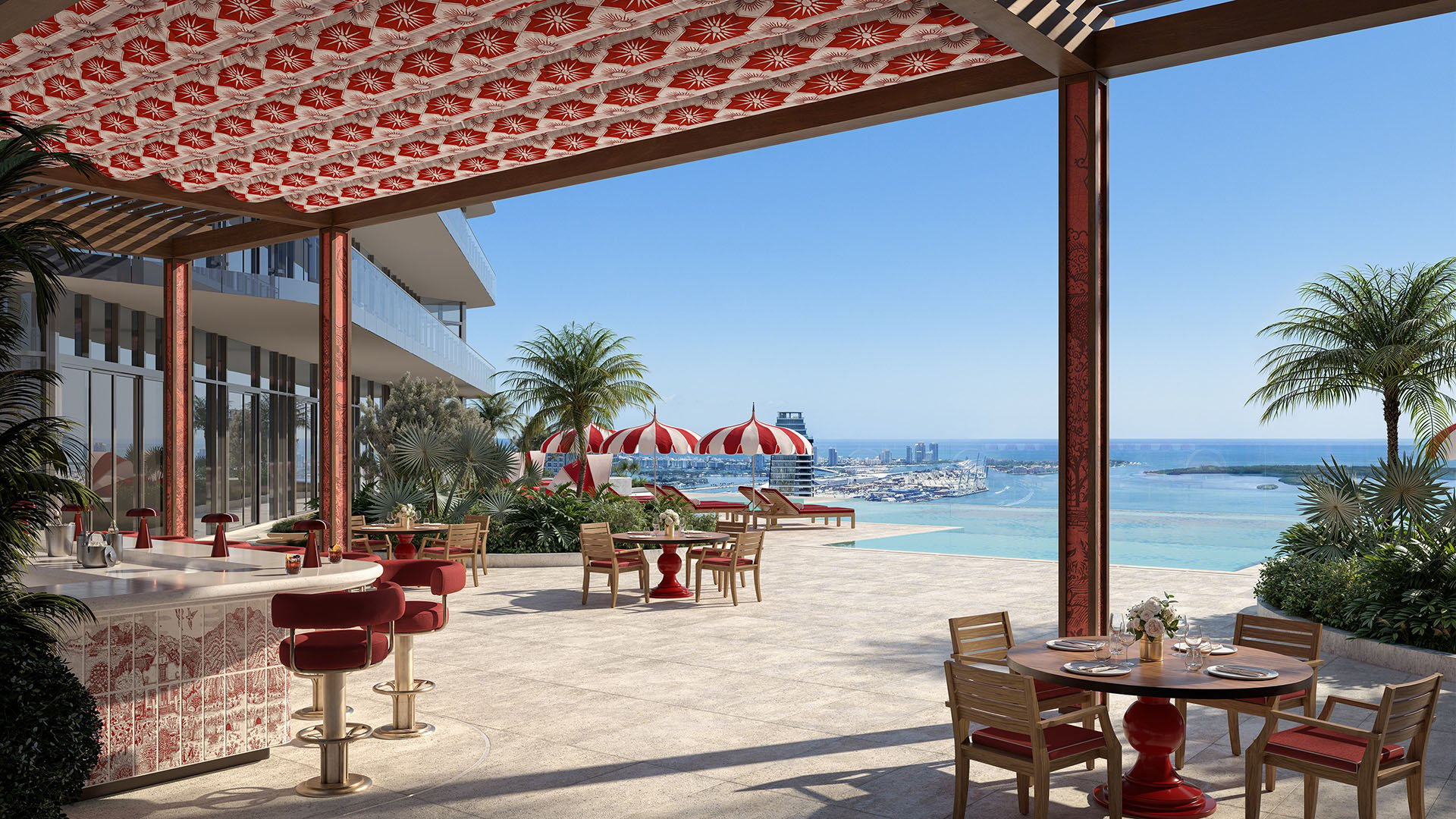
The riverfront project’s planned identity incorporates curated art, music, and design. Site-specific artworks are planned throughout, including large-scale Juan Gatti mosaic murals wrapping the base of each tower. Approximately 45,000 square feet of cultural and wellness space is planned within the connecting sky bridge, with performance venues and art installations.
Plans also describe an art-and-design cultural center with a library, creative lounges, private suites, and a screening room. These spaces support the promise of a cultural lifestyle. They do not establish inventory administration, condition documentation, conservation monitoring, or specialist handling for residents’ own works.
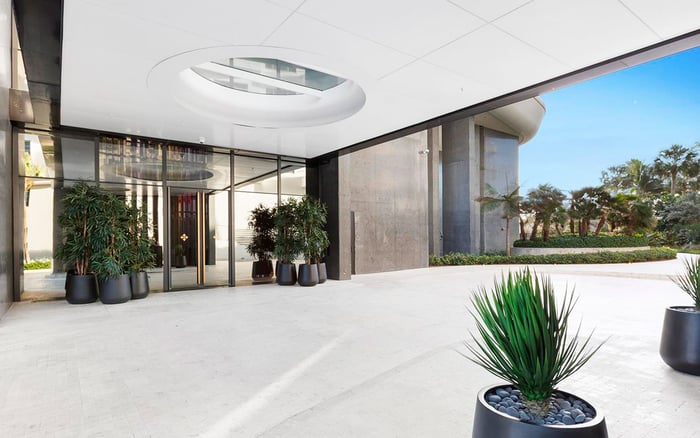
The distinction extends into the residences. Advertised features include floor-to-ceiling impact-resistant sliding glass doors, private or semiprivate elevator vestibules, and prewiring for smart-home technology, designer illumination, and audiovisual systems. Evaluate prewiring as infrastructure, not as an installed collection-lighting system.
For a purchase here, request a clear distinction between what is included at delivery, what the owner can add, and what remains subject to approval. Treat amenities and systems as planned or advertised until their delivery and performance are confirmed.
“Museum-grade” is not a substitute for a specification. The documented offerings at neither property establish a verified residential specification for artwork-level illumination limits, ultraviolet performance, color-rendering criteria, or collection-conservation temperature and humidity tolerances.
L’Observatoire International’s role at the Downtown project concerns the exterior lighting scheme. That credit should not be extended to lighting inside an individual residence or interpreted as a conservation commitment.
Ask the buyer’s lighting designer and conservator to prepare a room-by-room brief around the actual works. Request proposed illumination levels at the artwork, fixture information, ultraviolet characteristics, color-rendering criteria, dimming arrangements, and a daylight-control plan. Treat these as requirements to assess, not capabilities to presume.
At Faena House, review how existing controls and blinds could serve that brief. At the riverfront project, clarify how proposed fittings would connect to the advertised prewiring. In both cases, request a commissioning and measurement plan rather than relying on the appearance of a beautifully lit room.
Collection management remains unverified at both properties. Seek a written service scope rather than assuming that an art-led environment includes specialist care for a private collection.
At Faena House, listed services include a 24-hour doorman, security and surveillance, and semiprivate underground parking with valet. Residents also receive preferred status and access to Faena Hotel services and the private Beach Club. These hospitality and security benefits are distinct from collection services.
Ask management to specify whether it offers, coordinates, or does not provide inventory management, condition documentation, environmental monitoring, insurance coordination, and specialist art handling. Where outside providers are involved, clarify appointment, access, fees, and responsibility.
For buyers comparing branded residences, the useful distinction is between concierge coordination and a defined professional service. A broader shortlist that includes One Thousand Museum Downtown Miami should be tested with the same questions, without assuming equivalent collection support across addresses.
Written installation rules remain unresolved for both Faena properties. Do not treat a private vestibule, valet service, or public art program as permission-or proof of logistical capacity-to install an oversized work.
Before finalizing an installation design, request the applicable alteration agreement, structural-load information, delivery protocol, and approval procedure. Ask which party can authorize the work and what supporting drawings or professional reviews it requires.
Let the proposed installation drive the questions. For heavy wall works, clarify anchoring requirements. For suspended pieces, ask about ceiling attachment and review. For slab or façade penetrations and terrace sculpture, request explicit written guidance rather than extending an interior approval to another location.
Have the art handler assess the entire delivery route, including elevator dimensions and capacity, turns, thresholds, and access to the residence. Confirm freight-elevator availability, contractor insurance requirements, installation hours, protective measures, and crate arrangements. These are matters to resolve with management, not established rules at either property.
The strongest collector’s residence is not necessarily the one with the most visible art program. It is the one whose capabilities, responsibilities, and permissions align with the intended collection.
Before committing, assemble a written record covering service scope, the unit-level environmental assessment, the lighting brief, and the installation and delivery approvals relevant to the works. Have the buyer’s advisers distinguish confirmed provisions from proposed upgrades and unresolved permissions. That discipline allows cultural appeal and practical suitability to be evaluated separately, then brought together with confidence.
For a discreet conversation about selecting a South Florida residence around your collection, connect with MILLION.
If branded residences are on your mind — as a home or as an allocation — we would be glad to share what we are seeing, privately.
Begin a quiet conversationNo. Faena House is an oceanfront Miami Beach condominium, while Faena Residences Miami is a distinct riverfront project on the Miami River.
Private collection management is not established for either property. Buyers should request a written scope covering inventory, condition documentation, monitoring, insurance coordination, and handling.
Specifications list a multizone fan-coil system, integrated motorized blinds, and Crestron controls for lighting, thermostats, and shades. Those features do not establish conservation performance.
No. The terrace and floor-to-ceiling windows do not establish safe display conditions; proposed artwork locations should receive a daylight assessment.
No verified residential specification establishes artwork-level illumination limits, ultraviolet performance, or color-rendering criteria. Buyers should define requirements with a conservator and lighting designer.
The documented credit concerns the Downtown project's exterior lighting scheme. It does not establish a museum-grade lighting specification for individual residences.
No. The Downtown residences are advertised as prewired for smart-home technology, designer illumination, and audiovisual systems, which is not equivalent to an installed collection-lighting system.
Plans describe approximately 45,000 square feet of cultural and wellness space in a connecting sky bridge. Planned features include performance venues, art installations, a library, creative lounges, and a screening room.
Request the applicable alteration agreement, structural-load information, and written approval procedure. Ask specifically about anchoring, ceiling suspension, penetrations, and any terrace placement.
No. An art handler should assess the full delivery route, while management should confirm elevator availability, capacity, insurance requirements, and installation arrangements.