A disciplined buyer’s framework for comparing premium lines at Ocean House Surfside, with emphasis on view geometry, obstruction risk, floor utility, and resale scarcity.

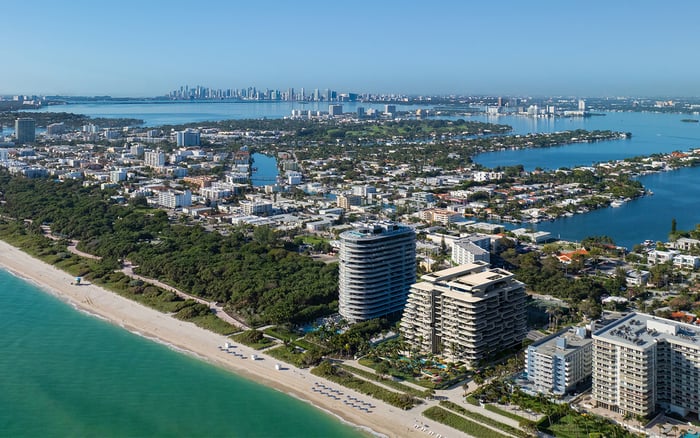
At Ocean House Surfside, the phrase “premium line” demands more exacting analysis than a simple preference for height. A buyer is reserving a specific relationship among the residence, horizon, neighboring structures, and coastline. The most valuable outlook is not necessarily the one from the highest available floor. It is the one where depth, angle, privacy, and durability work in concert.
Begin by standing where daily life will unfold. Evaluate the view from the primary bedroom, kitchen, living area, and principal terrace seating position. A dramatic first impression at the glass may prove less persuasive from ten feet inside the residence. Conversely, a line at a slightly lower elevation may offer a more immersive connection to water, sky, and shoreline.
The objective is to distinguish visual spectacle from visual utility. The former sells the tour. The latter supports years of ownership.
A view corridor has width, depth, angle, and foreground. Consider each separately.
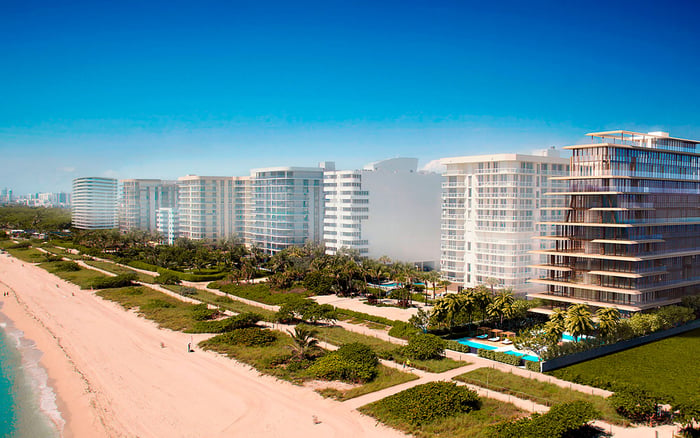
Width describes how much of the outlook remains open across the residence. Depth concerns how far the eye travels before meeting an obstruction. Angle determines whether the principal view is enjoyed naturally or requires turning toward a corner of the glazing. Foreground encompasses roofs, mechanical equipment, landscaping, pools, neighboring terraces, and other elements visible below.
This distinction is especially important in an oceanfront setting, where direct water, oblique coastline, and framed water views can deliver markedly different experiences. A water-view designation alone does not establish equal quality. Buyers should ask which rooms receive the view, how the vista changes from seated height, and whether columns, mullions, balcony walls, or adjacent building masses interrupt it.
Time of day also matters. Morning light, reflected glare, interior brightness, and terrace comfort can alter the practical value of an orientation. Assess these qualities as lifestyle variables rather than treating them as universally positive or negative.
Higher floors often command attention because elevation can expand horizon lines and reduce certain foreground distractions. Yet height is only one component of value. A lower residence with a broader, more direct corridor may be preferable to a higher home with an angled or visually compressed primary outlook.
Measure price differences between floors against tangible changes. Does the next elevation clear a nearby roofline? Does it materially improve privacy? Does the horizon become more complete from the interior, or does the apparent improvement exist mainly at the terrace edge? If the experience remains substantially unchanged, the floor premium may reflect positioning more than utility.
The reverse may also be true. A specific floor can cross a meaningful visual threshold, creating a scarce tier within the same line. Those transition points deserve close attention because resale buyers may recognize them quickly.
An open view today and a defensible view over time are not the same. The corridor’s durability depends on what sits between the residence and its principal outlook, as well as what may change around it.
Review the survey, site plan, floor plan, contractual exhibits, and any materials governing disclosed conditions. Study adjacent parcels and the view’s precise direction. The central question is not whether change will occur, but whether the value thesis rests on an undocumented assumption.
Use precise language when discussing protection. “Ocean-facing,” “open,” and “panoramic” describe an experience; on their own, they do not guarantee permanence. Any representation that materially affects a reservation decision should be confirmed in the controlling documents with qualified legal and technical advisers.
Nearby offerings can sharpen the analysis without implying direct equivalence. Reviewing view logic at Arte Surfside, The Delmore Surfside, and The Surf Club Four Seasons Surfside can help buyers define the combination of orientation, privacy, and visual openness they value most.
Scarcity is not simply a limited number of residences. It is a limited number possessing the attributes future buyers are most likely to seek and least able to replicate.
For each candidate line, ask five questions: How many comparable orientations exist within the building? How many occupy the preferred elevation band? How many pair the view with an efficient plan? How many avoid compromised privacy? How many retain their appeal if neighboring conditions evolve?
A genuinely scarce line usually presents several reinforcing qualities rather than a single headline feature. It may offer a direct outlook, balanced room placement, useful terrace geometry, privacy, and a floor position that clears a visual threshold. The harder that combination is to reproduce, the stronger the long-term scarcity argument.
Scarcity should still be distinguished from urgency. Limited availability can be real, but it does not replace diligence. A reservation decision should rest on the residence’s comparative utility and documented context.
A concise scorecard brings discipline to a comparison when multiple lines appear compelling. Assess each residence consistently across six categories: primary-room view, seated-view quality, privacy, terrace usability, obstruction exposure, and plan efficiency. Add a seventh category for scarcity within the building.
Avoid false precision. The score is a decision tool, not an appraisal. Weight each category according to the intended ownership pattern. A second-home buyer anticipating long mornings on the terrace may prioritize orientation and outdoor comfort. A buyer focused on future liquidity may give greater weight to a clear direct-view narrative and broad buyer appeal.
This buyer’s-guide approach also helps isolate the basis of a price premium. If one line costs more, the buyer should be able to articulate the difference in concrete experiential terms. When that explanation is difficult, further comparison is warranted.
The strongest reservation posture begins with knowing which attributes are nonnegotiable and which have substitutes. If only one available line satisfies the buyer’s view, privacy, and plan requirements, its strategic value rises. If several lines offer nearly the same experience, the buyer gains flexibility.
Request the documents and visual references required for a like-for-like comparison. Confirm that plans use the same scale, understand that renderings are illustrative, and evaluate quoted premiums against actual changes in utility. Preserve all required review rights and engage appropriate advisers before relying on material representations.
The goal is not to secure the highest residence or the most expensive line. It is to reserve the home whose premium is supported by a durable, legible ownership experience.
What makes a line premium at Ocean House Surfside? A premium line should combine view quality, privacy, plan utility, and relative scarcity rather than rely on floor height alone.
Is the highest available floor always the best choice? No. Orientation, interior sightlines, foreground conditions, and terrace geometry may matter more than incremental elevation.
How should buyers compare direct and angled ocean views? Compare them from normal seating positions in each principal room, not only while standing beside the glass.
What is a visual threshold between floors? It is an elevation where the outlook materially changes, such as clearing a roofline or gaining greater privacy.
Can an open view be assumed to remain open? No. Buyers should review controlling documents and seek professional guidance on adjacent conditions and representations.
Why does terrace geometry affect value? Depth, shape, enclosure, and sightlines determine whether outdoor space supports comfortable dining, lounging, and privacy.
How can a buyer measure scarcity within one building? Count how many residences combine the desired orientation, elevation, plan, privacy, and corridor quality.
Should resale potential influence a reservation decision? Yes, particularly when two lines are otherwise similar. A clear, easily understood view advantage may broaden future appeal.
Are renderings sufficient for evaluating a view? No. Consider them alongside plans, exhibits, site context, and any other relevant controlling materials.
When should legal or technical advisers become involved? Engage them before relying on representations that materially influence the reservation or purchase decision.
If you'd like a private walkthrough and a curated shortlist, connect with MILLION.
If branded residences are on your mind — as a home or as an allocation — we would be glad to share what we are seeing, privately.
Begin a quiet conversation