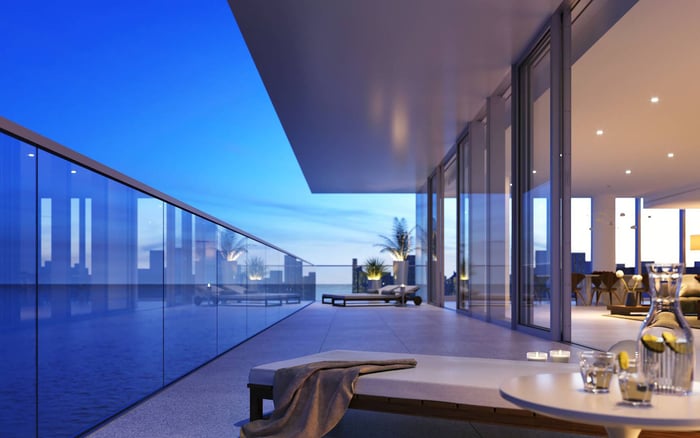
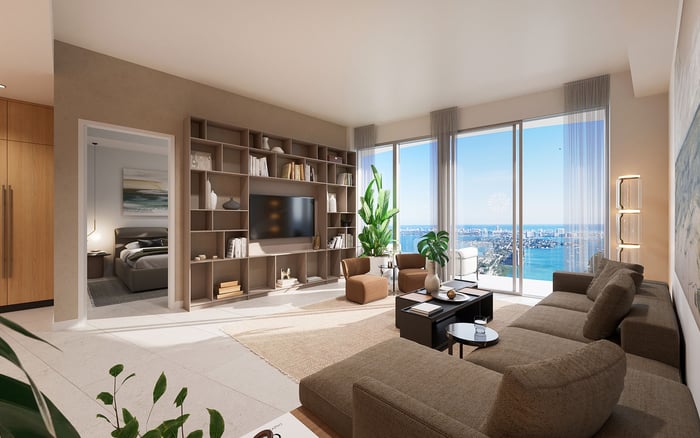
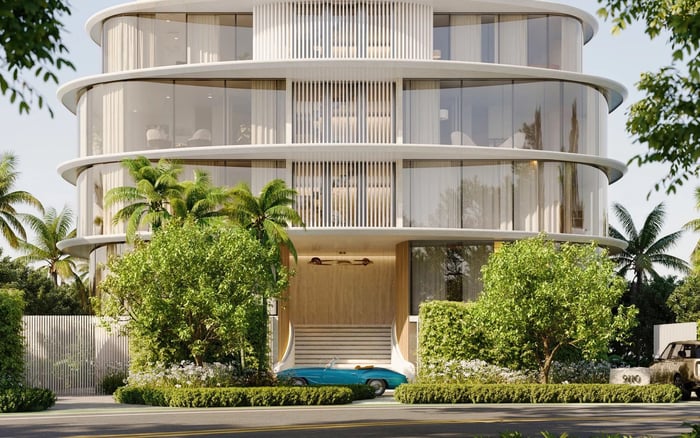
At 2000 Ocean, the most consequential buying decision may be the line itself. A disciplined review weighs orientation, elevation, corner exposure and the durability of the view before assigning any premium.
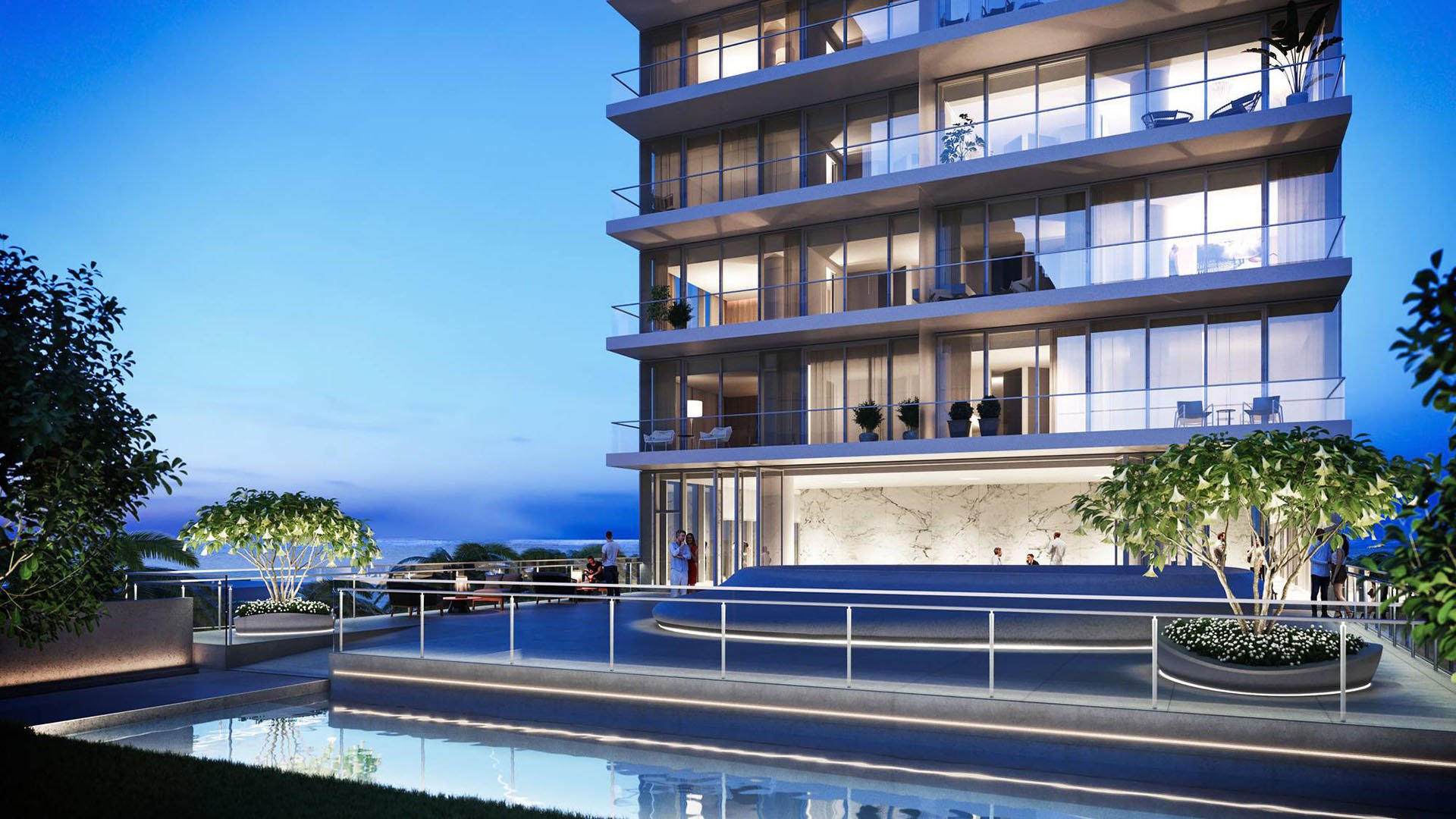
At 2000 Ocean Hallandale Beach, residence selection begins with a distinction sophisticated coastal buyers understand intuitively: two homes with similar interior dimensions can deliver materially different ownership experiences. The decisive variable is often the line-the residence's position within the building, its orientation and the shape of its outlook.
The tower is a boutique, design-focused oceanfront residential development in Hallandale Beach, making the quality of its view corridors especially relevant. Bedroom count and square footage remain important, but neither fully conveys how a residence receives the Atlantic, how broadly its outlook opens or how vulnerable that outlook may be to future change.
A premium line should therefore be evaluated as a spatial asset. Its value rests not merely on seeing water today, but on the breadth, direction and potential durability of that view over a long holding period.
The phrase “ocean view” can describe markedly different conditions. One residence may face the Atlantic directly; another may capture the water at an angle. A corner home may add a second exposure, widening the visual field and altering the experience from room to room. These distinctions should be assessed in person and against reliable plans, not inferred from descriptive labels.
Direct Atlantic exposure is a central consideration at 2000 Ocean, but direction alone is insufficient. Buyers should study where the view begins, how much of the horizon is visible, whether structural elements frame or interrupt it and which principal living spaces receive the strongest outlook. The most valuable corridor is often one that feels coherent throughout the home rather than impressive from a single vantage point.
Corner residences merit particular attention because multiple exposures can create broader corridors than a single-facing interior line. That does not make every corner inherently superior. The quality of each exposure, the arrangement of the rooms and the buyer's preference for sunrise, water or a more varied panorama should shape the conclusion.
Elevation can expand a view, but a higher floor is no substitute for diligence. The high-floor question should be framed carefully: What does added elevation reveal today, and what nearby conditions could affect that outlook tomorrow? Buyers should avoid assigning a permanent premium to a condition observed only in the present.
Terms such as “panoramic ocean,” “corner line” and “protected view” require verification. A currently open corridor is a visual fact. A legally or physically protected corridor is a different proposition-one that depends on surrounding parcels, development rights, applicable restrictions and the geometry of potential construction.
This distinction is central to water-view valuation. The most durable premium generally belongs to a corridor unlikely to be obstructed. Establishing that durability may require surveys, zoning analysis, development-rights research and legal review. Marketing language can introduce a view, but it cannot replace title, land-use and site-specific investigation.
A practical comparison begins by scoring each candidate residence across four factors: orientation, breadth of outlook, elevation and obstruction risk. Buyers can then add a fifth-personal enjoyment-to recognize that value is not entirely abstract. Direct ocean exposure may carry greater appeal for one owner, while another may prefer the changing light and wider visual range of a corner.
Apply the matrix line by line, not simply floor by floor. First, identify the primary direction of each exposure. Second, map the rooms that benefit from it. Third, compare the corridor's width and continuity. Fourth, investigate what lies between the residence and the horizon. Finally, consider whether the premium supports both daily enjoyment and long-term defensibility.
No responsible percentage premium can be assigned from orientation alone. Pricing conclusions require current asking information, relevant transactions, floor plans and unit-specific condition. Without them, the matrix is best used to rank alternatives and identify where deeper diligence is warranted-not to manufacture a price-per-square-foot adjustment.
Long-term scarcity matters because 2000 Ocean occupies Atlantic frontage within Hallandale Beach's established coastal development corridor. Within a single tower, the supply of residences combining favorable orientation, elevation and corner exposure is inherently finite. Once a preferred line is absorbed, an equivalent position may no longer be available elsewhere in the building.
That logic is distinct from assuming every ocean-facing home deserves the same premium. Scarcity must attach to qualities buyers can identify and defend. A wide Atlantic corridor with limited obstruction risk makes a stronger case than a narrowly angled glimpse of water, even when both are broadly described as ocean views.
Buyers considering Hallandale Beach may also compare the setting with Shell Bay by Auberge Hallandale, while a wider Broward search could include Auberge Beach Residences & Spa Fort Lauderdale. Farther south, Bentley Residences Sunny Isles offers another point of reference in a broader coastal search. These comparisons should sharpen the buyer's priorities, not substitute one building's line analysis for another's.
Early selection can be consequential when a buyer seeks a rare combination of orientation, elevation and corner exposure. Still, urgency should follow analysis, not replace it. Before reserving, obtain the exact floor plan, confirm the residence's position, review the outlook from the relevant level when possible and investigate neighboring development conditions.
The final decision should answer two distinct questions. Is the superior line worth paying for because it will improve daily life? Is the corridor sufficiently durable to support that premium over time? When both answers are persuasive, scarcity becomes more than a sales concept; it becomes a rational component of value.
This buyer's-guide approach also keeps the decision personal. The objectively broadest corridor is not necessarily the best residence for every owner. The strongest acquisition is one in which architecture, outlook, risk and intended holding period align.
What is a residence line at 2000 Ocean? It is the home's position within the tower, including its orientation and relationship to exterior views.
Why can two similarly sized residences carry different appeal? Differences in exposure, elevation, corner position and view-corridor breadth can create distinct living experiences.
Is direct Atlantic exposure always the best choice? It is a central consideration, but the ideal exposure depends on corridor width, room placement and buyer preference.
Do corner residences deserve special consideration? Yes. Multiple exposures may broaden the outlook, although each direction and its relationship to the rooms should be evaluated separately.
Does a higher floor guarantee a protected view? No. Elevation can improve a current outlook without creating legal or physical protection from future obstruction.
What does “protected view” mean? The phrase should describe a corridor supported by physical or legal conditions, not merely an open view today.
How should obstruction risk be investigated? Review surveys, zoning, neighboring parcels, development rights and relevant legal materials with qualified advisers.
Can a fixed premium be assigned to an ocean-facing line? Not from orientation alone. Unit-specific pricing, transactions, plans and condition are required for a quantitative conclusion.
Why might reserving early matter? A tower contains only a limited number of homes combining preferred orientation, elevation and corner exposure.
What is the core long-term valuation test? Determine whether both present enjoyment and the expected durability of the view justify the premium.
When you're ready to tour or underwrite the options, connect with MILLION.
If branded residences are on your mind — as a home or as an allocation — we would be glad to share what we are seeing, privately.
Begin a quiet conversation