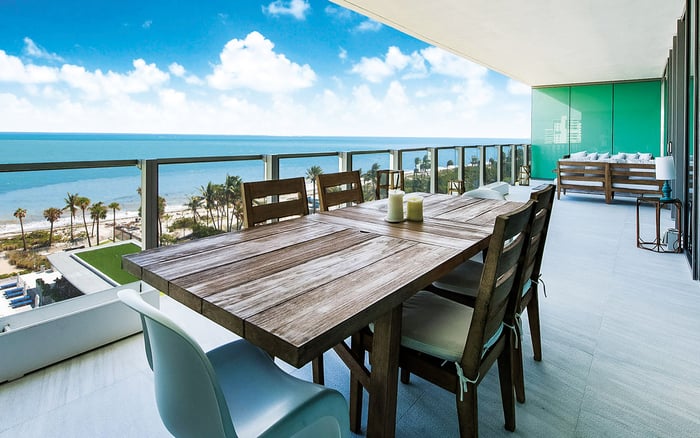
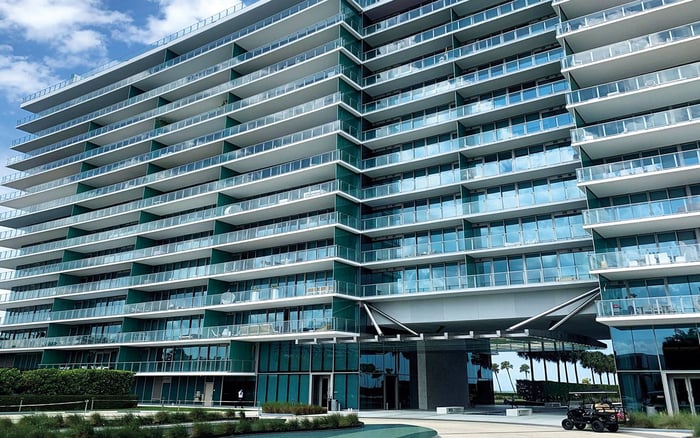
At Oceana Key Biscayne, a premium line should earn its price through durable physical advantages, manageable ownership economics, and credible appeal to the next end-user buyer.

At Oceana Key Biscayne, the central resale question is not whether one line carries greater prestige, but whether it delivers advantages that will remain legible to another sophisticated buyer years from now.
The building combines relatively recent construction, direct oceanfront exposure, and a low-density site-qualities that distinguish it within South Florida luxury real estate. Yet not every internal premium is equally defensible. A buyer paying more in 2026 should be able to tie that difference to orientation, layout, natural light, privacy, outdoor space, or a meaningfully stronger view corridor.
This is the essential discipline of resale analysis: separating durable utility from inherited marketing language. A celebrated line may still be compromised by awkward room proportions, exposure to neighboring residences, or an outlook whose permanence has not been tested. Conversely, a less prominently labeled residence may offer the more usable plan and the more rational foundation for long-term value.
Oceanfront ownership naturally places the view at the center of valuation. The relevant question, however, is not simply what appears beyond the glass today. Buyers should investigate whether the corridor is structurally protected and how neighboring buildings, landscaping, site conditions, or permitted future changes could affect it.
Orientation warrants the same scrutiny. If access permits, visit at different times to observe the character of the daylight, glare, interior brightness, terrace comfort, and privacy. Photography can flatten these distinctions. A line premium becomes more credible when its advantages are evident in ordinary daily use, not only during a perfectly staged showing.
For broader context, a buyer may compare the proposition with Oceana Bal Harbour or Eighty Seven Park Surfside. These comparisons should not be reduced to price per square foot. Their value lies in clarifying which combination of location, density, view, and ownership experience matters most to the buyer.
Oceana Key Biscayne should be approached primarily through an end-user ownership lens, not an assumption of investor-driven liquidity. That distinction changes how a buyer should assess a premium line.
Start with the plan. Consider circulation, separation between private and social rooms, furniture placement, storage, terrace access, and whether the principal spaces receive the best light and outlook. A larger headline area does not necessarily create a better residence if passageways or difficult room shapes absorb its utility.
Then examine privacy. The relationship among windows, terraces, elevators, common circulation, and neighboring residences can shape daily enjoyment as much as the horizon itself. The most defensible premium is usually one a future buyer can understand immediately during a showing because the residence feels measurably better without requiring an extended sales explanation.
This logic also applies when considering alternatives such as The Residences at Six Fisher Island. The comparison is not a prediction of which property will outperform. It is a way to identify whether island access, physical privacy, ocean exposure, or a particular floor plan is driving the purchase decision.
A premium-line valuation remains incomplete until ownership costs are considered alongside the acquisition price. Review recurring association charges, reserve funding, insurance coverage, assessment history, pending assessments, and any pending litigation. Request current documents and have the appropriate legal, financial, insurance, and inspection professionals evaluate them.
The analysis should distinguish building-wide expenses from costs that may vary by residence. A line commanding a substantial purchase premium can become less compelling if its ongoing economics materially diminish the enjoyment or resale advantage. Conversely, transparent finances and clearly understood obligations can reduce uncertainty, even when carrying costs are significant.
Regulatory exposure and insurance conditions also belong in the decision. They should not be relegated to background paperwork completed after price negotiations. For a 2026 buyer, they are part of the asset itself and should inform both the offer and the desired margin of safety.
Key Biscayne’s limited island access and controlled development environment distinguish it from denser Miami submarkets. Scarcity and lifestyle appeal may support values, but thinner transaction volume can also extend resale timelines. A rare residence is not automatically a liquid one.
Before accepting a premium, request recent same-line sales, relevant competing-line sales, days on market, price reductions, and the condition of each comparable. Adjust carefully for floor, renovation quality, furniture, exposure, layout, and sale timing. Do not assume the original hierarchy among lines remains intact in the resale market.
The likely future buyer pool matters. A highly specific floor plan or unusually large premium may require a narrower audience, while an intuitively usable residence may appeal to more end-users. Buyers considering other waterfront settings, including Park Grove Coconut Grove, can use that search to test whether the Oceana premium reflects a unique personal preference or a broadly recognizable advantage.
A rational offer should balance personal enjoyment with view durability, ownership costs, regulatory exposure, insurance conditions, and probable resale liquidity. The objective is not to eliminate emotion; in luxury property, pleasure is part of value. The objective is to know precisely how much of the price reflects pleasure and how much is supported by durable attributes.
Establish three figures: the value supported by relevant comparables, the amount justified by the line’s physical superiority, and the personal-use premium you are comfortable accepting. If the asking price exceeds all three, patience may be more valuable than prestige.
This is both an oceanfront lifestyle decision and a pricing-and-trends exercise. Within a buyer’s-guide framework, the enduring principle is simple: pay confidently for qualities that can be seen, used, documented, and explained to the next buyer.
What makes an Oceana Key Biscayne line premium defensible? Materially better orientation, layout, light, privacy, outdoor space, or a durable view can support a premium.
Should buyers rely on the developer’s original line hierarchy? No. Resale value should reflect current physical utility and future buyer appeal, not marketing prestige alone.
How should a buyer evaluate an ocean view? Assess both its present quality and whether the view corridor is structurally protected over time.
Why visit a residence at different times of day? Changing light can reveal glare, interior brightness, terrace comfort, and privacy that listing imagery may not convey.
Which association documents matter before making an offer? Review recurring charges, reserves, insurance, assessment history, pending assessments, and pending litigation.
Are same-line sales more useful than building-wide comparables? They can be highly relevant, but differences in floor, condition, exposure, timing, and layout still require adjustment.
Does Key Biscayne scarcity guarantee a quick resale? No. Scarcity and lifestyle appeal may support value, while thinner transaction volume can lengthen resale timelines.
Should Oceana be evaluated as an investment property? The more prudent framework is primarily end-user focused, without assuming investor-driven liquidity.
How should insurance affect the purchase price? Insurance conditions should be reviewed as part of ownership economics and reflected in the buyer’s risk allowance.
What is the clearest warning sign in a premium line? Exercise caution when the premium rests on a label or current outlook rather than a durable, usable advantage.
To compare the best-fit options with clarity, connect with MILLION.
If branded residences are on your mind — as a home or as an allocation — we would be glad to share what we are seeing, privately.
Begin a quiet conversation