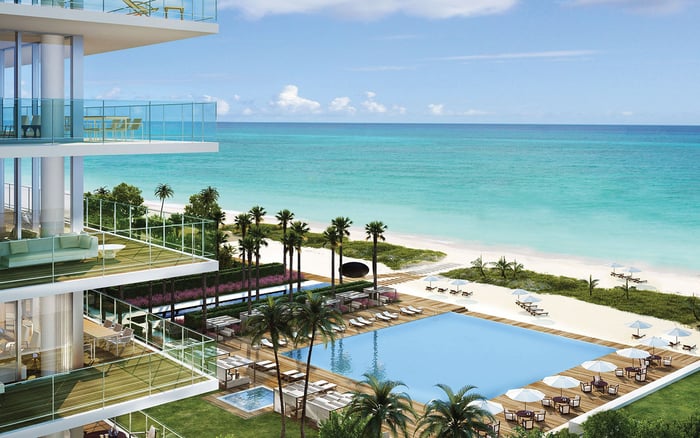
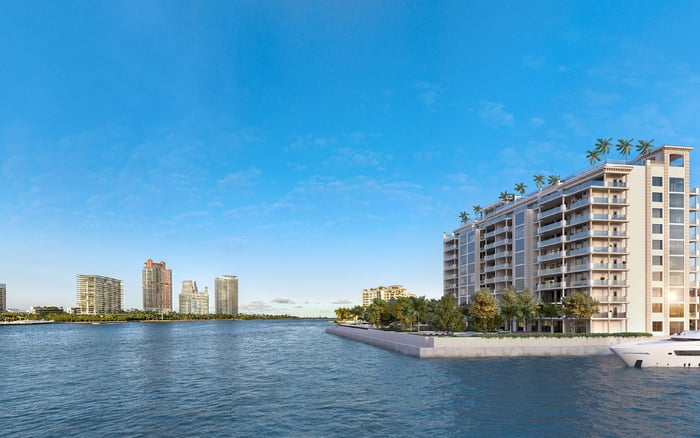
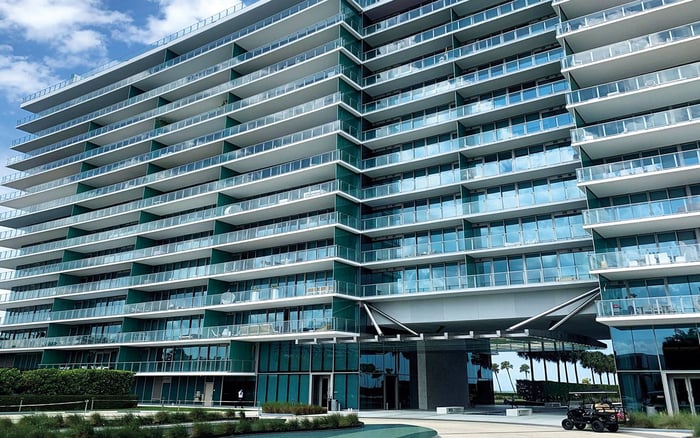
At Oceana Key Biscayne, finish decisions carry across open interiors shaped by glass, light, water views and generous balconies. Buyers should weigh aesthetic cohesion against approval, sourcing and installation risk, while treating resale value as a function of broad appeal, condition and execution rather than any single material.
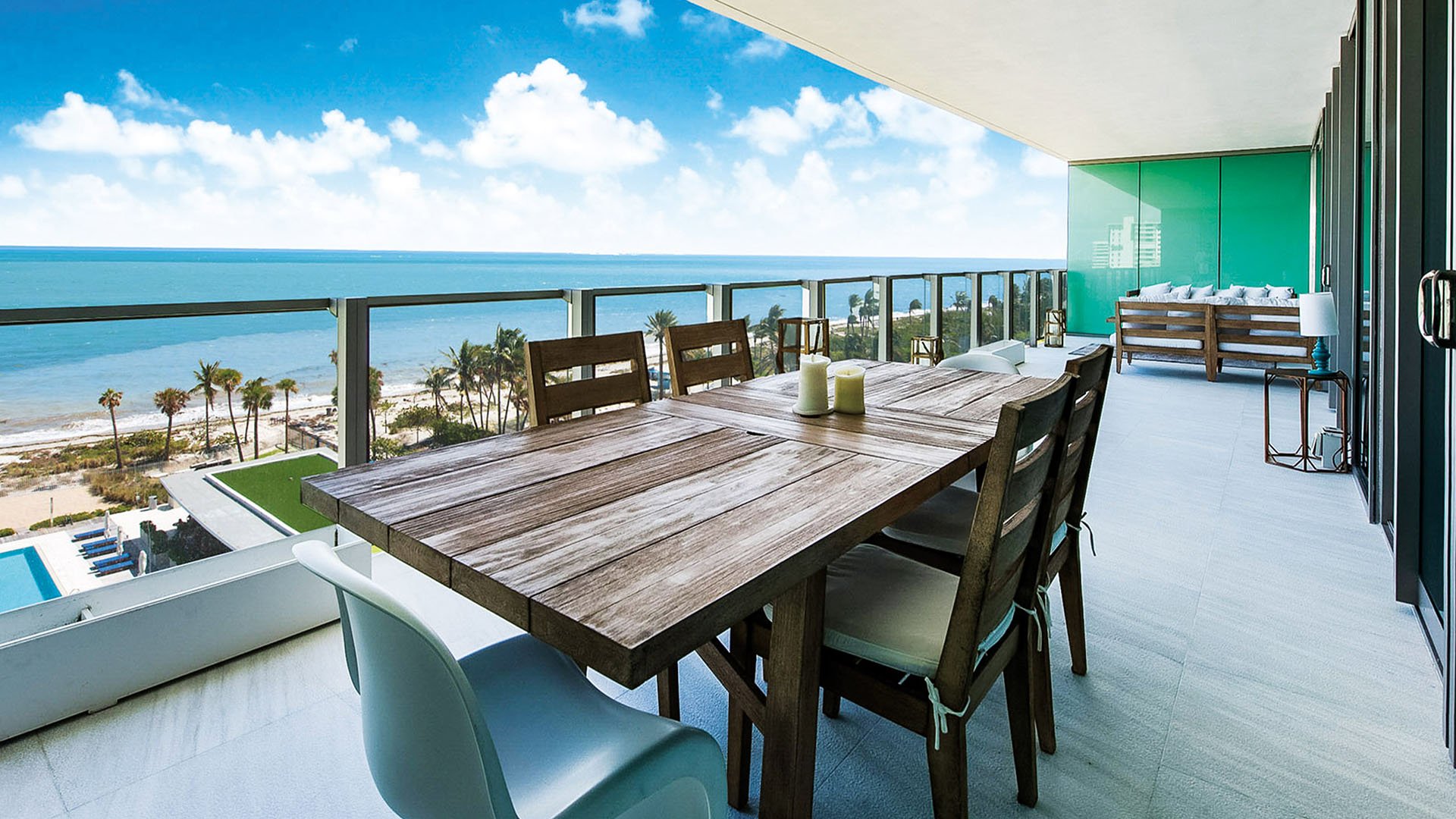
At Oceana Key Biscayne, architecture, daylight and water are integral to the experience. Expansive glass façades and floor-to-ceiling windows place the ocean at the center of each residence, while generous balconies extend the living environment outdoors. In this context, a design package is more than a collection of surfaces; it is the visual framework through which the view is experienced.
Open-plan living, dining and kitchen areas amplify every decision. Flooring may span several functional zones, cabinetry can anchor long sightlines, and stone or metal accents can shape the character of an entire entertaining space. The strongest schemes support Oceana’s clean, modern language rather than compete with it.
This distinction is especially relevant for buyers comparing Oceana Key Biscayne with other coastal properties, such as Oceana Bal Harbour or 57 Ocean Miami Beach. The appropriate specification is not necessarily the most elaborate. It is the one proportionate to the architecture, setting and intended pattern of ownership.
Buyers should first distinguish between selecting from an established finish palette and requesting a bespoke change. The former generally operates within a coordinated design system. The latter may require additional review, revised drawings, special procurement or work outside the standard installation sequence.
Package tiers, upgrade pricing, change-order deadlines, warranty rules and customization procedures are contract-specific. Before authorizing a change, confirm what is permitted, who must approve it, when the decision becomes irrevocable, how payment will be handled and whether the work affects warranty protection.
From a Design & Architecture perspective, disciplined editing has value. A restrained palette allows art, landscape and ocean light to carry the room, reflecting the development’s broader integration of architecture, art and landscaping. Customization is most persuasive when it improves function or material continuity without obscuring that identity.
Customization does not automatically cause a delay, but it introduces more variables. Design review, field verification, material availability, fabrication, shipping, installation and inspection can each affect the schedule. A substitution that appears simple on a mood board may require compatible dimensions, substrates, hardware or installation methods.
Buyers should request critical decision dates in writing and identify which selections could influence completion, access or closing. They should also establish who bears the consequences if a specified material becomes unavailable and whether an alternative requires fresh approval. No timing effect at Oceana should be assumed without reviewing the controlling agreement and current condominium requirements.
The practical objective is to preserve optionality early, then reduce uncertainty as work progresses. Prioritize decisions with the widest physical reach, such as continuous flooring or kitchen finishes, before addressing decorative elements that may be easier to adjust later. Buyers considering other design-led communities, including Park Grove Coconut Grove, can apply the same sequence when comparing standard specifications with personalized work.
Oceanfront
interiors benefit from materials and colors that complement daylight and water views. Pale or softly textured surfaces can reinforce brightness, while a limited number of darker accents can add definition. The goal is not to prescribe a single coastal aesthetic, but to establish a hierarchy in which the architecture and view remain legible.
A Balcony should also be considered part of the overall composition. Because Oceana’s balconies expand indoor-outdoor living, interior finishes visible through the glass should relate comfortably to the exterior setting. Abrupt shifts in color, scale or reflectivity can disrupt an otherwise calm sightline.
Common areas provide another benchmark. Their luxury materials, resort-style atmosphere, private residential access and extensive shared spaces establish expectations before a visitor enters a residence. Private interiors need not imitate them, but their quality, detailing and maintenance should feel consistent with the property’s positioning.
Resale
performance cannot be reduced to a particular stone, wood tone or appliance finish, and no premium should be assumed without transaction evidence. Future buyers assess the residence as a whole: plan, light, view, condition, craftsmanship and the ease with which the interior can accommodate their furnishings.
Highly personal choices may be meaningful to the current owner yet narrow the future audience. Conversely, a coherent bespoke interior can distinguish a residence when the execution is exceptional and the palette remains compatible with the architecture. The essential test is whether the customization feels integral or applied.
Maintain a clear file of approvals, specifications, invoices, warranties and care instructions. This documentation can help a future buyer understand what changed, who performed the work and how the materials should be maintained. For purchasers considering a wider range of highly designed residences, The Residences at Six Fisher Island offers another point of comparison for assessing how personal interiors relate to a luxury community’s broader identity.
Begin with the intended holding period and use pattern. A primary residence may justify deeply personal functional changes, while a second home or shorter ownership horizon may favor a quieter, more adaptable specification. Then assess each proposed change through four lenses: visual impact, approval complexity, schedule exposure and likely buyer breadth.
For Key Biscayne, durability and ease of care deserve as much attention as appearance, though product suitability and maintenance requirements should be confirmed with the relevant professionals. A beautiful finish that is difficult to repair or replace may create future friction.
Finally, place every promise in the governing documents. Renderings, samples and conversations are useful design tools, but the purchase agreement, approved change order and current condominium rules should define scope, cost, responsibility and timing.
Does Oceana Key Biscayne publish specific design package tiers? Package levels should not be assumed; buyers should verify current selections and terms in their transaction documents.
Can customization delay completion or closing? It can introduce review, sourcing and installation variables, but any effect at Oceana depends on the approved scope and controlling agreement.
Which finish decisions have the greatest visual impact? In an open plan, continuous flooring, kitchen surfaces and major cabinetry choices can influence several spaces at once.
Should interiors match Oceana’s common areas? Exact matching is unnecessary, although comparable quality and disciplined detailing can create a more coherent ownership experience.
Are neutral finishes always better for resale? Not always. Coherence, condition, craftsmanship and compatibility with the architecture matter more than neutrality alone.
Do premium materials guarantee a resale premium? No. A premium for any material should not be assumed without relevant transaction evidence.
What should buyers confirm before approving a change? Confirm permission, scope, price, deadline, installation responsibility, warranty treatment and possible effects on completion in writing.
How should the ocean view influence the palette? Materials should generally complement daylight and water rather than overwhelm them, preserving calm sightlines through the glass.
Why retain finish and renovation records? Approvals, invoices, specifications and care instructions can clarify workmanship, maintenance and warranty history for a future buyer.
Is bespoke design appropriate for a second home? Yes, when it improves use and remains proportionate to the expected holding period, maintenance needs and future buyer pool.
To compare the best-fit options with clarity, connect with MILLION.
If branded residences are on your mind — as a home or as an allocation — we would be glad to share what we are seeing, privately.
Begin a quiet conversation