A premium line should earn its price through lasting, demonstrable advantages. Buyers should test views, layouts, carrying costs and contract terms against both developer inventory and completed Coconut Grove resales.
At Four Seasons Residences Coconut Grove, the central question for 2026 buyers is not simply whether the building merits a premium. It is whether a particular residence possesses qualities that a future buyer will continue to recognize, desire and pay for after the tower is complete.
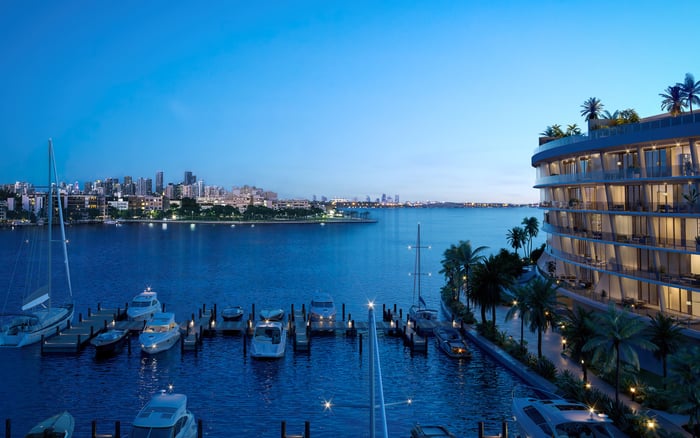
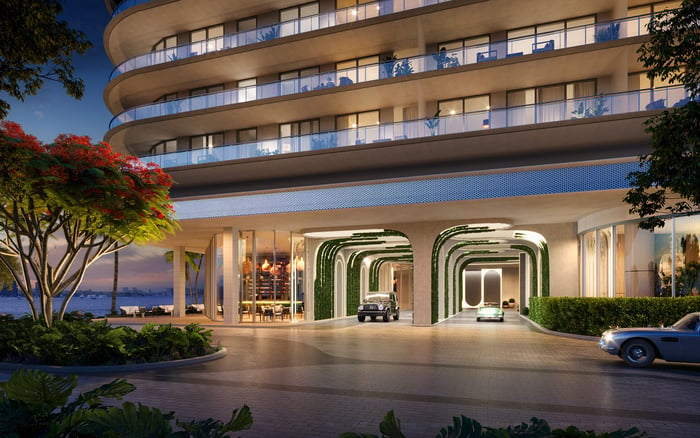
The 20-story waterfront condominium at 2699 South Bayshore Drive is planned with 70 homes. Developed by CMC Group and Fort Partners in partnership with Four Seasons, it is Florida’s first standalone Four Seasons residential property, without an adjoining Four Seasons hotel. Groundbreaking occurred in November 2025, and the first residents are expected in early 2028.
That combination of limited supply, waterfront positioning and hospitality service creates a persuasive foundation. Yet in branded residences, scarcity and brand recognition do not make every line equally defensible. Resale performance ultimately turns on the individual home, its basis and its ownership costs.
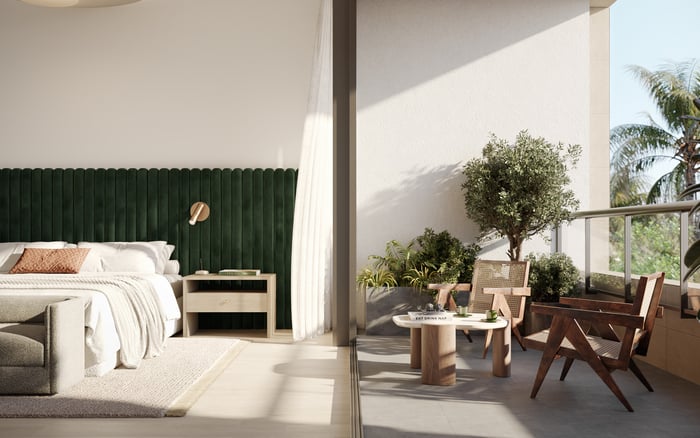
A premium is most credible when it secures an advantage that cannot be replicated elsewhere in the building. An unobstructed bay view, corner exposure, stronger privacy, abundant natural light, a genuinely useful terrace or a materially better floor plan can all remain legible to the next buyer.
A higher floor alone is less compelling when its view corridor, privacy and layout are substantially similar to those of a less expensive residence below. Buyers should request line-by-line pricing, interior square footage, terrace dimensions and floor-plan differences. The comparison should quantify precisely what each additional dollar secures.
Residences range from approximately 2,025 to 3,975 square feet, while four penthouses reach about 9,690 square feet. Starting prices are near $5.6 million for two bedrooms, $8.1 million for three bedrooms and $12.1 million for four-bedroom-plus-den homes. At those levels, modest functional distinctions can carry significant dollar consequences.
A June 2026 offering for Unit 2004 asked $10.95 million, or $3,091 per square foot. That is an asking price, not evidence of future closing value. It also sits materially above the roughly $1,895-per-square-foot median asking level for listed Coconut Grove condominiums in early 2026.
The broader neighborhood is an imperfect benchmark. During the trailing 90 days of the second quarter of 2026, Coconut Grove condominium sales recorded a median near $1.575 million, or $864 per square foot, and closed at approximately 94 to 95 percent of list price. Those figures encompass buildings of different ages, positions and service levels.
A more rigorous exercise pairs the developer’s remaining inventory with completed trophy-building resales. Vita at Grove Isle offers a relevant newer waterfront reference, while Park Grove Coconut Grove provides an established luxury comparison. Mr. C Tigertail Coconut Grove can help buyers assess how service, design, location and residence-specific attributes are reflected in the local market.
For a bay-facing premium, verify the sightline from the exact residence rather than relying on a generalized rendering. Study the exposure angle, nearby structures and the possibility that future development could affect the corridor. A broad living-room view may carry more resale weight than a partial view available primarily from the edge of a terrace.
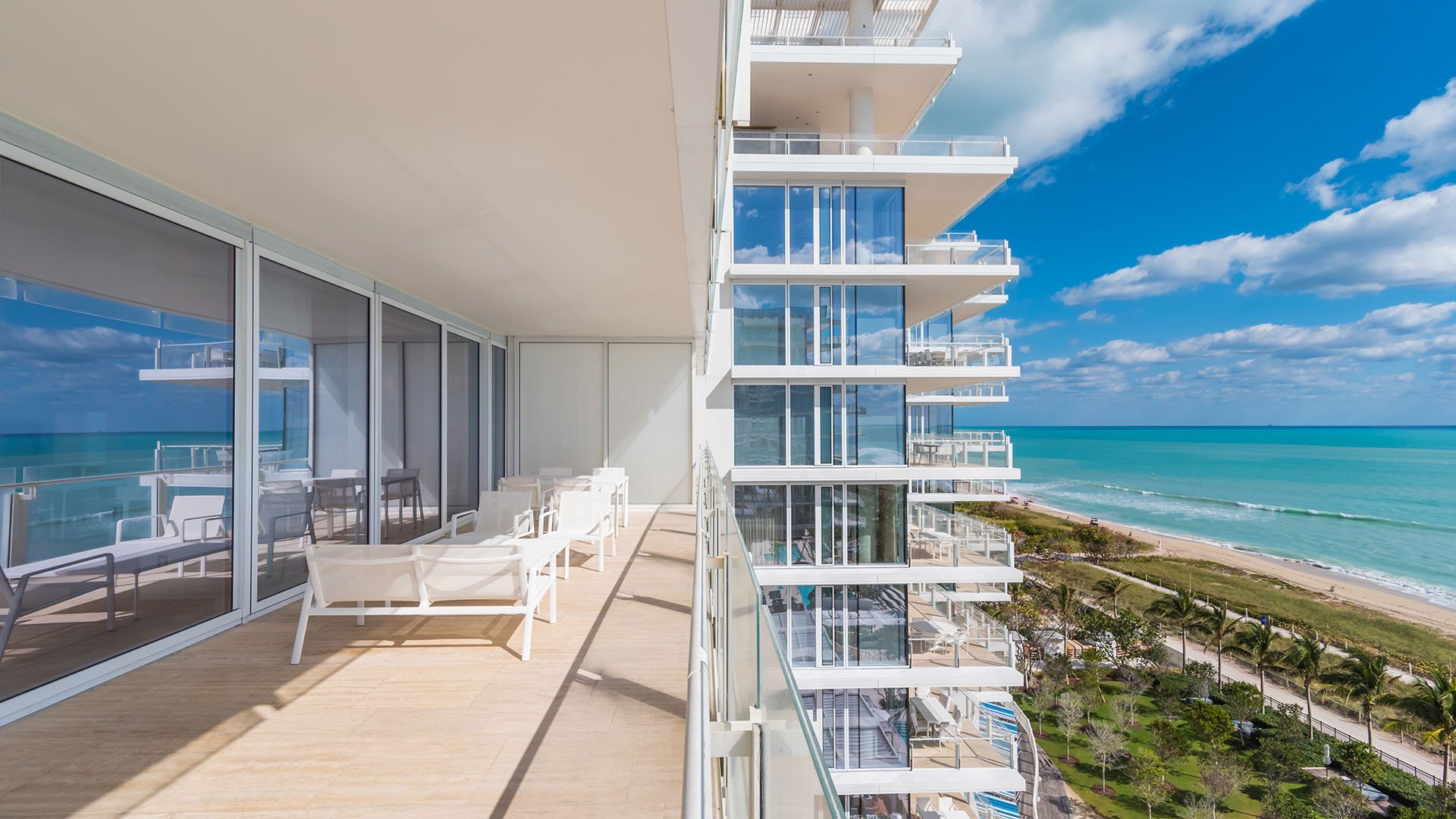
Terrace utility also matters. Assess dimensions, depth, access points and the relationship to principal rooms alongside total square footage. A terrace designed for comfortable daily use may retain more appeal than nominal outdoor space that photographs well but functions poorly.
The Four Seasons proposition extends beyond the residence. Amenities include a signature restaurant with in-residence dining, a serviced pool deck, gym, yoga room, spa, lounge and children’s area. The spa program includes a hammam, cold plunge, Jacuzzi, aquatherapy and sensory showers. Resident services include concierge, butler, housekeeping and valet.
These features may strengthen desirability, but a resale analysis must account for their cost. Model association fees, property taxes, insurance, transfer expenses and any separate service charges across realistic holding periods. A future purchaser will evaluate the monthly and annual commitment, not merely the acquisition price.
The project also includes a Surf Club private-membership benefit. Treat it as conditional until eligibility, approval requirements, duration, initiation costs and continuing dues are documented in the governing purchase materials.
The project was more than 50 percent presold by January 2026, potentially narrowing the choices available to later buyers. The developers also secured a $323.8 million construction loan that month. Neither fact removes the need for close scrutiny of the purchase contract.
Buyers contemplating an exit before completion should have counsel review assignment and resale restrictions, approval rights, timing provisions and associated charges. Flexibility can carry tangible value during a multiyear construction period, particularly when the original basis includes a substantial line or floor premium.
Build a concise comparison matrix for the target residence and its closest lower-priced alternatives. Include interior area, terrace area, exposure, view durability, privacy, floor-plan efficiency, purchase price, price per square foot and estimated annual carrying cost.
Then ask whether the premium is visible without explanation. If the residence offers an unmistakable corner, protected bay outlook or superior entertaining plan, the case may be durable. If the distinction depends mainly on a floor number or marketing label, negotiation discipline becomes more important.
The strongest 2026 acquisition is not necessarily the least expensive home or the highest floor. It is the residence whose advantages remain clear after the sales gallery, construction period and initial novelty have passed.
Is the Four Seasons brand enough to protect resale value? No. The brand and limited 70-home supply may support demand, but exposure, layout, basis and total ownership cost remain decisive.
Does a higher floor always justify a premium? No. The premium is stronger when elevation materially improves views, privacy, light or the overall living experience.
What should buyers compare within the building? Compare line-by-line pricing, interior area, terrace dimensions, exposure, floor plan and estimated carrying costs.
Are neighborhood medians useful for valuing a premium residence? They provide context, but direct comparisons with newer waterfront trophy properties are generally more informative.
Why compare developer inventory with completed resales? Remaining inventory reveals current competition, while completed resales show what buyers have accepted in finished buildings.
How should a buyer evaluate the view? Confirm the exact corridor from the residence and investigate whether nearby or future development could obstruct it.
What ownership expenses belong in the analysis? Include association fees, taxes, insurance, transfer costs and any additional charges tied to services or amenities.
Can the Surf Club benefit be included in the premium calculation? Only after eligibility, duration, approval requirements, initiation fees and ongoing dues are documented.
Why do assignment restrictions matter before completion? They can limit an owner’s ability to transfer the contract or exit before delivery, affecting flexibility and potential liquidity.
What is the clearest sign of a defensible premium line? Its superior qualities should be immediately visible, difficult to replicate and likely to remain desirable after completion.
To compare the best-fit options with clarity, connect with MILLION.
If branded residences are on your mind — as a home or as an allocation — we would be glad to share what we are seeing, privately.
Begin a quiet conversation