Continuum offers private temperature-controlled storage for purchase, but public materials leave its legal form, specifications, and transfer rights undefined. This buyer’s guide identifies the documents, written protections, and operating details to confirm before signing.

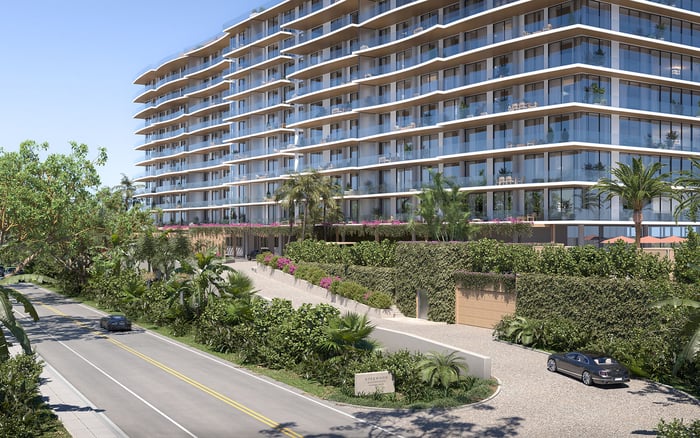
Continuum Club & Residences is a pre-construction condominium planned for 1755 79th Street Causeway in North Bay Village. The program calls for a 32-story tower with approximately 198 residences, ranging from one- to four-bedroom homes and penthouses. Delivery is anticipated around 2027, subject to ordinary construction schedule changes.
The development team is identified as Continuum Group, led by Bruce Eichner, with architecture by Arquitectonica and interiors by Durukan Design. For buyers considering Continuum Club & Residences North Bay Village, the central storage fact is precise but limited: private temperature-controlled storage is marketed as available for purchase. It should therefore be treated as an optional acquisition, not a standard feature included with every residence.
A marketed amenity becomes a dependable ownership right only when the governing documents define it.
The storage inventory, dimensions, location, numbering system, purchase price, and temperature range have not been specified. Nor has it been established whether a storage space will be deeded, assigned as a limited common element, licensed, or documented through another form of interest. Those distinctions can shape control, recurring costs, transferability, and resale presentation.
The word “storage” covers several unrelated functions at this new-construction project. Buyers should distinguish among them during negotiations.
First, private temperature-controlled storage is offered for purchase. This category requires a specific written allocation and legal explanation. Second, the residences are marketed with double walk-in closets in primary bedrooms, floor-to-ceiling pantry storage in kitchens, and an in-home laundry room with a premium full-size washer and dryer. These features may reduce everyday storage pressure, but they do not substitute for a separately purchased room or locker.
Third, secured bicycle and e-bike storage is presented as a shared building facility rather than individually purchased owner storage. Fourth, temperature-regulated holding space for food and package deliveries serves an operational purpose. It is distinct from private storage and may be subject to access procedures, collection windows, staff protocols, and liability rules that have not been detailed.
This distinction matters in a waterfront second home, where an owner may expect staff to receive perishables during an absence. Temperature regulation alone does not establish how long an item may remain, who may retrieve it, or what happens if the equipment fails.
The private storage is described only as temperature controlled. Dedicated owner wine rooms or wine lockers are not part of the disclosed program. Likewise, the Continuum Marketplace, promoted as being restocked daily with wine and snacks, is a retail amenity. It does not create an individual right to cellar bottles.
Before treating any optional space as wine-grade, a collector should request written performance specifications. Essential points include the stated temperature range, humidity management, backup power, monitoring, security, permitted contents, access hours, insurance obligations, and response procedures following an interruption. A room suitable for household goods may not provide the environmental consistency expected for a valuable collection.
The purchase exhibit should also identify the space by number and location, state a minimum size, and record the price and anticipated recurring charges. If customized racking or refrigeration is contemplated, buyers should confirm whether alterations are permitted, who approves them, and whether improvements must be removed at resale. None of these rights should be inferred from the phrase “temperature controlled.”
Allocation is not merely an amenity question. Counsel should review the condominium declaration, prospectus, exhibits, purchase agreement, proposed budget, rules, and every schedule addressing storage and parking. The objective is to determine exactly what the buyer receives-and which document controls if marketing language differs from the executed contract.
A deeded parcel may carry a different bundle of rights from a limited common element assigned to a residence. A license may be personal, conditional, or revocable under its terms. Buyers should therefore seek written answers to five practical questions: Is the space permanently linked to the unit? Can it be leased or lent? Can it be reassigned to another owner? Can it be sold independently? What approvals, fees, or transfer documents are required?
The floor plans identify residence lines, bedroom counts, and interior and exterior areas, but they do not clearly assign private storage rooms to particular homes. A floor plan should not be treated as the allocation instrument unless the final contract documents expressly make it one.
For broader context, buyers comparing North Bay Village inventory may also review Shoma Bay North Bay Village, Tula Residences North Bay Village, and Pagani North Bay Village. The useful comparison is not whether another new project advertises storage, but how each project’s controlling documents define allocation, use, cost, and transfer.
It remains unclear whether purchased storage must transfer with its associated residence or may be sold, leased, or reassigned separately. This unresolved point deserves attention before the storage purchase becomes nonrefundable.
The contract should identify both the residence and the storage space, together with the legal relationship between them. If the storage is appurtenant to the home, the documents should state whether it transfers automatically upon a sale. If separate transfers are possible, confirm the eligible buyer pool, association or developer consent, right-of-first-refusal provisions, recording requirements, transfer fees, and any prohibition on ownership by nonresidents.
This is also an investment consideration. A clearly documented storage right may be easier to explain at resale than an informal operational privilege. Conversely, a license with reassignment restrictions may offer utility without providing an independently marketable asset. The correct value analysis depends on the final documents, not the amenity label.
Because pricing can change, buyers should obtain a current developer price sheet for both residences and optional storage rather than budget from an earlier indication.
The building advertises a porte cochère and 24/7 valet service. It also plans EV charging stations and a Tesla house car. None of these features, however, establishes a separately allocated, long-term “valet storage” program for vehicles or personal property.
Buyers should distinguish valet operations from a property right in a parking space. Request written clarification on whether parking is assigned, licensed, shared, or entirely controlled through valet operations. Seasonal residents may also wish to ask about prolonged vehicle stays, key custody, battery maintenance, EV-charging rotation, oversized vehicles, guest parking, retrieval expectations, and responsibility for damage.
If the term “valet storage” arises in a sales conversation, require a definition. It might refer casually to valet parking, staff-handled personal property, or another service, yet each carries different rules and liabilities. The governing documents and service policies should identify the actual entitlement.
This topic belongs in practical buyer’s guides because storage affects daily life long after the finishes are selected. Before signing, buyers should obtain the governing documents and insist that any purchased space be identified by number, location, minimum dimensions, environmental standard, price, recurring fees, and permitted use.
Wine collectors should add humidity, backup power, monitoring, security, insurance, and failure-response requirements. Second-home owners should review package holding times and staff access. Every buyer should confirm storage transfer restrictions and the precise nature of parking and valet rights.
Renderings, amenity lists, and sales summaries can describe the intended lifestyle. The executed contract, declaration, exhibits, rules, and allocation schedules determine what the owner can rely upon. For discreet guidance on Continuum and comparable South Florida opportunities, connect with MILLION.
If branded residences are on your mind — as a home or as an allocation — we would be glad to share what we are seeing, privately.
Begin a quiet conversationNo standard inclusion is publicly stated. Private temperature-controlled storage is marketed as available for purchase.
Public materials do not identify whether storage is deeded, a limited common element, licensed, or held through another legal form.
That transfer right is not publicly defined. Buyers should confirm separate sale, lease, lending, and reassignment rights in the controlling documents.
Public materials describe generic temperature-controlled storage but do not designate dedicated owner wine rooms or wine lockers.
They should request temperature and humidity specifications, backup power, monitoring, security, insurance requirements, permitted contents, and failure protocols.
No. Temperature-regulated food and package holding is an operational building amenity distinct from private storage offered for purchase.
Secured bicycle and e-bike storage is presented as a shared building facility, not as individually purchased owner storage.
Public materials advertise 24/7 valet but do not identify a separate long-term valet-storage program for vehicles or personal property.
Review the declaration, prospectus, exhibits, purchase agreement, proposed budget, rules, and schedules governing storage and parking rights.
Public project information indicates delivery around 2027, although construction schedules can change.