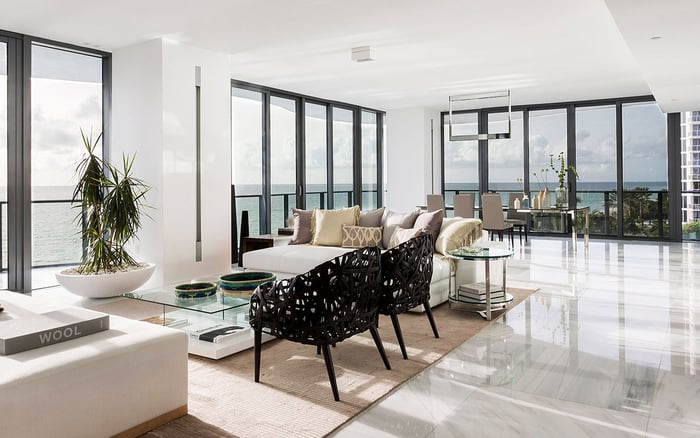
A Palazzo del Sol resale should be evaluated against the renovation you need, not simply the residence you see. Before committing, clarify ownership boundaries, alteration approvals, building finances, insurance responsibilities, and the path to a realistic move-in date.

A resale at Palazzo del Sol can invite a personal vision: a different kitchen composition, a more restrained material palette, or rooms better suited to the way you entertain. Before the offer, however, the question is not simply what you would change. It is whether the purchase still makes sense if those changes prove more limited, expensive, or time-consuming than expected.
For a Fisher Island buyer, a disciplined approach means evaluating the residence and the proposed renovation together. Establish which improvements are essential, which are optional, and which require further investigation. Let those distinctions inform price, contractual protections, and your willingness to proceed.
The most useful pre-offer exercise is a written brief separating the home you are buying from the home you hope to create.
Start with the declaration, bylaws, current rules, available alteration requirements, budgets, financial statements, and board minutes. Have your advisers read them together rather than treating renovation rules as a standalone checklist. Ownership boundaries, association authority, and financial obligations can all affect the same design decision.
Reconcile the legal unit description with everything represented as part of the purchase. Parking, storage, terraces, and exclusive-use areas deserve particular attention. A feature shown during a viewing should not be treated as unrestricted private property simply because it feels integral to the residence.
Terrace plans call for explicit questions: what is owned, what is reserved for exclusive use, and what may actually be altered? Furnishing an outdoor space and changing its physical elements are different proposals. Ask counsel to identify the relevant boundaries before the design team builds a concept around them.
If your search also includes Palazzo della Luna, repeat this review for that purchase. Do not carry assumptions about ownership rights or alteration permissions from one condominium to another.
Prepare a room-by-room scope before seeking meaningful pricing. Distinguish decorative preferences from changes that could involve common elements or require association approval. The purpose is not to produce final construction drawings before buying, but to identify the assumptions on which the purchase depends.
Ask the architect or designer to classify proposed work as essential, desirable, or deferrable. If the residence only works for you after a particular layout change, that change deserves early scrutiny. A beautiful alternative scheme offers little comfort if the required arrangement cannot be approved.
Request written clarification of the applicable alteration process. Cover submission requirements, contractor documentation, deposits, fees, permitted working periods, delivery arrangements, and elevator access. Treat these as matters to establish, not as confirmed Palazzo del Sol policies.
Above all, distinguish preliminary feedback from approval. A design conversation, contractor estimate, or seller assurance should not become the basis for an unconditional renovation commitment.
A unit inspection is only one part of the decision. Request available structural assessments, engineering studies, major-project contracts, and related association records. Consider whether building work could affect your planned improvements or occupancy, and seek clarification where the documents leave questions unresolved.
Review the structural integrity reserve study where applicable. Florida law generally requires covered residential condominium associations with buildings three habitable stories or higher to obtain one at least every ten years, subject to statutory applicability and exceptions. Have counsel confirm the requirements relevant to the property rather than assuming a general rule resolves its circumstances.
Read the study alongside the current budget and financial statements. On its own, it neither establishes the association's available cash nor eliminates future assessment risk. Examine assessment notices and board minutes for approved charges and proposed major work before deciding what the residence is worth to you.
A renovation budget should distinguish the proposed interior work from association-related charges, insurance needs, and potential building-level obligations. A single construction figure should not stand in for the full financial picture.
Review the association's insurance coverage and governing documents with your insurance adviser. Establish which property falls within association coverage and which interior items you must insure. That distinction matters when specifying improvements and considering the protection you want after completion.
Keep approved assessments separate from possible future expenditure. Ask counsel how any existing assessment will be addressed in the purchase contract rather than assuming the seller or buyer automatically bears it.
For buyers also considering The Residences at Six Fisher Island, use the same comparison framework: acquisition cost, intended improvements, documented obligations, and timing uncertainty. This is a decision framework, not a claim that different properties share approval procedures or financial conditions.
Before setting a move-in date, identify the authority responsible for permitting at the property and establish the review path for your actual scope. Investigate association consent and governmental permitting separately. Do not assume that progress on one resolves the other.
In particular, do not apply Sunny Isles Beach procedures to Palazzo del Sol. A permitting portal, application form, inspection sequence, or specialized remodeling service from another jurisdiction does not establish what governs this residence.
Ask your professional team to identify the steps between concept and lawful completion, including any required inspections. Build your occupancy plan around confirmed requirements, not an attractive construction estimate alone.
For a second home, decide how much timing flexibility you genuinely have. If a specific arrival date is nonnegotiable, an uncertain approval path should influence the purchase decision before it becomes a scheduling problem.
Before submitting the offer, settle three points with your advisers: the changes without which you would not buy, the evidence needed to assess their feasibility, and the price that remains acceptable if optional improvements are deferred.
Have counsel consider appropriate document-review and inspection protections, access for your professional team, and the contractual treatment of unresolved matters. Do not assume any proposed protection is effective without advice on the actual agreement.
Finally, ask whether you would still want the residence substantially as it stands. If the answer is no, renovation feasibility is not a post-closing detail. It is part of the asset you are evaluating. The right purchase leaves room for personal expression without making ownership depend on permissions that have not been established.
Explore Fisher Island residences with MILLION to frame your next purchase around both the home and the decisions that come before it.
If branded residences are on your mind — as a home or as an allocation — we would be glad to share what we are seeing, privately.
Begin a quiet conversationIdentify the changes essential to your purchase and separate them from optional improvements. Investigate whether the essential work is feasible before treating renovation potential as part of the residence's value.
Request the declaration, bylaws, rules, available alteration requirements, budgets, financial statements, and board minutes. Review them together to understand ownership boundaries, approval requirements, and financial obligations.
Reconcile the legal unit description and condominium documents with the purchase representations. Distinguish ownership from exclusive-use rights and confirm any restrictions on alterations.
No. Determine whether it affects common elements or requires association approval, and distinguish preliminary feedback from formal approval.
Ask about submissions, contractor documentation, deposits, fees, working periods, deliveries, and elevator access. Confirm the applicable requirements rather than assuming any particular Palazzo del Sol policy.
Request available structural assessments, engineering studies, major-project contracts, and related association records. Review them for issues that may affect your ownership decision or intended work.
No. Read it alongside budgets and financial statements, and examine assessment notices and board minutes for approved charges and proposed major work.
Establish which property the association insures and which interior items require your own coverage. Review the governing documents and association coverage with your insurance adviser.
Do not assume those procedures apply. Confirm the property's permitting authority and the requirements for your proposed scope before planning submissions or inspections.
Let unresolved essential changes influence your price, timing expectations, and willingness to proceed. Ask counsel to address appropriate review protections and unresolved obligations in the actual purchase agreement.