For Seattle households considering Surfside, the decisive luxury may be operational privacy: a home that accommodates relatives, guests, and caregivers without compromising daily life.

For Seattle buyers relocating with parents, adult children, frequent guests, or household staff, Surfside presents a deceptively nuanced brief. Oceanfront outlooks and resort amenities matter, but multigenerational success is often determined by quieter details: who can arrive without crossing the main living room, whether an older relative has a genuinely private suite, and how a caregiver enters for recurring shifts.
This MILLION Buyer's Guides perspective begins with a household map. Identify permanent occupants, seasonal visitors, potential live-in support, and recurring daytime caregivers. Then test each residence against morning routines, meal preparation, rest, work, and overnight privacy. A nominal bedroom count cannot reveal whether generations can live independently within the same home.
The most valuable luxury in a multigenerational home is control over proximity.
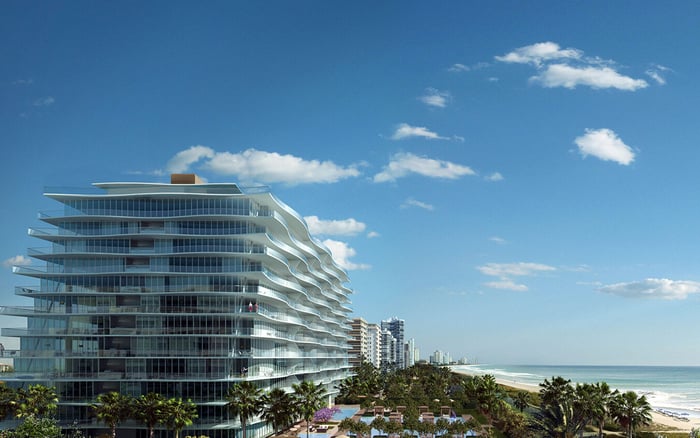
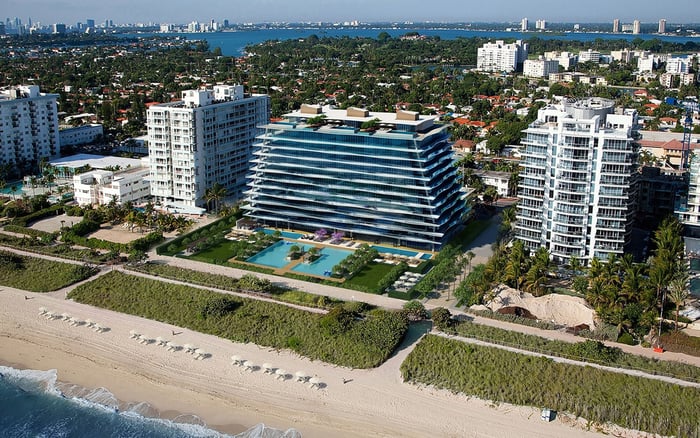
At Fendi Château Residences Surfside, the 12-story oceanfront building contains 57 residences spanning roughly 3,325 to 7,110 square feet. Its three- to five-bedroom, flow-through layouts illustrate why configuration can matter more than raw area. Bedrooms arranged in distinct zones can reduce overlap, while private elevators and entry foyers create discreet arrival space for relatives, guests, and caregivers.
Staff quarters shown in certain floor plans can provide separate sleeping accommodations for a live-in caregiver, nanny, or housekeeper. Buyers should still inspect the specific residence rather than extrapolate from building-wide marketing. Confirm the room's dimensions, relationship to a bathroom, storage, route to the kitchen, and whether the arrangement provides dignified separation for both family and staff.
Deep terraces can serve as additional outdoor living zones, allowing generations to spread out without leaving the residence. Two oceanfront pools, private cabanas, restaurant service, a full-service spa, 24-hour security, and 24-hour valet may also ease daily coordination. These conveniences do not replace a functional plan, but they can make a well-designed residence easier to live in.
Visiting relatives do not always need a permanent bedroom in the family home. The Surf Club Four Seasons Surfside combines private residences with a Four Seasons-operated hotel along 9001 to 9111 Collins Avenue. This format can allow relatives to book nearby hotel accommodations and remain close to the household without occupying its private rooms.
The option can be especially useful when visits are frequent but intermittent. Resort-style services, dining, a full-service spa, pools, fitness facilities, cabanas, and beach service can reduce transportation and scheduling demands for older visitors. Resident-focused amenity areas are distinct from hotel facilities-an important consideration for households balancing convenience with privacy.
A condo-hotel setting nevertheless requires careful observation. Buyers should compare resident-only and shared areas, follow the routes from valet and lobby to the residence, and consider whether hotel events or visitor activity suit the family's preferred atmosphere. The relevant question is not whether service exists, but whether circulation patterns preserve residential calm.
A caregiver's first arrival is not the useful test. Buyers should model the hundredth. Ask management, in writing, whether household staff must register, where credentials are collected, which entrances and elevators they may use, and whether authorization requires renewal. Confirm procedures for shift changes, after-hours access, deliveries, parking, and temporary replacement caregivers.
Twenty-four-hour attended lobbies, security, and valet service can simplify recurring arrivals and transportation. Seaway North at The Surf Club, for example, provides a 24-hour attended lobby, direct beach access, an oceanfront pool and hot tub, fitness facilities, and a clubroom. Even with attended service, access protocols remain building-specific and should be verified before closing.
The physical tour should mirror the caregiver's working day. Trace the route from arrival to the care recipient's suite, kitchen, laundry, and service areas. Note whether the path cuts through formal entertaining spaces or another generation's bedroom zone. Privacy is strongest when architecture and building procedures support the same routine.
Before contracting, obtain the current condominium rules governing long-term guests, caregiver access, household staff registration, parking, elevator use, and recurring visitors. If hotel accommodations are part of the plan, confirm booking procedures and whether any policies affect availability or access. Verbal assurances are no substitute for governing documents and written management responses.
A comparison viewing at Ocean House Surfside can help buyers test assumptions across multiple properties. Apply the same household map and access questions at every appointment. Consistency exposes meaningful differences in foyer privacy, bedroom separation, staff circulation, and management procedures without relying solely on amenity impressions.
Buyers should also consider whether a residence can adapt as care needs evolve. A room suitable for an occasional guest may not accommodate overnight support. Likewise, a beautiful secondary suite can become impractical if its bathroom access, storage, or route to shared spaces compromises independence.
A single-family home may appear to offer maximum autonomy, but buyers should never assume that an independent in-law suite or detached caregiver cottage is permissible. Surfside's zoning terminology distinguishes single-family dwellings, duplex or two-family dwellings, multifamily dwellings, and other residential forms. An accessory building is a detached subordinate structure with an incidental use on the same lot, and structures used for sleeping or containing cooking facilities may be subject to accessory-building regulations.
For any proposed conversion or new detached space, engage a local land-use attorney to confirm how the specific design would be classified. Review sleeping, cooking, bathing, access, parking, and intended occupancy before treating the space as part of the purchase rationale. A configuration's legal character may differ from how it is described during a showing.
Surfside's Chapter 90 addresses short-term rentals across single-family, two-family, multifamily, and townhome properties. If the family expects to rent unused quarters between visits, both municipal rules and any association restrictions require review. Flexibility should be documented, not presumed.
The strongest Surfside purchase is one in which the floor plan, service model, and rules support the same household strategy. Request the exact plan, governing documents, written access procedures, and relevant zoning advice early enough to inform negotiations. Visit when the family can observe lobby, valet, elevator, and shared-space activity rather than viewing only the residence.
For Seattle households, relocation planning should include a practical first-week script: who arrives with whom, where guests sleep, how caregivers are credentialed, and which services reduce travel outside the property. When those answers are clear before closing, privacy becomes an operating feature rather than an aspiration.
For confidential assistance evaluating Surfside residences for multigenerational living, connect with MILLION.
If branded residences are on your mind — as a home or as an allocation — we would be glad to share what we are seeing, privately.
Begin a quiet conversationPrioritize separated bedroom zones, multiple suites, private arrival space, staff quarters, and terraces that expand usable living areas.
A private elevator and foyer can give relatives, guests, and caregivers a more discreet route into the residence with less reliance on shared corridors.
It may, but buyers should verify the exact room, bathroom access, storage, kitchen route, and building rules for the specific residence.
Nearby hotel rooms can keep visitors close without permanently dedicating bedrooms inside the family residence.
Request written rules covering registration, credentials, entrances, elevators, parking, after-hours access, shift changes, and replacement caregivers.
No. They can simplify arrivals and transportation, but each building's recurring-access procedures still require confirmation.
No. Staff rooms, service paths, bathroom configurations, and privacy relationships can vary by individual residence.
No. Buyers should have local land-use counsel confirm how the proposed structure and its sleeping or cooking facilities would be classified.
Any rental plan requires review of Surfside's rules and, when applicable, condominium or homeowners association restrictions.
Obtain the exact floor plan, governing documents, guest and staff policies, written management responses, and relevant zoning guidance.