A discreet first-year planning framework for a Tokyo-to-Miami Beach move, separating association dues, optional services, owner insurance, post-transfer property taxes, and furnishing commitments into a usable cash calendar.
Rebasing from Tokyo to Miami Beach requires more than translating a purchase price into yen. Plan the first year around two distinct commitments: operating the residence and preparing it for occupancy. Association dues belong in the first category; furnishing deposits, freight and installation belong in the second. A single monthly allowance obscures when cash must actually be available.
Build a 12-month calendar beginning at closing, with separate lines for HOA dues, optional services, owner insurance, property taxes and furnishing. Record each amount, payment date and responsible adviser, and mark every figure as confirmed or provisional. Keep acquisition costs and any financing payments outside this ownership schedule, then reconcile both schedules within the household’s overall liquidity plan.
For funds originating in Japan, retain the dollar obligation alongside the household’s yen funding assumption. Ask the banking adviser to confirm conversion and transfer costs before scheduling payments. A planning exchange rate is not a guaranteed settlement rate.
An indicative planning range for Miami luxury-condominium dues is approximately $1.50-$6+ per square foot per month. For a 2,000-square-foot residence, that translates to $3,000-$12,000+ monthly, or $36,000-$144,000+ annually. This is arithmetic based on a broad range, not a quoted charge for any Miami Beach building.
The spread reflects differences in services, age, insurance, staffing and reserves. It can inform an early sensitivity test, but it is too broad to support a purchase decision. Do not combine this calculation with flat monthly luxury-building benchmarks as though they describe the same residence.
When evaluating Five Park Miami Beach, for example, request the same unit-specific documentation you would require for any candidate. A project name is no substitute for an operating budget. Ask for:
The current dues for the exact residence and the payment schedule.
The association budget, reserve information and relevant inspection materials.
Details of assessments, including amounts, status and payment dates.
Master-policy information and a written schedule of included services.
List assessments separately from ordinary dues. Ask your advisers to distinguish confirmed obligations from possible future expenditures. Do not assign an unsupported contingency percentage and treat the result as settled.
The question is not simply whether a service is available, but whether its cost is included, usage-based or separately contracted. Request a written service menu from management and identify the conveniences your household expects to use. Availability is not inclusion.
For a residence under consideration at Setai Residences Miami Beach, ask management to identify any optional services and their current terms. Do not infer a service package or price from the name alone. Apply the same discipline across the shortlist.
For each desired service, confirm the billing unit, minimum commitment, cancellation terms and additional charges. Where relevant, request quotes for housekeeping or assistance during absences, without assuming either is offered by the building.
Create an essential-services budget and a discretionary allowance. For a household dividing time between Tokyo and Miami Beach, establish which commitments continue during absences and which can be paused. Budget against those written terms, not anticipated occupancy alone.
HO-6 unit-owner insurance generally addresses contents, personal liability and portions of the residence outside the condominium master policy. It does not replace the association’s coverage. Review both together to clarify the owner’s obligations before finalizing the annual budget.
An indicative Miami HO-6 benchmark is approximately $2,570 annually, but a high-value residence requires an individual quote. Do not treat that figure as a reliable premium for a substantially furnished home. Give the insurance adviser a proposed contents inventory and ask how the intended furnishing program affects coverage.
Flood protection warrants a separate discussion. Condominium unit-owner policies are exempt from the specific phased flood-insurance requirement applicable to certain state-backed residential policies. That exemption does not establish that flood coverage is unnecessary or that every other requirement is satisfied. Ask the adviser to distinguish legal requirements from the protection appropriate to the residence.
Enter actual premium payment dates in the cash calendar. Keep any deductible liquidity reserve separate from expected annual premium spending.
The seller’s tax bill is not a dependable forecast for the buyer. Ownership changes can trigger reassessment. Plan around an anticipated post-transfer assessment rather than carrying forward the prior owner’s payment.
Florida Homestead Exemption depends on permanent-residence status and filing requirements. A move from Tokyo does not, by itself, establish eligibility. Confirm the household’s circumstances and the applicable filing deadline before assuming any benefit.
Save Our Homes generally limits annual increases in a qualifying homestead’s assessed value to 3% or the CPI change, whichever is lower. It does not necessarily cap growth in the final tax bill. Keep that distinction explicit in the budget.
Ask the tax adviser for a post-transfer estimate, expected payment timing and any closing adjustments requiring reconciliation. Dividing an annual estimate by 12 helps with monthly provisioning, but it is not a payment schedule. Qualified advisers should address Japanese and U.S. cross-border tax treatment separately.
At 57 Ocean Miami Beach, as with any shortlisted residence, begin with the actual unit’s condition and an inventory of what will remain at handover. Then decide what to acquire locally, what to ship from Tokyo and what to defer. The furnishing allowance should follow that scope, not a generic percentage of the purchase price.
Request separate quotes for furniture, freight, storage, delivery, installation and setup. Ask relocation specialists to identify applicable customs costs rather than inserting a standard estimate. Require each vendor to itemize deposits, progress payments and final balances.
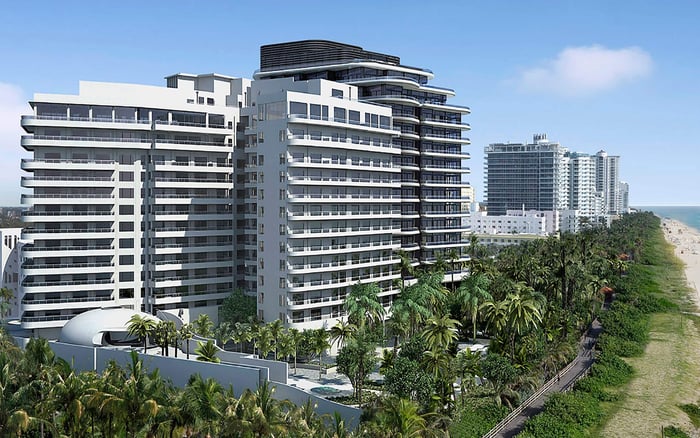
Before authorizing shipments, confirm delivery arrangements with building management. For a home under consideration at Faena House Miami Beach, resolve the same questions against that residence’s actual requirements. Separate refundable deposits, if applicable, from permanent expenditure. Both affect liquidity, but they are not the same cost.
The completed schedule should distinguish recurring operating costs, discretionary usage, one-time setup spending and liquidity held against uncertainty. Every material line should carry a written amount or a clearly identified estimate, a payment date and a named person responsible for confirmation.
Review the calendar again when the final insurance quote, tax estimate and furnishing contracts arrive. The objective is not the lowest apparent monthly number. It is a residence whose first year can be funded deliberately, without confusing the cost of ownership with the cost of arrival.
For a discreet conversation about your Miami Beach residential shortlist, connect with MILLION.
If branded residences are on your mind — as a home or as an allocation — we would be glad to share what we are seeing, privately.
Begin a quiet conversationSeparate HOA dues, optional services, owner insurance, property taxes and furnishing or relocation spending. Reconcile this schedule with a separate acquisition and financing plan.
An indicative Miami luxury-condominium range is approximately $1.50–$6+ per square foot monthly. It is not a building-specific quote and should be replaced with the exact residence’s dues.
The calculation produces $3,000–$12,000+ monthly, or $36,000–$144,000+ annually. These figures illustrate the broad range rather than an actual association charge.
Request the budget, reserve information, assessment details, relevant inspection materials and master-policy information. Obtain the exact unit’s dues and a written list of included services.
Obtain written rates and terms from management, then separate essential commitments from discretionary usage. Confirm whether charges continue during periods away from the residence.
No. It is an indicative Miami HO-6 benchmark; a high-value residence requires an individual quote reflecting its coverage needs.
No. HO-6 generally covers contents, personal liability and portions of the unit outside the master policy, so both should be reviewed together.
Not reliably, because an ownership change can trigger reassessment. Use an anticipated post-transfer assessment and confirm any exemptions for which the buyer qualifies.
No. It generally limits annual increases in a qualifying homestead’s assessed value to 3% or the CPI change, whichever is lower, rather than limiting the final bill.
Obtain separate quotes for furnishing, freight, storage, delivery, installation and setup, with any applicable customs costs identified by specialists. Schedule deposits and balances by their actual due dates.