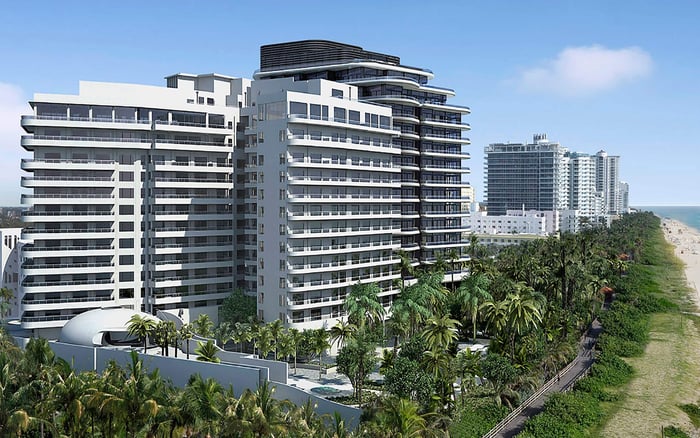
An ownership-readiness framework for Apogee South Beach buyers, separating building valuation, storm deductibles, owner allocations, and the coverage available under a personal condominium policy.

For a buyer considering Apogee South Beach, ownership readiness extends beyond the purchase price and recurring carrying costs. Insurance demands a more exacting inquiry: after a covered storm loss, what obligation remains with the association, how could it reach the residence, and what would the owner’s policy actually reimburse?
These are three distinct questions, not a single coverage calculation. A substantial master-policy limit does not eliminate a deductible. An association assessment does not automatically qualify for personal insurance reimbursement. An appraisal provision does not resolve every coverage dispute.
A sound audit connects the association’s documents to the buyer’s proposed insurance and liquidity plan. Establish Apogee’s current insured value, deductible, appraisal date, and allocation provisions from its own records-not from assumptions about another Miami Beach condominium.
Request the association’s declarations page, endorsements, deductible schedule, latest independent replacement-cost appraisal, budget, reserve study, and assessment-related board minutes. Include the governing documents that explain how common expenses and uninsured losses are allocated.
Read these materials together. The declarations page identifies core policy terms; endorsements can change their effect. The deductible schedule establishes retained exposure, while the appraisal supplies the valuation against which to consider insurance adequacy. Budgets, reserves, and minutes inform a separate question: how might the association fund its obligations?
Ask the association’s insurance adviser to reconcile the insured value with the appraisal and explain the applicable storm deductible. Ask counsel to review allocation language and relevant statutory exceptions. A general assurance that the building is insured is no substitute for either review.
For buyers also considering Continuum on South Beach, use the same document checklist but conduct a separate analysis. Comparable purchasing appeal does not establish comparable policy wording or owner exposure.
A replacement-cost appraisal establishes the building’s insurance valuation. Florida condominium law requires association property-insurance replacement cost to be determined through an independent appraisal at least every 36 months. Confirm the appraisal date and ask the association’s adviser to explain how that valuation relates to current insurance limits.
An outdated valuation can create underinsurance exposure and increase the risk of post-loss assessments. The practical question is whether the association’s insurance valuation remains an appropriate basis for coverage-not merely whether an appraisal document exists.
A policy’s appraisal clause serves a different purpose. It addresses disputes over valuation and the amount of a claimed loss, rather than resolving the entire coverage dispute. Establishing the amount of damage is not the same as establishing the insurer’s obligation to pay it.
Review the actual clause with an insurance professional or counsel. Ask which issues it addresses and which coverage questions remain outside the process. Keep this review separate from the replacement-cost appraisal review, despite the shared terminology.
Florida condominium master policies commonly express storm deductibles as a percentage of insured value. Figures such as 3% and 5% are useful illustrations, but neither should be treated as an Apogee policy term.
A percentage alone is not an ownership budget. Have the adviser identify the applicable deductible, the insured-value base used to calculate it, and the policy wording that determines when it applies. Do not assume that a provision labeled hurricane answers every question about named-storm exposure.
Where the policy uses a percentage deductible, that percentage and its valuation base determine the dollar deductible. The resulting figure represents the association’s retained portion of a covered loss-not an automatic assessment against any particular owner.
Next, examine funding. If association funds are insufficient, owners may face a special assessment. Ask management which funds could be available for that purpose; do not treat the total reserve balance as freely available cash. Review the explanation alongside the budget, reserve study, and relevant minutes.
Florida condominium insurance rules generally treat association property-insurance deductibles and uninsured repair costs as common expenses, subject to applicable statutory exceptions. The governing documents and applicable law matter when determining how those costs reach individual owners.
Do not simply divide the master deductible by the number of residences. Have counsel confirm the allocation applicable to the unit and explain any relevant exceptions. Keep the association’s deductible, its available funding, and the residence’s potential share on separate lines in the analysis.
Apply the same discipline when evaluating Faena House Miami Beach. Each candidate residence warrants its own allocation review; another building’s assessment structure is not a reliable substitute.
The objective is not to predict a particular assessment. It is to understand how an association-level obligation could become a personal cash requirement.
Florida Statutes §627.714 requires condominium unit-owner policies to include at least $2,000 in property loss-assessment coverage for assessments arising from the same direct property loss. The deductible for that statutory coverage may be no greater than $250. Have your adviser confirm current statutory requirements and their application to the proposed policy.
That minimum is a floor, not an assurance that a major storm assessment will be fully insured. Nor does a larger loss-assessment limit automatically guarantee reimbursement for an association’s master-policy deductible. Policy wording can expressly exclude losses attributable to that deductible.
Ask the HO-6 insurer or adviser to identify the language governing assessment coverage, covered causes of loss, applicable limits, and any master-deductible exclusion. Request an explanation tied to the actual policy and endorsements, not a verbal description of the product.
Loss-assessment coverage generally requires an assessment to arise from a loss covered by the unit owner’s policy. Routine maintenance, reserve funding, and repairs unrelated to a covered loss do not become insured simply because they are billed as special assessments.
Conclude the audit with a concise decision sheet: the association’s insurance valuation, applicable storm deductible, potential funding gap, unit allocation method, and the owner’s policy response. Flag unresolved contractual questions for professional review before relying on any reimbursement assumption.
Then distinguish potential reimbursement from cash you are prepared to commit. Ownership readiness means understanding the exposure you retain, not merely selecting a high coverage limit. For an Apogee purchase, that clarity belongs alongside the residence’s other financial considerations.
Explore South Florida residences with a more considered ownership perspective at MILLION.
If branded residences are on your mind — as a home or as an allocation — we would be glad to share what we are seeing, privately.
Begin a quiet conversationRequest the association’s declarations page, endorsements, deductible schedule, replacement-cost appraisal, budget, reserve study, assessment-related minutes, and relevant governing documents.
Florida condominium law requires replacement cost for association property insurance to be determined by an independent appraisal at least every 36 months.
No. The first establishes the building’s insurance valuation; the second addresses disputes about valuation and the amount of a claimed loss, rather than resolving all coverage issues.
Establish the current deductible from the association’s policy, endorsements, and deductible schedule. The 3% and 5% figures discussed in the article are illustrations, not Apogee terms.
Yes. The association retains the deductible portion of a covered loss, and insufficient association funds can lead to assessments on owners.
Not without confirming the applicable allocation. Governing documents and relevant law determine how common expenses and uninsured costs may be allocated, subject to applicable exceptions.
Florida Statutes §627.714 requires at least $2,000 for assessments arising from the same direct property loss, with a deductible no greater than $250 for that statutory coverage.
No. Policy language can exclude losses attributable to an association deductible, so the limit must be reviewed alongside exclusions and endorsements.
Not merely because they are called special assessments. Routine maintenance, reserve funding, and repairs unrelated to a covered loss do not qualify on that basis.
It should connect the association’s valuation and deductible to available funding, the unit’s allocation, and the owner policy’s response. Any potential obligation not reimbursed by insurance belongs in the buyer’s liquidity plan.