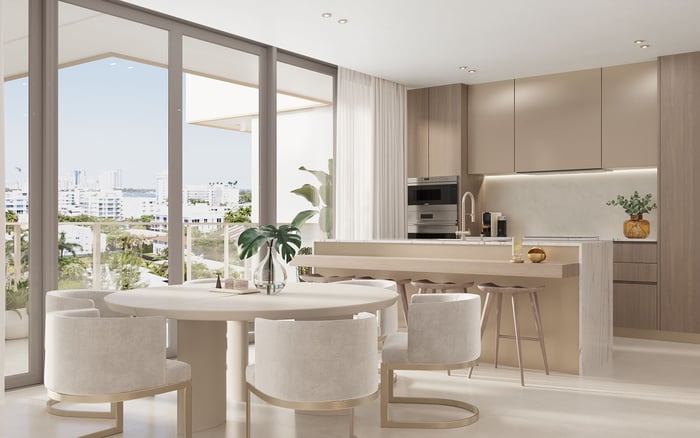
A disciplined framework for evaluating a Wynwood residence through resale competition, line-specific livability, view durability, documents, and exit optionality.
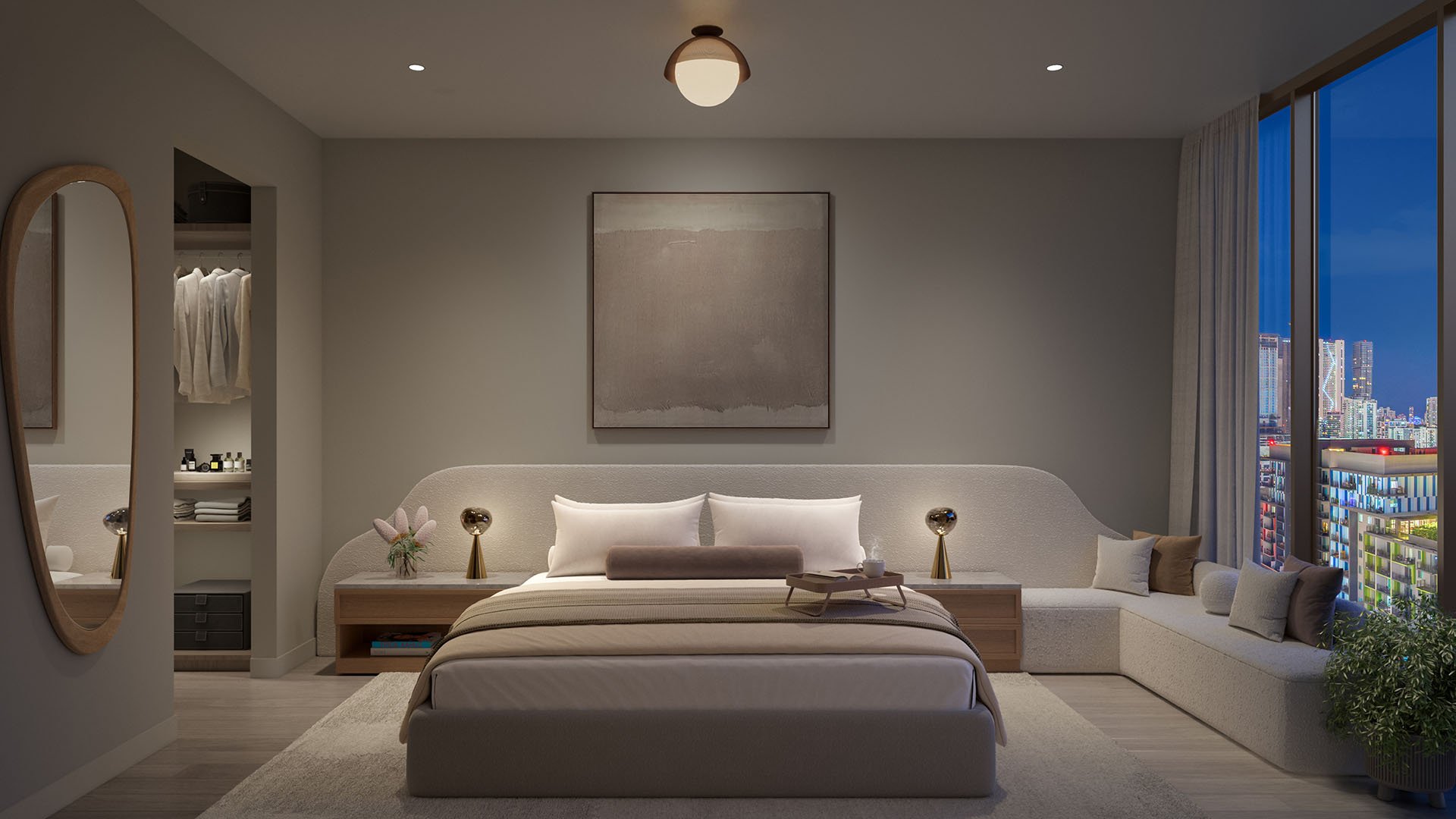
Wynwood invites an unusually precise approach to luxury purchasing. The prudent buyer is not simply selecting a neighborhood or admiring a presentation. The task is to understand how a residence will perform as a home, how its line compares with neighboring lines, and how convincingly it may distinguish itself when eventually offered for resale.
That distinction matters because luxury is rarely uniform within a building. Two residences with similar interior areas can present markedly different ownership propositions once exposure, privacy, arrival sequence, elevator relationship, outdoor space, and nearby development potential enter the equation. A careful Wynwood acquisition therefore begins with a unit-specific thesis, not a generalized belief in the district.
Resale depth is the likely pool of credible future buyers for the exact residence. It should not be confused with broad demand. The question is narrower: If this home returned to market, who would choose it, which alternatives would they inspect, and what feature would justify selecting it over those alternatives?
Begin by identifying the residence’s natural audience. A pied-à-terre buyer may value simplicity and efficient planning, while a primary resident may insist on storage, privacy, acoustic comfort, and separation between entertaining and sleeping areas. An investment-minded owner may place greater weight on carrying costs, leasing provisions, and the ease of presenting the home to more than one buyer profile.
Then map the internal competition. Similar layouts in the same building can become substitutes, particularly when several owners decide to sell at once. The strongest line is not necessarily the largest. It is the one with the clearest, most defensible reason to be preferred.
A floor plan describes rooms. A line reveals how those rooms inhabit the building. Review the position of the front door, service spaces, bedrooms, terraces, mechanical areas, elevators, refuse rooms, and neighboring residences. Ask how guests arrive, where morning light is expected, and whether important rooms face potential noise or visual interruption.
High floors can command attention, but elevation alone should not settle the decision. A lower residence with a composed outlook, useful terrace, and greater privacy may be more satisfying than a higher home with compromised proportions. Conversely, a premium line may merit its price when its attributes cannot be reproduced elsewhere in the building.
For each candidate, write a one-sentence ownership case. If that sentence depends only on finishes or staging, the argument may be fragile. Finishes can be changed. Position within the building cannot.
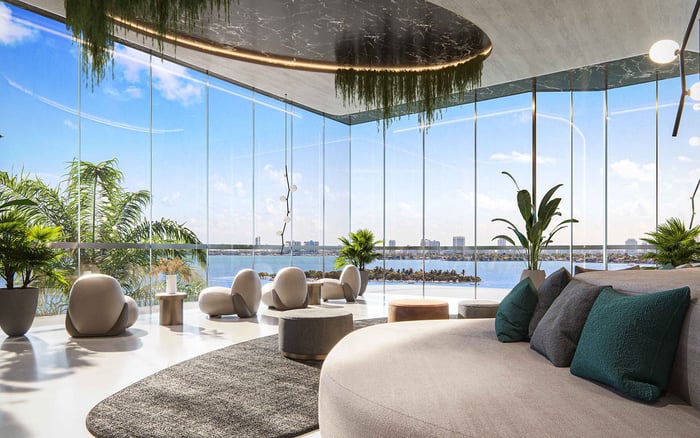
A water view, skyline outlook, or open exposure should be evaluated from the principal rooms and realistic seated positions, not only from the terrace edge. Consider what the view contributes throughout the day, whether it supports privacy, and how much of the asking price appears attached to it.
The essential distinction is between an attractive view and a scarce one. Scarcity requires more than beauty. It requires limited internal substitutes and a credible reason the outlook may remain differentiated. Buyers should commission appropriate professional reviews of surrounding parcels, applicable rules, and disclosed plans rather than assume openness is permanent.
If certainty is unavailable, price the uncertainty. A view premium should reflect durability, not optimism.
The fine print determines how a residence can be used, financed, maintained, and eventually sold. Review the governing documents, current budget, reserves, insurance information, pending or contemplated assessments, litigation disclosures, leasing provisions, pet rules, approval procedures, and responsibilities assigned to owners.
Minutes and notices can provide context for formal documents. They may illuminate recurring maintenance issues, governance priorities, or projects under discussion. Engage qualified legal, financial, insurance, inspection, and tax advisers to interpret the file for the intended ownership structure.
This discipline belongs in every practical buyer’s guide because amenities and design are only part of the proposition. The lasting luxury is confidence that the rules, obligations, and building culture align with how the buyer expects to live.
A serious comparison set should challenge the preferred purchase. A buyer considering Frida Kahlo Wynwood Residences might also examine Miami Tropic Residences to test whether the desired lifestyle is truly tied to Wynwood or to a broader, design-led urban brief.
The same exercise can extend to Kempinski Residences Miami Design District and Villa Miami. The objective is not to declare one project superior. It is to reveal which attributes the buyer genuinely values and which premiums withstand direct comparison.
Normalize each option for total acquisition cost, anticipated carrying obligations, usable indoor and outdoor space, privacy, parking, storage, delivery condition, and resale substitutes. The result should be a concise decision matrix, accompanied by notes preserving why one line prevailed.
Before making an offer, divide the residence’s qualities into permanent, changeable, and uncertain. Permanent qualities include position and basic configuration. Changeable qualities include decoration and many interior specifications. Uncertain qualities include future outlooks, costs, and market reception.
Pay most confidently for permanent advantages. Budget explicitly for changeable elements. Discount uncertainty rather than narrating it away. This framework preserves affection for the home while preventing presentation from replacing analysis.
The best purchase is not necessarily the unit with the loudest first impression. It is the residence whose advantages remain legible after the marketing materials are closed, the documents are read, and a future buyer is imagined at the door.
What does resale depth mean for a Wynwood residence? It is the probable breadth of future demand for the exact building, line, layout, and price position.
Is the highest floor automatically the best choice? No. Elevation should be weighed against privacy, proportions, exposure, usability, and the premium requested.
How should a buyer assess a view premium? Separate present beauty from long-term durability, then investigate surrounding conditions with qualified advisers.
Why does line selection matter so much? A line fixes the residence’s orientation, adjacency, privacy, and relationship to the building in ways renovation cannot.
Which building documents deserve close review? Examine governing documents, budgets, reserves, insurance materials, assessments, litigation disclosures, minutes, and use restrictions.
How can buyers evaluate internal resale competition? Identify units with comparable layouts, exposures, and price points, then define why the preferred home would prevail.
Should finishes influence the purchase decision? Yes, but they should not outweigh permanent attributes because many finishes can be altered after closing.
What should a comparison set include? Include credible alternatives that test location, lifestyle, total cost, space, privacy, and future substitutability.
How should uncertainty affect an offer? Unresolved questions about views, costs, or use should be investigated and reflected in the price and contract protections.
Who should assist with due diligence? Use qualified legal, financial, tax, insurance, inspection, and real-estate professionals suited to the transaction.
If you'd like a private walkthrough and a curated shortlist, connect with MILLION.
If branded residences are on your mind — as a home or as an allocation — we would be glad to share what we are seeing, privately.
Begin a quiet conversation