A careful Pompano Beach luxury buyer should verify wellness amenity rights, operating obligations, completion status and medical routes through current documents and independent review rather than relying on presentation materials alone.

A wellness program should be evaluated as part of the ownership structure, not simply as a list of desirable features. For every pool, fitness area, treatment space, sauna, steam room or outdoor retreat presented to a buyer, the essential questions concern access, control, cost and long-term operation.
Request current documents identifying which amenities are included in the common elements, which may be controlled or operated by another party, and which may require reservations or additional payment. Confirm whether the documents address hours, guest privileges, service providers and the association’s responsibilities.
Completed spaces and proposed spaces require different forms of review. A completed facility can be inspected and its operating history discussed, while a proposed facility should be compared carefully across disclosures, plans, budgets and contracts. Any inconsistency should be resolved in writing with qualified advisers.
A visual presentation does not establish an owner’s legal right to use a space. Buyers should ask counsel to identify the documents that govern access and determine whether those documents permit rules, charges or operating arrangements to change.
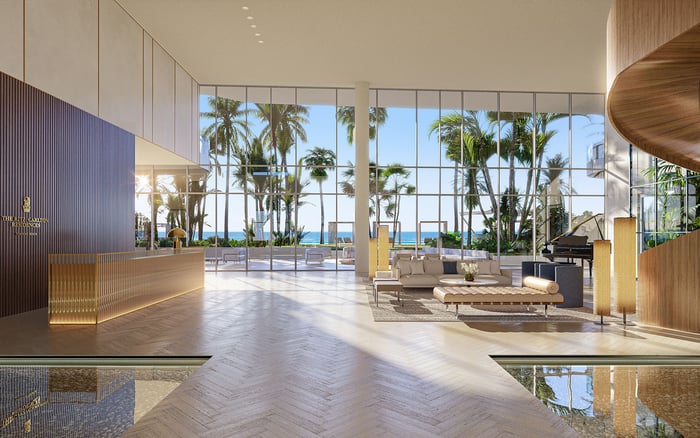
At Waldorf Astoria Residences Pompano Beach, buyers can use the project’s presented wellness offering as a starting point for document-based questions. Rather than assuming that every illustrated or described feature will operate in a particular way, request written clarification of ownership, availability, staffing and fees.
Cabanas, treatment rooms and reservable spaces deserve specific attention. Confirm whether each is a common amenity, a separately controlled area or a space subject to booking terms. Also ask how recurring expenses and future replacement obligations are allocated.
Branded properties can involve different operating and access models, so brand recognition should not substitute for a review of the applicable documents. When considering W Pompano Beach Hotel & Residences, identify which spaces are intended for residents and which, if any, may be shared with guests, members, customers or other users.
Review circulation as closely as the amenity list. Ask whether different users have separate or overlapping entrances, elevators, arrival areas and booking systems. Buyers should also seek written information about priority rules, guest access, events and any right of an operator or association to modify procedures.
The practical objective is to understand the expected experience without treating a marketing description as a guarantee. Where privacy is important, the buyer’s expectations should be reconciled with enforceable documents before a commitment is made.
Elaborate indoor and outdoor amenities can involve multiple systems, finishes, service contracts and replacement cycles. A buyer should review budgets, reserve information, insurance materials, warranties and maintenance responsibilities with appropriate professionals.
The Ritz-Carlton Residences® Pompano Beach can be included in a consistent comparison focused on who manages each amenity, who may use it and how its operation is funded. Apply the same questions to every property rather than allowing differences in presentation to change the standard of review.
For a completed property, request available records concerning budgets, meetings, service contracts, closures and repairs. For a property that is not complete, examine the assumptions in the proposed budget and determine which costs, contracts or service levels remain subject to change. Qualified legal, financial, insurance and inspection advisers can help interpret the materials provided.
Do not reduce medical proximity to a straight-line distance or an untested estimate. Identify the facilities and practitioners relevant to the buyer, then verify routes from the exact property at times and under conditions that matter to the intended pattern of ownership.
The review can include garage departure, building access procedures, visitor entry, parking and the route available to emergency personnel or caregivers. Buyers should ask management or the relevant project representative how access is handled, while independently confirming any medical provider’s location, services and hours.
A residential wellness amenity is not clinical care. Buyers should avoid assuming that building personnel provide medical assistance unless their authorized role and procedures are documented. Questions about emergency equipment, staff protocols and caregiver access should receive clear written answers.
A disciplined comparison uses the same categories for every candidate: completion status, access rights, privacy, staffing, reservations, separate fees, maintenance responsibility, reserves and medical-route practicality. Armani Casa Residences Pompano Beach may be considered within that framework without assuming that its ownership terms or amenity arrangements match those of another property.
Record responses and identify the document supporting each material statement. Unresolved items should be treated as open due-diligence questions rather than filled with assumptions. The appropriate choice is the residence whose documented rights, costs and operating structure fit the buyer’s intended use.
What is the first wellness question a buyer should ask? Ask which document establishes the right to use each important facility and whether that right is subject to separate rules or charges.
Why distinguish completed amenities from proposed amenities? Completed facilities can be inspected, while proposed facilities require closer comparison of plans, disclosures, budgets and contracts.
Why does shared use matter? Shared use may affect access, privacy, reservations and the character of the experience, so the governing terms should be confirmed.
What should buyers verify about cabanas and treatment rooms? Determine who controls them, how they are reserved and whether use carries an additional or recurring cost.
Which financial materials deserve review? Review available budgets, reserve information, insurance materials, warranties and relevant service contracts with qualified advisers.
How should a buyer assess maintenance obligations? Identify the party responsible for operations, repairs and replacement, then determine how those obligations are funded.
How can medical proximity be evaluated carefully? Verify routes from the exact property under relevant conditions and confirm the destination’s services and hours independently.
Can a residential spa be treated as medical care? No assumption should be made that a wellness facility or its personnel provide clinical services without clear documentation.
What emergency-access questions should be asked? Ask about first-responder entry, caregiver access, building procedures and the location of any documented emergency equipment.
How should buyers compare Pompano Beach projects? Apply one written checklist to every candidate and connect each material answer to a current governing or disclosure document.
To compare the best-fit options with clarity, connect with MILLION.
If branded residences are on your mind — as a home or as an allocation — we would be glad to share what we are seeing, privately.
Begin a quiet conversation