The entertaining proposition on Brickell Key is unusually layered, spanning private residential dining venues, chef kitchens and access to hotel hospitality. Yet the practical value for a host will depend on reservation, catering, guest and event policies that are not publicly detailed.
At The Residences at Mandarin Oriental, Miami, entertaining is conceived as more than dinner in a private home. The planned Brickell Key development unites branded residences and a new Mandarin Oriental hotel around a multi-tiered resort podium with more than 100,000 square feet of amenities. Private dining rooms, chef kitchens, restaurants, pools, cabanas, lounges and wellness spaces create an expansive hospitality framework.
That scale is compelling, particularly for buyers who expect their building to support intimate dinners, milestone celebrations and business gatherings. Yet architecture is only one side of the proposition. Operating rules will determine how readily a resident can reserve a room, engage a chef, serve wine, accommodate guests and conclude an evening without breaching community requirements.
The true entertaining amenity is not simply the room, but the right to use it well.
For buyers comparing Branded Residences across Brickell, this distinction merits the same attention as views, layouts and service standards. It is especially relevant during Pre-Construction, when polished venue concepts may precede final operating policies.
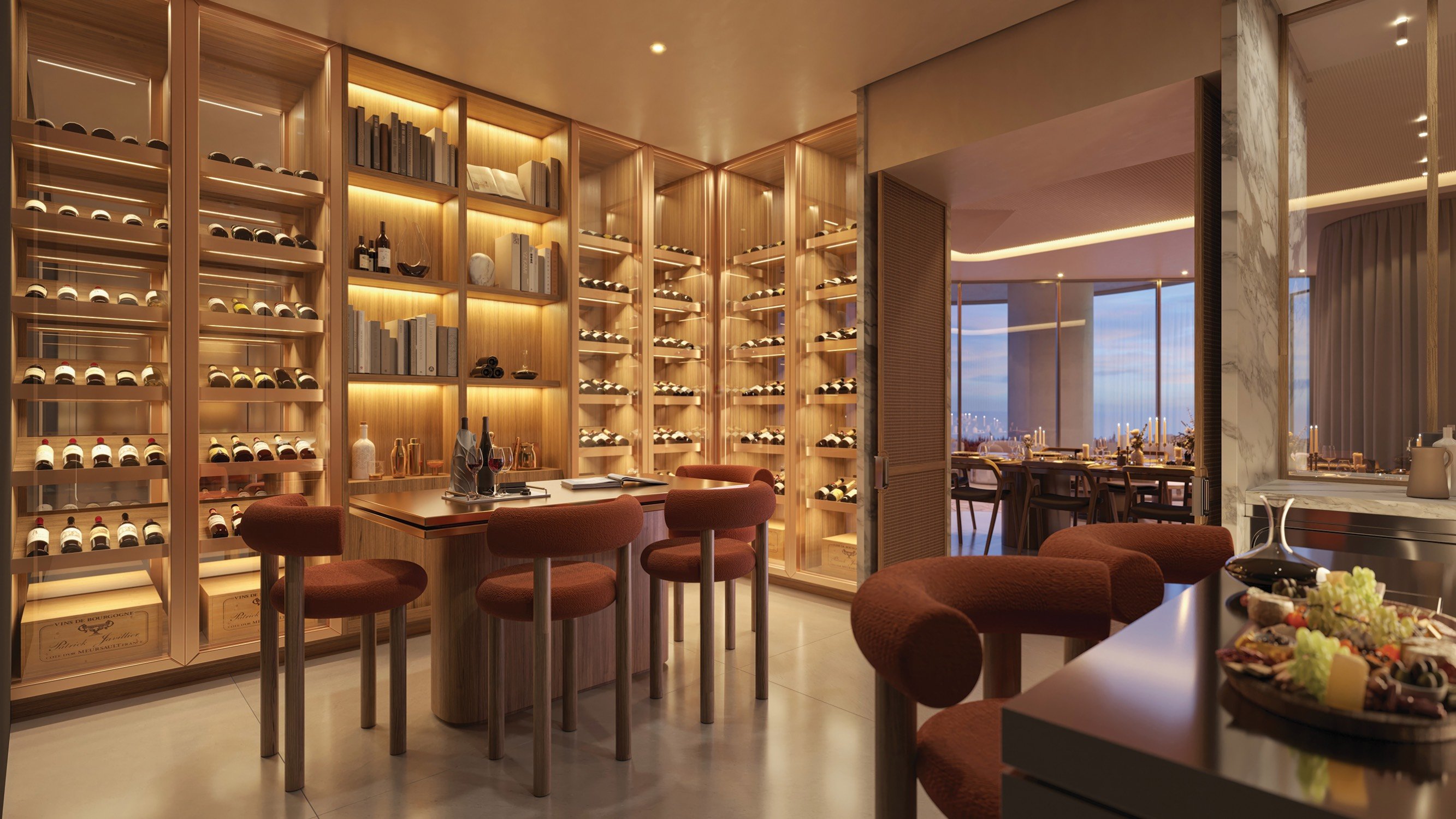
The residential amenity plan offers a collection of distinct settings rather than a single generic event room. A Dining Pavilion pairs an outdoor grill with sunset and skyline views, suggesting a relaxed setting for open-air meals. A Tea Pavilion adds a kitchenette and indoor-outdoor entertaining space overlooking Biscayne Bay. The private dining room is planned with indoor and outdoor dining areas, a full chef’s kitchen and an adjoining wine cellar.
A glass-enclosed dining environment connected to the cellar is conceptually suited to chef-led dinners and celebrations. On the 19th floor, a residents’ lounge is planned with a chef’s kitchen, a show kitchen and two flexible rooms for private dining or meetings. Together, these spaces allow a host to match the setting to the occasion, from an informal grill evening to a more composed tasting dinner.
The wider podium provides useful before-and-after settings. Pools, cabanas, lounges, an art walk, screening space, children’s facilities and executive work areas broaden the possible rhythm of a gathering. Even the main residential lobby is planned with an honor bar or hospitality console offering infused water and daily provisions. The result is a Lifestyle proposition built around service and social continuity, not merely square footage.
A crucial distinction runs through the plan. The South Tower dining pavilions and private dining room are presented as private residential amenities, while the hotel restaurants and bars are shared hospitality venues available to residents. Those categories may offer markedly different levels of control.
A resident-booked private room may permit a customized guest experience, subject to building rules. A hotel restaurant reservation remains part of a commercial hospitality operation, with its own menus, availability and service structure. Planned hotel options include a signature fine-dining restaurant with an outdoor terrace, an all-day restaurant with outdoor seating near an herb garden, poolside dining with verandah seating and a specialty rooftop bar.
North Tower residents are promised direct access to the hotel and its dining, wellness and hospitality amenities. Direct access is valuable, but it should not be interpreted automatically as priority reservations, complimentary use or unrestricted event privileges. The governing documents and hotel-residence service agreement should define where residential rights end and hotel discretion begins.
Buyers considering other hospitality-centered Brickell addresses, including Cipriani Residences Brickell and St. Regis® Residences Brickell, can apply the same test: distinguish physical access, service availability and contractual entitlement.
The service vision includes private chefs, in-residence catering and in-residence dining with access to hotel catering. Gourmet meal delivery to private accommodations also supports this sophisticated hospitality proposition. Yet these elements do not resolve the economics or permissions attached to a private event.
Buyers should establish whether hotel catering will be optional, preferred or exclusive. Available details do not specify menu minimums, service charges or potential staffing requirements. Nor do they confirm whether a resident may bring an independent chef or outside caterer into a chef kitchen.
That distinction can materially shape an evening. An owner may prefer a familiar private chef, a specialist pastry team or a caterer experienced with cultural and dietary traditions. If outside vendors are permitted, management may still require certificates of insurance, security clearance, approved delivery routes, kitchen supervision or additional cleaning. If hotel catering is exclusive, the host should understand menu customization, beverage procurement, corkage and cancellation terms before assigning value to the service.
In-residence dining presents another boundary question. Delivery to a private home is not necessarily governed by the same framework as staffing a larger gathering in an amenity room. The service agreement should clarify ordering windows, setup, serving personnel, cleanup and charges for each format.
Available amenity descriptions do not disclose event guest limits, booking windows, deposits, quiet hours, alcohol rules, insurance requirements or outside-caterer permissions. These are not peripheral details. They determine whether an amenity functions spontaneously or demands significant advance planning.
A disciplined Buyer's Guides approach should address the following points before contract decisions or closing:
Capacity limits for seated dinners, cocktail formats and indoor-outdoor use
Reservation priority, annual booking limits and rules for peak dates
Deposits, cancellation deadlines, damage assessments and cleaning fees
Alcohol service, corkage, bartender requirements and wine-cellar protocols
Vendor access, loading procedures, insurance and security credentials
Music, noise, terrace hours and the permitted end time for gatherings
Staffing requirements for kitchens, grills, furniture setup and breakdown
The same scrutiny applies even at highly private residential concepts such as The Residences at 1428 Brickell. Amenity imagery conveys possibility; rules and agreements define usable ownership.
A buyer should request the condominium declaration, rules and regulations, amenity reservation policy and hotel-residence service agreement. If final versions are not yet available, counsel can review drafts and identify provisions that may later be supplemented by board or management policies.
Particular attention should be paid to who may amend the rules, whether fees can change, how residents receive priority over hotel patrons and whether access varies by tower. Buyers who entertain frequently may also want written clarification on recurring private-chef access, holiday reservations and simultaneous use of adjoining indoor and outdoor areas.
The objective is not to diminish an ambitious amenity program, but to distinguish a beautifully designed social setting from a dependable hosting platform. At this level, discretion, predictability and service coordination are themselves luxury features. The most informed buyer will evaluate not only where dinner can be served, but who controls the calendar, kitchen, guest list and final bill.
For private guidance on South Florida's most considered residences, connect with MILLION.
If branded residences are on your mind — as a home or as an allocation — we would be glad to share what we are seeing, privately.
Begin a quiet conversationThe plan includes a Dining Pavilion, Tea Pavilion, private dining room with wine cellar, and a 19th-floor lounge with chef and show kitchens.
Residents are promised access to hotel dining and hospitality amenities, although access does not by itself confirm priority reservations or complimentary use.
Project marketing promotes in-residence dining and access to hotel catering. Menu minimums, service charges and detailed ordering terms are not publicly disclosed.
Public materials do not confirm whether independent chefs or outside caterers will be permitted. Buyers should request written clarification and any vendor requirements.
No public guest limits are stated for the residential entertaining spaces. Capacity and event-format restrictions should be confirmed in the amenity policy.
Public materials do not specify deposits, cleaning fees or damage assessments. These costs should be reviewed in the reservation policy and rules.
Alcohol-service requirements and corkage terms have not been publicly detailed. Buyers should ask about bartenders, beverage sourcing and wine-cellar protocols.
Buyers should obtain the condominium declaration, rules and regulations, amenity reservation policy and hotel-residence service agreement.
Private residential amenities and shared hotel venues may have different booking rights, fees and operating controls. Physical access does not necessarily create contractual priority.
Yes. The development is planned, and venue programming or operating policies may change before completion, making current document review and later confirmation important.
.jpg&width=700&height=438&fit=cover)