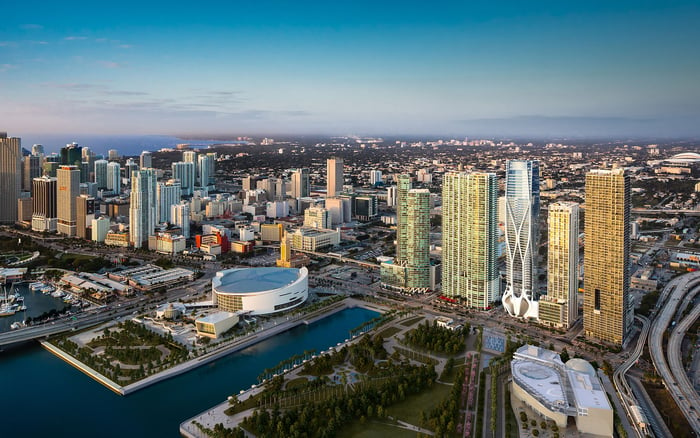
At One Thousand Museum, sophisticated insurance diligence requires reading the association’s master policy, an owner’s HO-6 form, and loss-assessment endorsements as one coordinated risk structure.

At One Thousand Museum Downtown Miami, the insurance inquiry should extend beyond confirming that the condominium association has a master policy. Buyers should examine how the current policy language interacts with the proposed HO-6 coverage, the residence’s interiors, association reserves, governing documents, and any loss-assessment endorsement.
A certificate of insurance is only a starting point. It may not present every deductible, sublimit, exclusion, valuation provision, endorsement, or allocation method that could affect an owner after a loss.
The same diligence is relevant when comparing One Thousand Museum with Aston Martin Residences Downtown Miami, Waldorf Astoria Residences Downtown Miami, or Casa Bella by B&B Italia Downtown Miami. Each building’s insurance documents and governing instruments require an independent review.
The master policy and HO-6 form should be compared line by line rather than treated as interchangeable protection. The review should identify which building elements, interior components, improvements, personal property, and owner liabilities fall within each policy’s definitions.
For a residence with custom millwork, stone, lighting, integrated systems, furnishings, or other upgrades, buyers should prepare a current inventory and discuss replacement-cost assumptions with a qualified insurance advisor. The purchase price and an earlier renovation invoice should not substitute for a coverage-specific valuation review.
The analysis should also address temporary living arrangements, personal liability, and any other owner exposure relevant to the intended use of the residence. A primary home, second home, and furnished residence may require different questions during underwriting.
Loss-assessment coverage warrants its own review. Buyers should determine which causes of loss can trigger the endorsement, whether a separate sublimit applies to an assessment tied to the association’s deductible, and how exclusions in the HO-6 form affect the result.
A headline limit alone does not establish that every assessment will be covered. The policy language, master-policy deductible schedule, governing documents, reserves, and allocation method should be considered together before selecting a limit.
This potential exposure also belongs in the broader ownership budget. An insurance-related assessment, uncovered interior loss, or temporary displacement may create different financial demands, so each scenario should be modeled independently.
The diligence file should identify the master policy’s insured values, deductibles, principal limits, sublimits, and endorsements. Buyers and their advisors can then model illustrative loss scenarios using the allocation method stated in the governing documents.
An equal division among residences should not be assumed without reviewing those documents. The analysis should also consider how available reserves and the association’s decision-making process could affect the handling of a deductible or uncovered repair.
These calculations are planning tools rather than predictions. Any conclusion should be based on the current policies, endorsements, governing documents, and professional advice obtained for the specific transaction.
Wind, flood, water intrusion, mechanical failure, wear and tear, ordinance-or-law costs, and common-area damage should be addressed as separate review categories. Buyers should ask whether each category is covered, excluded, limited, or handled under another policy.
Flood deserves a distinct inquiry rather than an assumption. The advisor should verify the existence, scope, limits, deductibles, and applicable insured parties of any relevant flood coverage.
The same approach applies to maintenance, deterioration, reserve deficiencies, and code-related work. The buyer should obtain a direct explanation of whether and how each exposure could interact with the master policy, HO-6 policy, loss-assessment endorsement, or owner funds.
Before selecting HO-6 limits, request the current master-policy declarations, schedules, endorsements, and available policies relevant to property, wind, flood, liability, and umbrella coverage. The review file should also include the condominium declaration, reserve materials, available claims information, recent assessments, relevant board records, and the stated method for allocating losses among units.
A Florida-licensed insurance advisor and counsel should reconcile the residence’s interior valuation, the master-policy structure, the governing documents, and the proposed loss-assessment protection. Lender requirements, when applicable, should be reviewed independently as part of the transaction.
No building-specific insurance conclusion should be drawn from a summary certificate alone. The decisive language appears in the current policies, endorsements, and governing documents available for review.
Why should the master policy and HO-6 form be reviewed together? Comparing them can help identify overlaps, exclusions, and potential gaps between association and owner coverage.
Is a certificate of insurance enough for diligence? No. Buyers should request the current policy materials and endorsements available for review.
How should custom interiors be evaluated? Prepare a current inventory and ask a qualified insurance advisor to assess appropriate replacement-cost assumptions.
What should be checked in loss-assessment coverage? Review covered causes of loss, exclusions, limits, deductible-related sublimits, and the conditions for payment.
Does a high loss-assessment limit guarantee full protection? No. Sublimits, exclusions, and policy conditions may affect the amount available for a particular assessment.
How should deductible exposure be modeled? Use the current master-policy terms and the allocation method stated in the condominium’s governing documents.
Why do association reserves matter to the review? Reserve materials can provide context for evaluating how the association may approach an uncovered cost or deductible.
Should flood be analyzed separately? Yes. Buyers should verify the specific flood coverage, limits, deductibles, exclusions, and insured parties rather than rely on assumptions.
Which documents belong in the diligence file? Include current policies and endorsements, governing documents, reserve materials, available claims information, assessments, and relevant board records.
Who should review the insurance package? A Florida-licensed insurance advisor and counsel should evaluate the documents in the context of the specific residence and transaction.
For a discreet conversation and a curated building-by-building shortlist, connect with MILLION.
If branded residences are on your mind — as a home or as an allocation — we would be glad to share what we are seeing, privately.
Begin a quiet conversation