One Thousand Museum’s structural wind engineering is only one part of its storm-resilience story. Buyers should separately establish critical-equipment elevations, any flood-barrier provisions, and the procedures governing a return to residence.
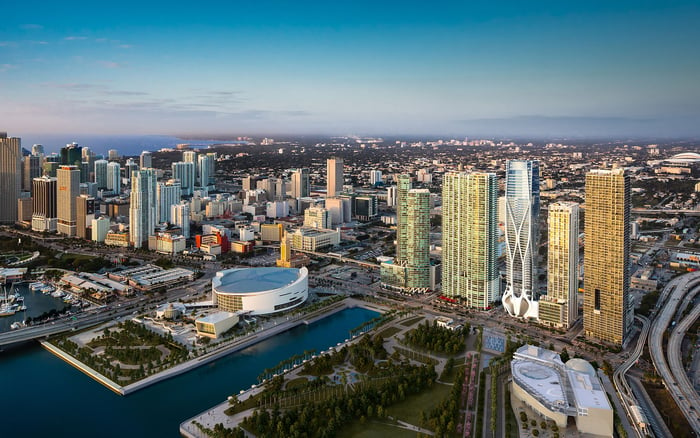
At 1000 Biscayne Boulevard, across from Museum Park, One Thousand Museum Downtown Miami rises 62 stories. Its reinforced-concrete exoskeleton is both an architectural signature and a structural system designed to carry gravity loads and resist hurricane wind forces. For a buyer, however, structural strength answers only part of the storm-resilience question.
The more personal question concerns daily life: whether essential equipment remains protected, which services can operate after an interruption, and when residents may return. Mechanical-equipment elevations, flood-barrier specifications, and resident re-entry procedures must be established through building-specific documentation. None should be inferred from the tower’s silhouette or the elevation of an individual residence.
A resilient structure and an uninterrupted residential experience are not interchangeable. That distinction should guide the purchase conversation from the first showing through the final document review.
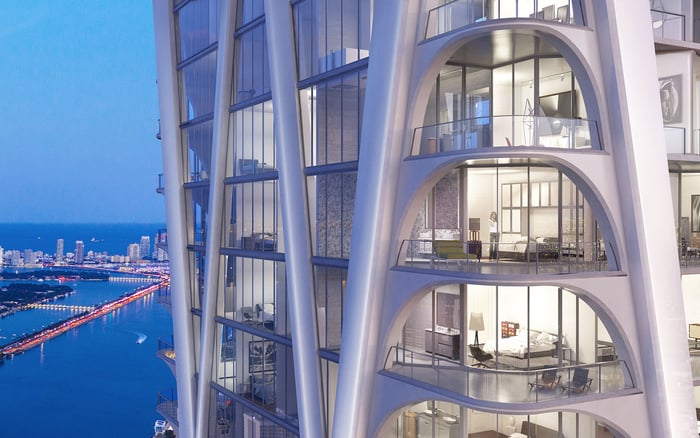
The exoskeleton enables clear spans of up to 45 feet with only two interior columns while handling hurricane-level lateral loads. At the base, columns fan outward and meet at the corners, creating a tube-like frame that adds wind resistance. Diagonal bracketing provides additional strength against Miami’s hurricane winds.
The exterior glazing is described as impact-resistant laminated glass meeting Florida hurricane-code requirements. These are meaningful design attributes. They support a discussion of structural wind resistance and the exterior enclosure-not a promise that every building service will remain available throughout a storm.
Buyers should not translate those attributes into a hurricane-category rating. Nor should an account of safeguarding the unfinished tower during a Category 4 hurricane be treated as evidence of occupied-building performance. It establishes neither a recovery timetable nor uninterrupted habitability. The next step is to move from architectural descriptions to the systems that support occupancy.
A high-floor residence does not establish the elevation of the equipment serving it. Before assigning value to mechanical protection, request drawings or an engineer’s written explanation identifying critical electrical distribution equipment, any generators and associated components, elevator controls, water-service equipment, and other systems needed for occupancy.
For each relevant component, ask for its elevation relative to the applicable flood-design reference, using a consistent vertical datum. A floor designation is not a measured elevation. Have a qualified professional explain the relationship between equipment locations, the building’s flood-design criteria, and any protective measures.
Backup power warrants a separate inquiry. Request the circuits and services covered, the operating assumptions, and the documented duration under those assumptions. Ask specifically whether coverage extends to residence-level cooling, elevators, water service, or only selected essential functions. The presence of a generator alone does not establish coverage.
For buyers also considering Aston Martin Residences Downtown Miami, the same document requests provide a useful basis for comparison without implying equivalent systems or performance. Compare defined capabilities, not general assurances about preparedness.
Flood protection should begin with a direct question: what, if any, permanent or deployable measures are specified for this building? The exact barrier configuration and protection height at One Thousand Museum are not established here. Buyers should neither assume that barriers exist nor conclude that protection is absent.
Request a plan identifying the openings and pathways addressed by any system. Ask how entrances, vehicle access, service areas, and utility penetrations are treated, where applicable. The objective is to understand the scope of protection, not simply the treatment of a single visible entrance.
If deployable barriers are part of the plan, ask who authorizes installation, who performs it, where components are stored, and how much preparation time is required. Request maintenance and practice-deployment records, along with the stated protection limits. An equipment specification and an operating procedure answer different questions; the purchase review should address both.
Have the reviewing engineer explain any dependencies, exclusions, and residual exposure. A protection claim is useful only when its boundaries are understood. No building-specific flood elevation or barrier protection height should be treated as verified in the buying decision without supporting documentation.
The end of severe weather does not, by itself, establish a building-specific return-to-occupancy timetable. Ask management for the current written storm and re-entry procedures, including how residents receive instructions and who communicates access decisions.
The plan should clarify the decision sequence: how applicable public restrictions are addressed, which building assessments are contemplated, and which service conditions govern a return. Ask how elevator availability, electrical safety, water service, and life-safety functions factor into that determination. These are review questions, not confirmed procedures at One Thousand Museum.
Second-home buyers should also request the arrangements for authorized representatives, residence checks, and access when an owner is away. Distinguish permission to inspect a home from permission to resume living in it. Ask whether communications make that distinction explicit and how updates reach owners who cannot travel.
No fixed return date or backup-power duration is established here. Treat a verbal estimate as a planning assumption to examine, not a purchase guarantee.
Before committing, organize the review around three deliverables: equipment-elevation documentation, flood-protection specifications if applicable, and the current operating plan for storm preparation and re-entry. Request the relevant maintenance records and ask management to identify any changes affecting those documents.
An independent engineer can assess technical relationships; transaction counsel can help frame document requests and address unresolved matters within the purchase process. Tie each answer to a defined system, document date, and responsible party. Specific, written descriptions are easier to evaluate than broad assurances.
If Waldorf Astoria Residences Downtown Miami is also on the shortlist, apply the same discipline while distinguishing design commitments from records of actual operation. The comparison should not become an unsupported ranking of storm resilience.
One Thousand Museum’s wind-engineering attributes deserve consideration on their own terms. They do not settle the separate questions of flood protection, service continuity, or post-storm access. Equally, an unresolved detail calls for targeted diligence; it is not evidence of a defect.
For a primary residence, focus on the conditions needed to resume daily life. For an occasional residence, give equal attention to remote communication and authorized access. In either case, the strongest purchase decision pairs architectural appreciation with a clear understanding of operational limits.
For a discreet conversation about your Downtown Miami purchase priorities, connect with MILLION.
If branded residences are on your mind — as a home or as an allocation — we would be glad to share what we are seeing, privately.
Begin a quiet conversationOne Thousand Museum is at 1000 Biscayne Boulevard in Downtown Miami, across from Museum Park. The tower rises 62 stories.
Its reinforced-concrete exoskeleton carries gravity loads and resists hurricane wind forces. A tube-like frame and diagonal bracketing contribute to wind resistance.
The exterior glazing is described as impact-resistant laminated glass meeting Florida hurricane-code requirements. That does not establish uninterrupted building services during a storm.
It should not be described as hurricane-proof or assigned a verified hurricane-category rating. Structural wind resistance does not guarantee uninterrupted habitability.
Exact critical-equipment elevations are not established here. Buyers should request building-specific drawings and a professional explanation of their relationship to flood-design criteria.
Their presence, configuration, and protection height are not established here. Request the applicable specifications and operating procedures rather than assuming either protection or its absence.
No building-specific backup-power duration is established. Ask which services are covered and what operating assumptions support any stated duration.
No fixed return-to-occupancy timetable is established. Buyers should review written re-entry criteria and distinguish inspection access from permission to resume occupancy.
No. Safeguarding the unfinished tower during a Category 4 hurricane does not establish occupied-building performance or post-storm recovery time.
Prioritize equipment-elevation documentation, applicable flood-protection specifications, and the current storm and re-entry plan. Request relevant maintenance records and professional review of unresolved technical questions.