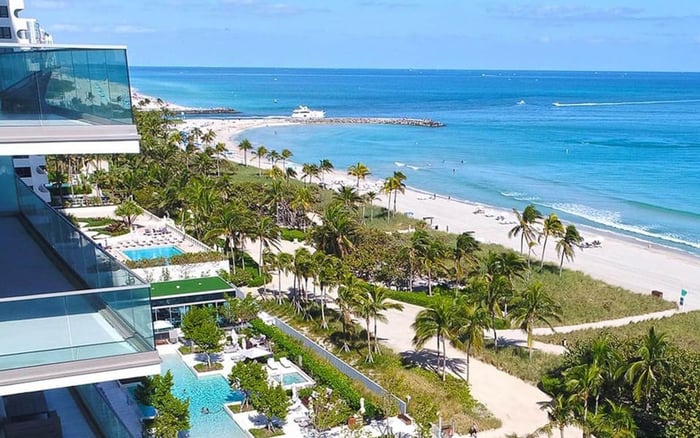
At Oceana Bal Harbour, controlled residential access coexists with a layered public realm. Buyers should distinguish nearby beach routes from landscaping easements and verify each recorded instrument before assigning a premium to privacy.
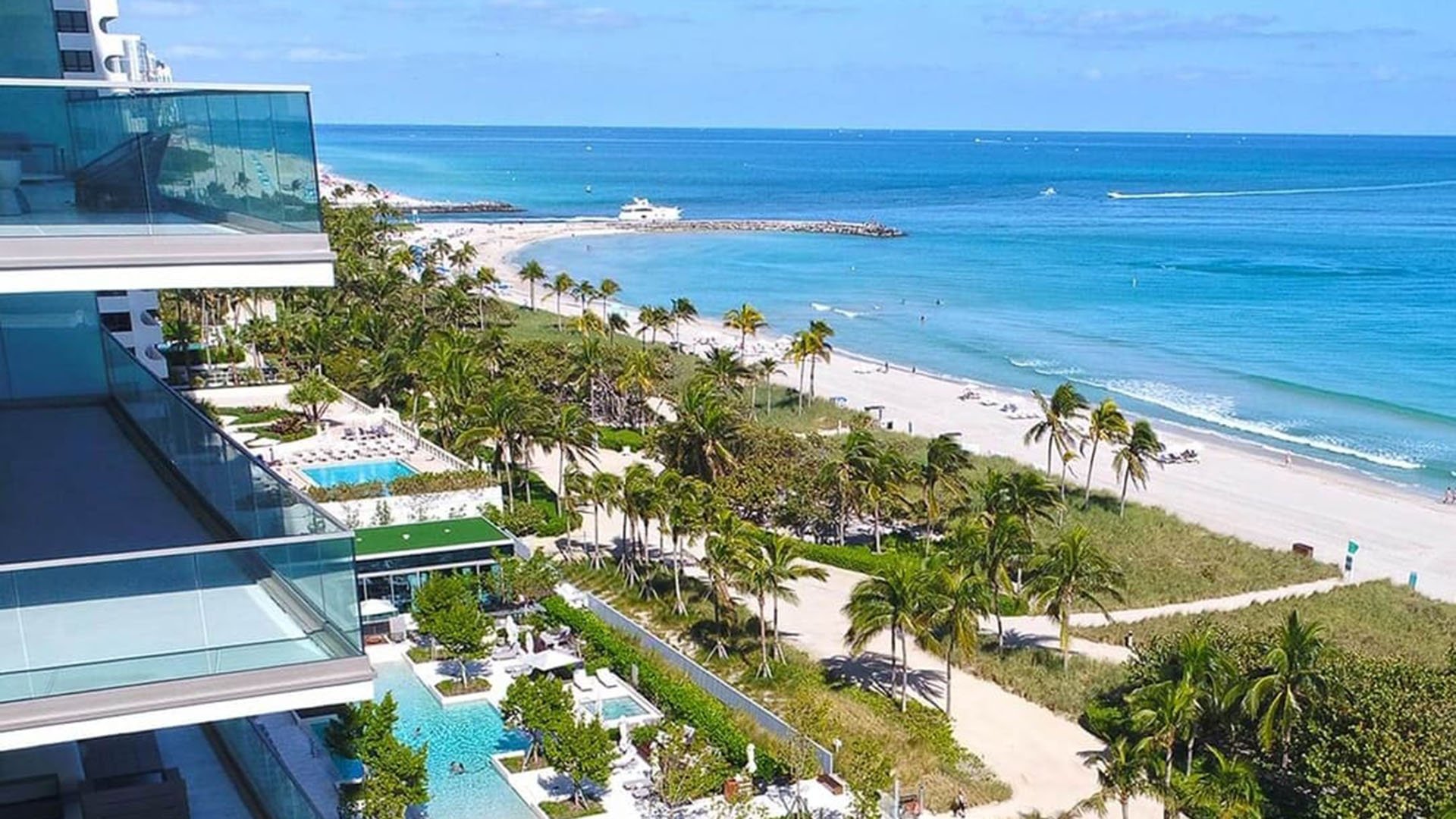
At Oceana Bal Harbour, the visual proposition is immediate: an oceanfront condominium at 10201 Collins Avenue spanning approximately 5.5 acres, with about 400 feet of beachfront and direct beach access. Replacing the former Bal Harbour Club, the development presents floor-through residences oriented toward Atlantic Ocean and Biscayne Bay views.
Yet privacy is not defined by architecture alone. It also depends on where private property ends, where resident-controlled access operates and where Village-managed paths, crossings, greenspace or shoreline rules begin. A guarded arrival and controlled route from the building to the sand can feel highly private without conferring exclusive control over every adjacent stretch of shoreline.
For an exacting purchaser, that distinction is not academic. It can influence sightlines, pedestrian activity, beach-service expectations and the premium assigned to a particular exposure. This Oceanfront edition of MILLION’s Buyer's Guides therefore treats beach access, waterfront living and resale analysis as related questions rather than separate categories.
Bal Harbour’s public realm includes a waterfront park, jetty, cutwalk, beach path, pedestrian beach-access crossing south of Oceana and greenspace along Collins Avenue in front of the property. The southern crossing sits beside the condominium rather than within its resident amenities, but its proximity still merits attention from buyers focused on seclusion.
The separate 102nd Street Beach Access Path is Village-operated and secured by locked gates. Entry requires a Bal Harbour All Access Card. Beginning in spring 2026, that card is scheduled to include access to the path and replace the separate access fob. Controlled public infrastructure is therefore not synonymous with unrestricted entry, just as a nearby access route is not equivalent to an easement through a residential amenity deck.
Context matters across the coastline. Purchasers comparing Rivage Bal Harbour, The Delmore Surfside and Eighty Seven Park Surfside should apply the same discipline: map the building, adjoining public realm and actual legal rights before translating the impression of a private beach into value.
A June 2024 amendment to the Oceana Development Agreement addressed landscaping improvements within easements along the property’s west and south edges. It required Oceana to fund and provide those improvements and also covered landscaping in a crescent-shaped area facing Collins Avenue. These obligations establish that portions of the perimeter are governed through negotiated arrangements with the Village.
Crucially, the west and south areas are identified as landscaping easements. Buyers should not recast them as public pedestrian easements without reviewing the recorded instruments. An easement is a defined legal interest, and its practical effect turns on its language: who holds it, who may use it, for what purpose, during which hours and subject to which maintenance, landscaping, relocation and enforcement provisions.
This is why shorthand phrases such as “public easement” or “private beach” can obscure more than they explain. The proper inquiry is document-specific and location-specific. A landscaping obligation at the street edge, a pedestrian crossing beside the site and resident access through the condominium represent three distinct conditions.
Florida beach access demands a layered reading. Wet sand and upland dry sand are not necessarily governed in the same way. Dry sand may be privately owned, while its use can still be affected by easements or other recognized rights. Authority can also vary by location, making posted signage and recorded property documents more useful than broad assumptions.
Bal Harbour regulates activity within this shared coastal setting. Vehicles are restricted on the public beach and on public land, easements or rights-of-way in the beach area, subject to stated exceptions. Electric mobility devices are prohibited along the beach path, jetty, cutwalk and 102nd Street Beach Access Path. Regular public camping or sleeping on public property is also prohibited. Public access, therefore, does not imply an unregulated environment.
These controls may preserve order, but they do not erase the distinction between resident-only services and public or Village-managed space. Management should identify where condominium beach service ends, where public passage may occur and which authority governs each adjoining zone.
Counsel should obtain the title commitment, boundary survey, condominium declaration, development agreement, all relevant amendments and the recorded documents creating the west and south easements. Publicly available documents may provide a starting point, but they are no substitute for a complete legal review.
The survey should be read alongside the instruments, placing abstract rights on the ground. Confirm the easement holder, permitted users, operating hours, maintenance allocation, landscaping restrictions, relocation rights and available remedies. Ask management to mark the southern crossing, Collins Avenue greenspace, beach path and 102nd Street route relative to the residence under consideration.
Unit position then becomes part of the diligence. A buyer prioritizing quiet may assess lower and higher exposures differently, particularly near circulation routes or landscaped edges. The objective is not to avoid the public realm. It is to understand it accurately, price it intelligently and ensure that the expected lifestyle aligns with the recorded framework.
Does Oceana Bal Harbour have direct beach access? Yes. The condominium has direct beach access, but that does not establish exclusive control over every adjoining shoreline area.
Is the crossing south of Oceana inside the resident amenities? No. It is a formally identified pedestrian beach-access crossing beside the condominium.
Are the west and south easements public walkways? The available description identifies them as landscaping easements. Their recorded instruments must be reviewed before drawing conclusions about pedestrian rights.
Why does the Collins Avenue landscaping matter? It establishes that part of Oceana’s perimeter is subject to negotiated obligations involving the Village.
Is the 102nd Street Beach Access Path open without credentials? No. Its locked gates require a Bal Harbour All Access Card.
What changes in spring 2026? The All Access Card is scheduled to include entry to the 102nd Street path and replace the separate access fob.
Does controlled condominium access mean the beach is entirely private? No. Controlled building access does not itself determine ownership or use rights across every part of the adjacent shoreline.
Which documents are most important? Review the title commitment, survey, declaration, development agreement, amendments and recorded easement instruments.
What should management clarify? Management should identify the limits of resident beach services and where Village jurisdiction or public passage rights begin.
How should privacy-sensitive buyers compare residences? Compare each unit’s position with the southern crossing, beach path, Collins Avenue greenspace and 102nd Street route.
For a tailored shortlist and next-step guidance, connect with MILLION.
If branded residences are on your mind — as a home or as an allocation — we would be glad to share what we are seeing, privately.
Begin a quiet conversation