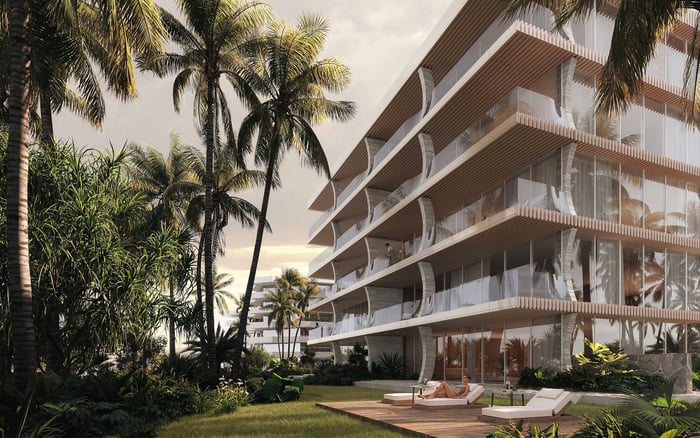
A buyer-focused examination of Mr. C association fees in West Palm Beach and Coconut Grove, separating marketing estimates from unit-specific charges and identifying the documents that clarify long-term service costs.
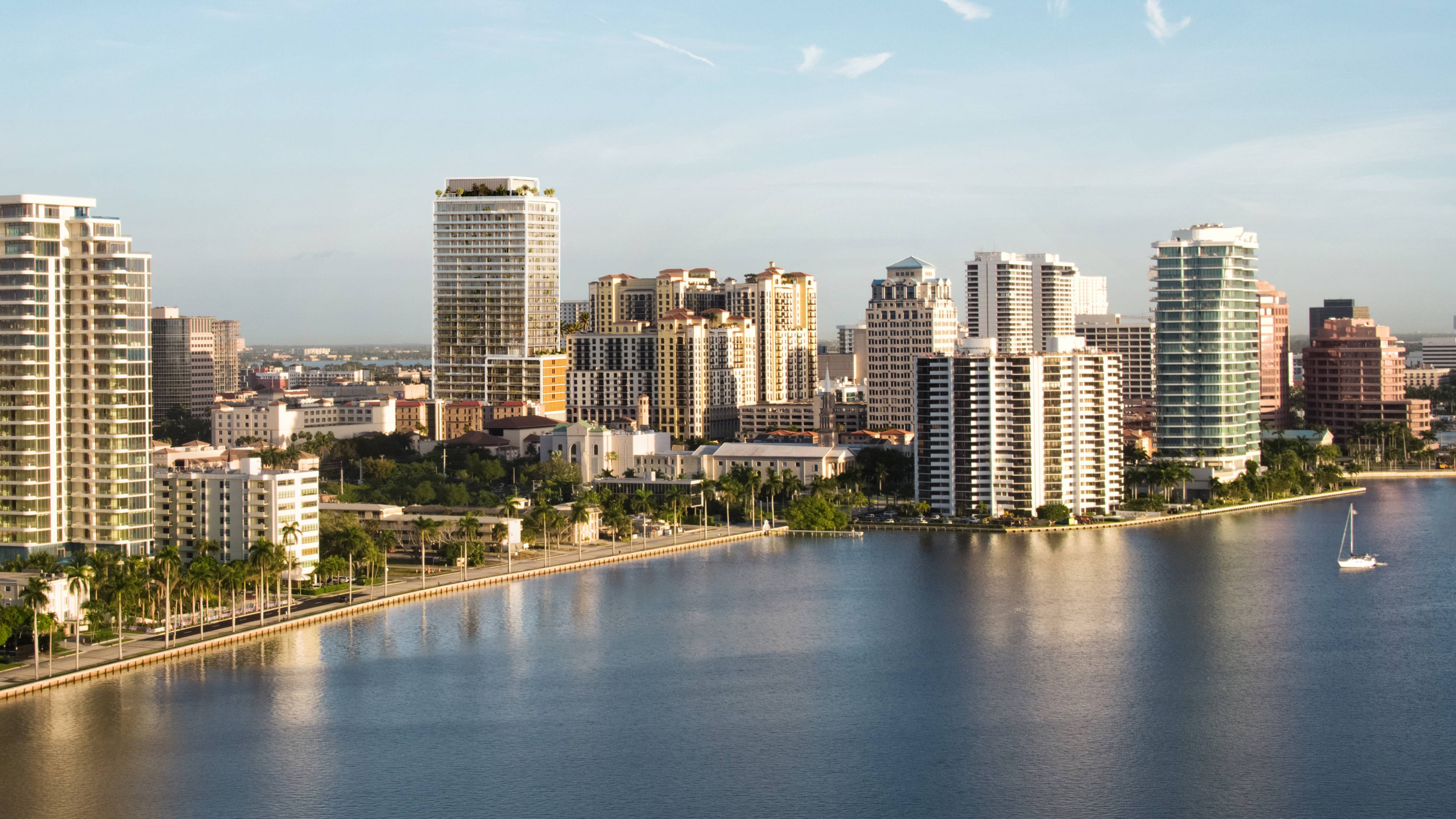
The appeal of a hospitality-led residence is the ease it promises. The financial question is whether the documents define that promise precisely enough. At Mr. C in West Palm Beach and Coconut Grove, association charges deserve the same scrutiny as the residence itself: what they purchase, how they can change, and which expenses remain outside them.
A quoted monthly fee is a starting point, not a complete ownership budget. Marketing estimates, listing fields and adopted assessments carry different evidentiary weight. For a buyer planning a decade or more of ownership, that distinction matters more than a superficially attractive comparison of two monthly totals.
The objective is not necessarily the lowest charge. It is a service standard with funding, contractual obligations and potential changes that are clear before purchase.
At Mr. C Residences West Palm Beach, the Cipriani-branded condominium project at 320 Lakeview Avenue, the association-fee estimate is $2.19 per square foot monthly. This is a marketing estimate, not an adopted association budget.
Applied to a hypothetical 2,000-square-foot residence, that rate yields $4,380 monthly, or $52,560 annually, in association fees alone. The arithmetic is useful for preliminary planning, but it is not a unit-specific assessment. Confirm the residence's actual allocation and the area measurement used before relying on that calculation for a purchase commitment.
The “all-inclusive” fee estimate encompasses administration, staffing, utilities, insurance, maintenance, third-party vendor contracts and reserves. That description is broad, but not self-defining. It does not establish that every in-residence utility, insurance exposure or optional service is included.
Ask for a written inclusions-and-exclusions schedule alongside the budget. Buyers also considering Forté on Flagler West Palm Beach should apply the same discipline: compare documented service obligations and reserve funding rather than assume similar monthly totals purchase equivalent coverage.
At Mr. C Tigertail Coconut Grove, at 2678 Tigertail Avenue, the available fee examples are unit-specific figures, not a single building-wide price schedule.
Monthly association-fee examples include $3,506 for unit 202, $4,382 for unit 1806, $4,327 for unit 1706, $1,473 for unit 1009 and $2,719 for unit 604. These figures span different listing dates and potentially inconsistent fields. Their variation does not establish an assessment formula based on square footage, floor or stack.
Unit 1705 illustrates why reconciliation matters: a $290 monthly HOA fee appears alongside a separate $1,912 “maintenance expense” field. Neither the smaller figure nor an automatic sum provides a reliable ownership budget without confirmation of frequency, overlap and accuracy.
Request the current unit-specific assessment schedule and a recent association billing statement. Have the association or its authorized representative reconcile every recurring charge in writing. This is especially important when one field appears unusually low beside those for other residences.
For buyers whose Coconut Grove search also includes Four Seasons Residences Coconut Grove, the same comparison framework applies. It does not imply matching service packages, fee levels or contract terms between the properties.
Staffing and third-party vendor contracts are explicit components of the West Palm Beach fee description. Their pricing deserves scrutiny: a service promise and the cost of delivering it are separate questions.
Neither property's quoted fees establish a contractual escalation percentage, index, cap, renewal provision or termination right. A planning assumption of 3% or 5% annual growth must never be presented as a documented Mr. C contract term.
For each material service or management agreement, ask counsel to identify:
The initial price, covered services and contract duration.
Any fixed increase, index-linked adjustment, minimum increase or cap.
Pass-through charges and services priced outside the base agreement.
Renewal dates, notice periods and any automatic-renewal language.
Termination rights, associated costs and remedies for service failures.
These are questions for review, not assertions that either property has a particular clause. The essential distinction is between an increase embedded in a contract and one arising from the association's broader budgeting decisions. A ceiling on one vendor's pricing would not, by itself, cap the total assessment.
Tigertail unit 1806 offers a concrete illustration. Its quoted $4,382 monthly association fee annualizes to $52,584. The 2025 property-tax figure is $51,517. Together, those amounts total $104,101 annually, before financing, unit insurance or other expenses.
That total is not a forecast for a new owner. It pairs a quoted association charge with a historical tax figure. Obtain purchase-specific tax advice and insurance quotations rather than carry those numbers unchanged into a long-term plan.
Insurance also requires a clear distinction between association and unit coverage. An association budget's insurance line does not establish the extent of protection inside an individual residence. Review the association's coverage summary and deductibles with an insurance adviser, then identify appropriate unit coverage and any applicable flood protection.
Optional services belong in a separate allowance. Until their pricing and inclusion are confirmed, “all-inclusive” should not be treated as a ceiling on personal spending.
Start with confirmed charges where available and clearly labeled estimates elsewhere. Keep separate lines for operating expenses, reserve contributions, special assessments, property taxes, unit insurance and optional services. If reserves are already included in the association payment, do not count them twice.
For sensitivity testing, model alternative annual increases, such as 3% and 5%, explicitly as assumptions-not predictions or contract provisions. Avoid applying one growth rate indiscriminately to every expense. Taxes, insurance, reserve funding and service contracts should each have their own stated assumptions.
Keep potential special assessments outside the routine annual-growth calculation. Ask for the reserve study and funding plan, then have advisers assess how the proposed funding relates to anticipated work. An operating budget and a capital-funding plan answer different questions.
The decision is not simply whether the first year's costs are comfortable. It is whether the buyer remains comfortable under a less favorable expense scenario without compromising the intended ownership experience.
Before committing, assemble the unit-specific assessment schedule, adopted budget, reserve study and funding plan, insurance summary, relevant service contracts and schedule of separate maintenance or optional-service charges. Reconcile those documents with the purchase agreement and any representations about inclusions.
At both properties, the strongest comparison is between documented obligations, not isolated fee figures. A well-understood service budget keeps the residence's pleasures central and ownership expectations realistic.
For a considered approach to South Florida ownership, connect with MILLION.
If branded residences are on your mind — as a home or as an allocation — we would be glad to share what we are seeing, privately.
Begin a quiet conversationThe marketing estimate is $2.19 per square foot monthly. This is not an adopted association budget or a confirmed unit-specific assessment.
It calculates to $4,380 monthly, or $52,560 annually, in association fees alone. The actual residence's assessment and allocation must be confirmed.
No. The description includes broad operating categories but does not establish that every in-residence utility, insurance exposure or optional service is covered.
The reported monthly association fee is $4,382, equivalent to $52,584 annually. Confirm the current amount with the association before relying on it.
The examples concern different units and listing dates and may use inconsistent fields. They do not establish how assessments are allocated.
Not without confirmation. The $290 monthly HOA field and separate $1,912 maintenance field require reconciliation for frequency, overlap and accuracy.
No project-specific escalation rate is established here. Those percentages may be used only as clearly labeled financial-model assumptions.
The annualized association fee and listed 2025 property taxes total $104,101. This excludes financing, unit insurance and other expenses and is not a new-owner tax forecast.
Request the unit-specific assessment schedule, adopted budget, reserve study and funding plan, insurance summary, relevant service contracts and schedules of separate charges.
Separate operating expenses, reserves, special assessments, taxes, unit insurance and optional services, with explicit assumptions for each. Avoid counting reserve contributions twice if they are already included in association fees.