A waterfront purchase at Maison D'Or South Flagler calls for vessel-specific review of bridge clearance, draft, berth rights, dock services, and crew logistics before closing.
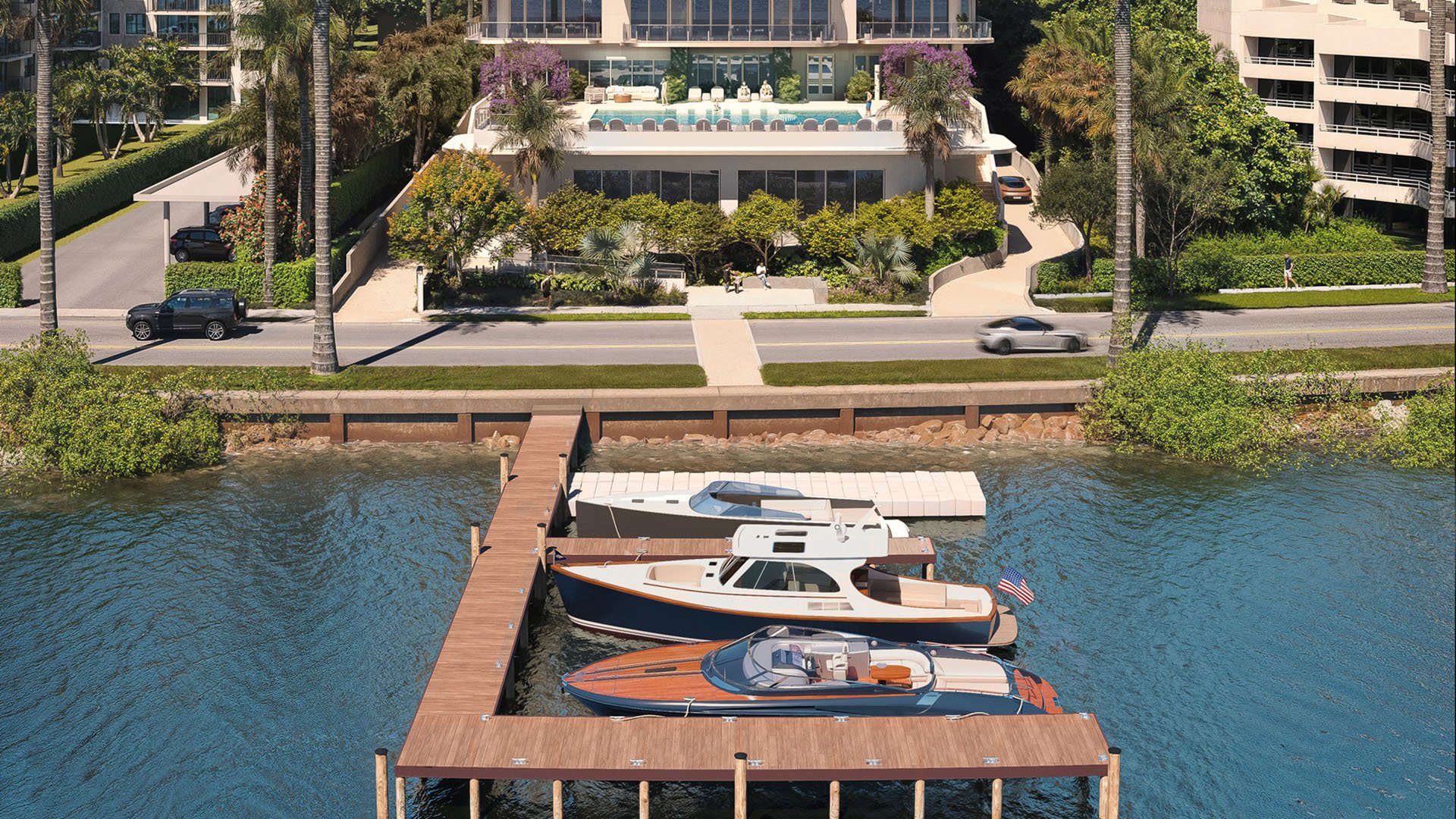
For buyers considering Maison D'Or South Flagler, the marine component of a waterfront purchase deserves the same scrutiny as the residence itself. Proximity to the water can be compelling, but it does not by itself confirm that a particular yacht can complete the intended route, approach safely, fit the available berth, or operate with suitable shoreside support.
A waterfront residence and a yacht-compatible operating plan should be evaluated together, but verified separately.
That distinction matters because yacht compatibility is never a single measurement. The review must consider air draft, loaded vessel draft, beam, length, turning requirements, tide, bridge operations, dock configuration, utilities, and crew access. Legal rights also matter: a buyer needs to understand precisely what use of a berth entails and whether that right remains connected to the residence over time.
A bridge assessment should begin with the yacht’s maximum air draft and the full route the owner expects to use. Antennas, towers, hardtops, outriggers, and other fixed equipment can affect the true operating height. A simplified vessel profile may not provide enough information for route planning.
The captain should confirm the controlling clearance information, applicable vertical datum, tide conditions, bridge procedures, and any timing considerations relevant to the intended passage. If the vessel requires an opening, that dependency can shape departure planning, guest transfers, provisioning, maintenance movements, and crew schedules.
The analysis should not stop at the bridge closest to the residence. Each segment of the planned journey should be reviewed in both directions, with realistic assumptions about tide, traffic, visibility, and maneuvering. A route that appears workable on a chart can still introduce practical constraints when tested against the yacht’s actual dimensions and operating pattern.
A useful diligence exercise is to ask the captain to prepare a written route memorandum. It can identify each navigational constraint, the vessel measurement that controls the analysis, and any conditions that could delay or prevent passage. This gives the buyer a clearer basis for deciding whether residential dockage, if available on acceptable terms, would support routine use or only occasional access.
Clearance above the yacht is only one part of the equation. Loaded draft below the waterline determines whether the vessel can approach, maneuver, berth, and depart with an appropriate margin. Fuel, water, provisions, tenders, equipment, and cruising stores can change the yacht’s operating profile.
A qualified marine professional should evaluate depth, tidal variation, potential shoaling, approach geometry, turning room, piling placement, beam constraints, and the under-keel margin appropriate for expected conditions. The review should address the approach channel as well as the berth itself. Adequate depth at the dock does not resolve a shallower point elsewhere along the route.
Timing also matters. If access depends on a narrow tidal window, the berth may not meet an owner’s expectation of flexible departure. The buyer should therefore define the intended use before deciding whether a technical limitation is acceptable. A berth used for a tender has a different operating standard from one expected to accommodate the primary yacht throughout the year.
Marine diligence requires legal documents as well as measurements. Buyers should request the applicable dock plan, berth schedule, governing provisions, assignment terms, insurance requirements, utility specifications, maintenance obligations, access rules, and resale-transfer language.
The form of the boating right can affect control, duration, cost, reassignment risk, and transferability. Counsel should determine whether the arrangement is tied to a particular residence, subject to approval, limited by vessel dimensions, or capable of changing under the governing documents. The buyer should also clarify responsibility for maintenance, storm preparation, damage, utilities, and insurance.
Services should be assessed against the vessel rather than described generically. Electrical connections, water access, waste procedures, security, loading arrangements, contractor entry, and after-hours access may all affect usability. A captain or vessel manager can help translate technical specifications into a practical operating assessment.
For a broader South Flagler comparison, buyers may also review Forté on Flagler West Palm Beach and The Ritz-Carlton Residences® West Palm Beach. Each residence should be assessed through its own current documents, marine conditions, and access arrangements rather than assumed to offer equivalent boating rights.
A berth near the residence may offer convenience, but the yacht’s wider operating needs can point toward a different arrangement. Crew parking, deliveries, provisioning, fueling, maintenance access, waste handling, tender storage, contractor entry, and security all affect day-to-day use.
The captain should map how people, equipment, and supplies would move between the residence, berth, and service providers. The review should consider whether work can occur without interfering with residential access or the owner’s schedule. It should also identify where the yacht would go when maintenance or weather preparation requires facilities unavailable at the residential berth.
A split plan may be worth evaluating. Depending on the vessel and the buyer’s priorities, a smaller boat or tender could serve the residence while the primary yacht remains at a location better suited to professional operations. This is not necessarily less convenient; it can reduce operational friction while preserving easy access to the water.
Buyers comparing other West Palm Beach residences can include Alba West Palm Beach in the residential review while keeping the marine analysis separate. Waterfront outlook, residential amenities, and yacht support are distinct considerations, even when they contribute to the same ownership decision.
The most effective process combines legal, technical, and operational reviews. The legal file should establish the nature, duration, cost, restrictions, insurance burden, and transferability of any boating right. The technical file should address dimensions, depth, utilities, maneuvering space, tides, and route constraints. The operating file should test bridge procedures, loaded draft, maximum air draft, provisioning, service access, and crew requirements.
Any unresolved point should be documented before the buyer treats dock access as part of the residence’s enduring value. Marketing language and visual materials cannot substitute for governing documents, field verification, and a captain’s vessel-specific analysis.
For discreet guidance on evaluating South Florida waterfront residences, connect with MILLION.
If branded residences are on your mind — as a home or as an allocation — we would be glad to share what we are seeing, privately.
Begin a quiet conversationProximity does not establish that a yacht can complete the route, approach safely, fit the berth, or obtain the required shoreside support.
Air draft determines whether the yacht can pass beneath bridges without requiring an opening. The measurement should include fixed equipment above the vessel.
The review should account for antennas, towers, hardtops, outriggers, and other fixed equipment that affects maximum height.
No. The captain should review every relevant segment of the intended route in both directions.
Fuel, water, provisions, tenders, and equipment can change the yacht’s operating draft. The loaded condition provides a more practical basis for evaluating access.
The review should cover depth, tides, shoaling potential, approach geometry, turning room, piling placement, beam constraints, and under-keel margin.
Buyers should request the dock plan, berth schedule, governing provisions, assignment terms, insurance requirements, utility details, maintenance obligations, and transfer language.
It can affect control, duration, cost, reassignment risk, restrictions, and whether the right transfers with the residence.
Parking, deliveries, provisioning, maintenance access, waste handling, security, and contractor entry can determine whether a berth works in daily operation.
The buyer should coordinate legal, technical, and operational reviews, with unresolved marine issues documented before dock access is assigned lasting value.