Arbor's completion milestone is significant, but sophisticated buyers should reconcile its ownership history, title record, condominium documents, budget and purchase agreement before closing.

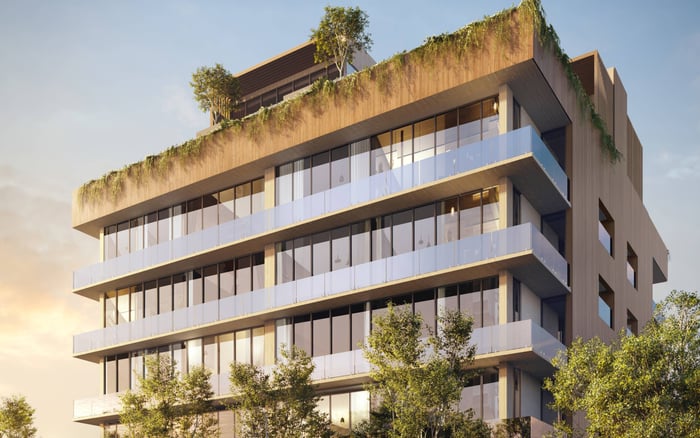
At Arbor Coconut Grove, the essential buyer story extends beyond material palettes and proximity to CocoWalk. The five-story condominium at 3034 Oak Avenue is now configured as a 45-residence building, with two-, three- and four-bedroom homes spanning approximately 1,466 to 3,185 square feet. Lofts, townhomes and penthouses broaden the mix; ceilings exceeding 10 feet, impact glazing and open plans define its contemporary appeal.
The more consequential details reside in the condominium declaration, prospectus, amendments, association budget, title commitment and purchase agreement. These documents determine what is being conveyed, which entity stands behind the offering, how common expenses are allocated and what remedies remain if a dispute arises. Marketing can frame a lifestyle. Recorded and executed documents define the transaction.
The recorded documents define the asset long after the sales gallery closes.
Arbor received its Temporary Certificate of Occupancy in March 2026, with move-ins scheduled for early spring. Sales had surpassed 70 percent by the time that milestone was announced. A TCO is meaningful because it permits occupancy subject to applicable conditions, but it should not be treated as confirmation of a final Certificate of Occupancy without separate verification.
The milestone followed a much longer development arc. Initial plans contemplated delivery in fall 2018 and closings in early 2019. In 2022, the unfinished project became the subject of an $18.08 million foreclosure lawsuit connected to a $20.7 million construction loan default. At the time, the building was approximately 90 percent complete and fully sold, and buyers had made 40 percent deposits.
The property later changed hands through a deed transfer intended to avoid foreclosure, while the underlying loan moved from Trez Capital to Oasis Investment Trust. Ten contractors with active construction liens were named in the litigation, which was dismissed after the ownership transfer. Isaac Kodsi, founder of Ark Capital Group, acquired Arbor out of foreclosure in 2023 and returned deposits to the original buyers. Ark Capital Group and the Kodsi family then steered the project to completion.
That sequence does not, by itself, resolve a current buyer's legal position. It explains why the chain of title, releases and identity of the current contracting party merit close attention.
Earlier iterations of the development were associated with Urban Atlantic Group, Oak Ventures and Arbor Grove Development. Some current legacy-facing information continues to name earlier sponsors while identifying the building as completed in 2026. A purchaser should therefore look beyond familiar project branding and confirm the exact legal entity identified as the developer in the current offering package and purchase agreement.
Counsel should compare that entity across the prospectus, contract, deed form, escrow provisions, warranties and notices. Any inconsistency should be resolved in writing before execution. The distinction matters because obligations concerning completion, deposit handling, warranty procedures and association control attach to legal entities-not to a sales-gallery name.
This scrutiny is relevant across Coconut Grove's evolving residential market. Buyers comparing Arbor with Four Seasons Residences Coconut Grove should assess each offering through its own governing documents rather than assume that neighborhood, branding or price point provides equivalent contractual protection.
Current descriptions generally place Arbor at 45 residences, while earlier materials cited 48 or 52. That variation makes the recorded declaration, all amendments and the current prospectus the definitive references for the official unit schedule and percentage interests.
The discrepancy is not merely editorial. Unit count and percentage interests can affect voting power, the allocation of common expenses and each owner's economic relationship with the association. Buyers should confirm that the unit designation, parking rights, storage rights and any limited common elements shown in the contract align with the declaration and survey materials.
When comparing smaller Grove offerings such as Opus Coconut Grove, the useful question is not simply which property feels more intimate. It is how each declaration allocates rights, costs and control within its particular condominium structure.
Because Arbor passed through a foreclosure dispute and ownership transfer, the title commitment warrants more than a routine glance. The review should address releases of prior mortgages, UCC filings, mechanic's liens and other construction-related encumbrances. It should also verify the current owner of the land and improvements, the proposed deed grantor and every exception that will survive closing.
A title commitment is the starting point, not the end of the inquiry. Buyers and counsel should match recorded releases with the parties and instruments appearing in the historical chain. They should also confirm how any open construction matters, if present, will be cleared and what title coverage will be issued at closing. The objective is not to relitigate the project's history. It is to ensure that yesterday's capital stack does not become tomorrow's ownership problem.
At approximately 45 units, Arbor's boutique scale concentrates the cost of shared amenities, staffing, insurance and reserves among a relatively small ownership base. The current association budget and reserve schedule therefore merit line-by-line review. Buyers should examine anticipated assessments, the assumptions underpinning operating costs and the transition from the developer-funded period to owner funding.
This is where a buyer's guide should move beyond finishes to recurring economics. A purchaser can ask which expenses are fixed, which are estimates, whether any services are temporarily subsidized and how percentage interests determine each unit's share. The prospectus date and amendment history should also be checked against the building's post-TCO status, ensuring that the financial materials reflect the condominium now approaching occupancy.
The same discipline applies when considering established Grove luxury such as Park Grove Coconut Grove. Differences in scale and maturity can produce different expense structures. Comparisons should normalize what is included rather than rely on a headline monthly figure.
The purchase agreement deserves particular attention for deposit-release provisions, outside closing dates, force majeure, sole-remedy clauses, arbitration, finish substitutions and warranty procedures. Buyers should also identify the developer's rights during its control of the association and the conditions governing turnover.
A move-in-ready impression does not eliminate new-construction contract risk. Confirm whether plans and specifications may change, what standard governs permissible substitutions, how punch-list items are handled and whether closing can be required before every nonmaterial item is complete. Any oral assurance material to the purchase should appear in the signed documents.
Finally, match the contract's promised closing condition with the building's actual approvals. The March 2026 TCO is a major milestone, but the agreement should specify what documentation permits closing and occupancy. Counsel should separately verify whether a final Certificate of Occupancy has been issued.
Arbor presents a compelling Coconut Grove proposition: a low-rise address one block behind CocoWalk, varied residence types, substantial ceiling heights and a completion-era ownership group that brought a long-delayed building to TCO. Remaining inventory was priced from approximately $1.7 million, placing document diligence alongside design and location in the acquisition calculus.
The fine print should present a coherent, current picture: the correct developer entity, final unit schedule, clean title path, current budget, reserve framework, closing standard and enforceable remedies. When those elements align, the buyer is evaluating the actual condominium rather than inheriting assumptions from an earlier chapter.
For discreet guidance on Arbor and other exceptional South Florida residences, connect with MILLION.
If branded residences are on your mind — as a home or as an allocation — we would be glad to share what we are seeing, privately.
Begin a quiet conversationCurrent materials generally describe 45 residences, although legacy information has cited 48 or 52. The recorded declaration and current prospectus should confirm the official count.
The building received a Temporary Certificate of Occupancy in March 2026. A final Certificate of Occupancy should be confirmed separately.
Ark Capital Group and the Kodsi family steered the project to completion after Isaac Kodsi acquired it out of foreclosure in 2023.
Earlier project materials identified different sponsors. Buyers should confirm that the prospectus, contract, deed form and warranties consistently identify the current legal entity.
The project's foreclosure and construction history makes it important to verify releases of prior mortgages, UCC filings, mechanic's liens and other encumbrances.
Review operating costs, insurance, staffing, reserves, developer subsidies and each unit's allocated share. Arbor's boutique scale spreads shared costs across about 45 units.
Key provisions include deposit release, outside closing dates, force majeure, sole remedies, arbitration, substitutions, warranties and developer control of the association.
The mix includes conventional residences, lofts, townhomes and penthouses, with two-, three- and four-bedroom configurations.
Arbor is at 3034 Oak Avenue in Coconut Grove, one block behind CocoWalk.
No. Buyers should still verify closing conditions, occupancy approvals, substitution rights, punch-list procedures, warranties and title coverage.